SpaceX to launch USSF-380 satellites for US Space Force
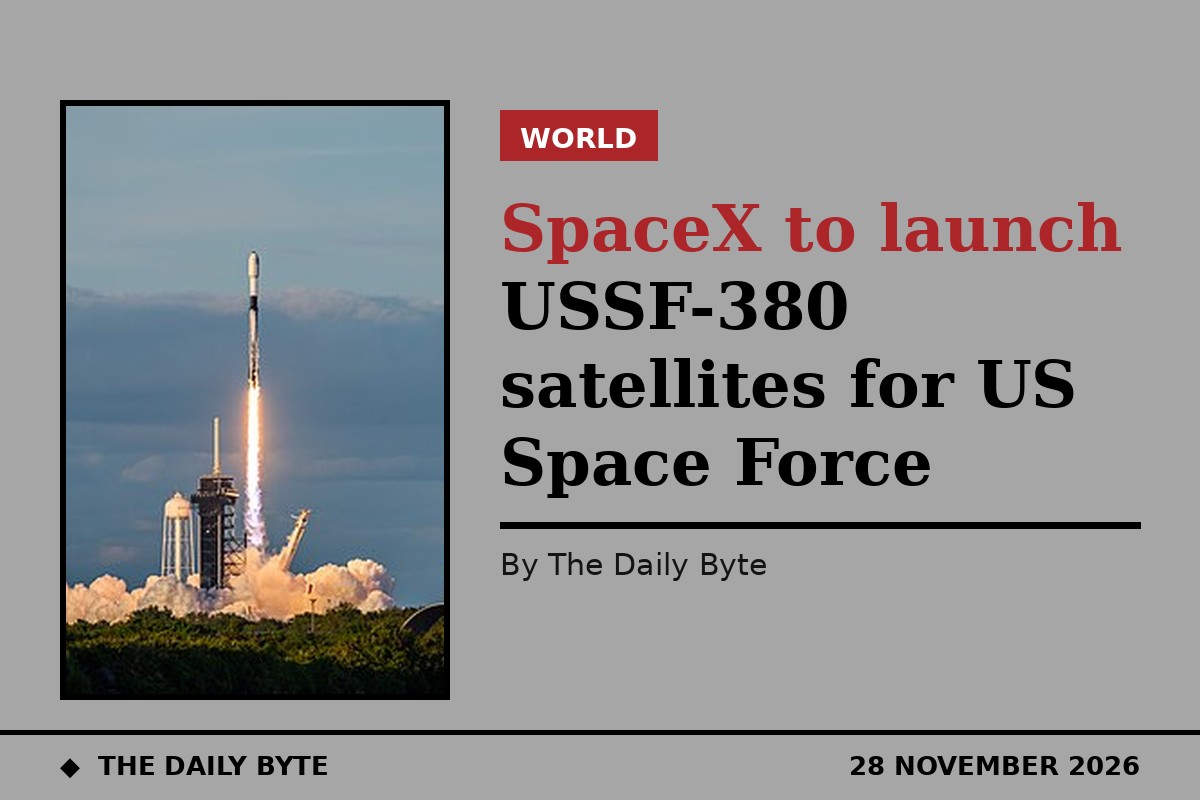
SpaceX is set to launch a classified mission for the United States Space Force on Saturday night, sending a new batch of satellites into low Earth orbit from Vandenberg Space Force Base in California.
The mission, designated USSF-380, will lift off on a Falcon 9 rocket from Space Launch Complex 4 East. Liftoff is scheduled during a four-hour window that opens at 8.39pm Pacific time on Saturday 28 November, which is 11.39pm Eastern time and 04.39 UTC on Sunday 29 November. The rocket will fly on a southeasterly trajectory after leaving the pad.
The flight will carry satellites for the Space Force's Space Data Network, a government-owned and controlled communications constellation designed to provide secure, high-speed data transport around the world for the Joint Force. Spaceflight Now reports that USSF-380 is the seventh flight in a series of missions supporting the network, which is being built under a 2.29 billion dollar contract awarded to SpaceX to deliver the satellites to low Earth orbit. The goal is to establish a global capability by the end of 2027.
Details of the payload itself have not been disclosed, as is usual for national security space missions. Multiple spaceflight outlets have reported that the mission is likely to deliver a batch of military satellites operating in low Earth orbit, possibly based on SpaceX's Starshield satellite bus, but the Space Force has not confirmed what will be on board.
Booster B1082 on its 27th flight
The mission will use the Falcon 9 first-stage booster with the tail number B1082, which will be making its 27th flight. The booster has previously flown the Transporter-18, NROL-145 and USSF-62 missions, the OneWeb Launch 20 mission and 22 batches of Starlink satellites.
Nearly eight and a half minutes after liftoff, B1082 is due to land on the droneship Of Course I Still Love You, positioned in the Pacific Ocean. If the landing succeeds, it will be the 237th landing on that vessel and the 682nd Falcon booster landing to date.
The launch was delayed from Friday 27 November, and a backup window opens at 6.26pm Pacific time on Sunday 29 November if conditions require a further delay. SpaceX will stream the launch on its website from about ten minutes before liftoff.
The flight is the 80th rocket launch of 2026 in California, and the sixth Falcon 9 launch from Vandenberg in November, underlining the pace of operations at the West Coast range. Launches from Vandenberg frequently fly south over the Pacific into polar and other steep orbits, and a launch after dark can be visible across Southern California.
Building a secure military data network
USSF-380 follows a busy year for the Space Force's data network programme. The constellation is intended to give American service members reliable communications wherever they operate, reducing dependence on commercial networks. SpaceX's contract covers the delivery of the satellites, while the network itself remains under government control.
For SpaceX, the mission adds to a record year of Falcon 9 flights. The rocket is the most active in the world, having launched hundreds of times from Florida and California, and the reuse of boosters such as B1082 has become routine. A successful landing on Saturday night would extend that record further and keep the Space Data Network on course for its target of global coverage by the end of next year.


