Spain falls silent before decisive election on Sunday
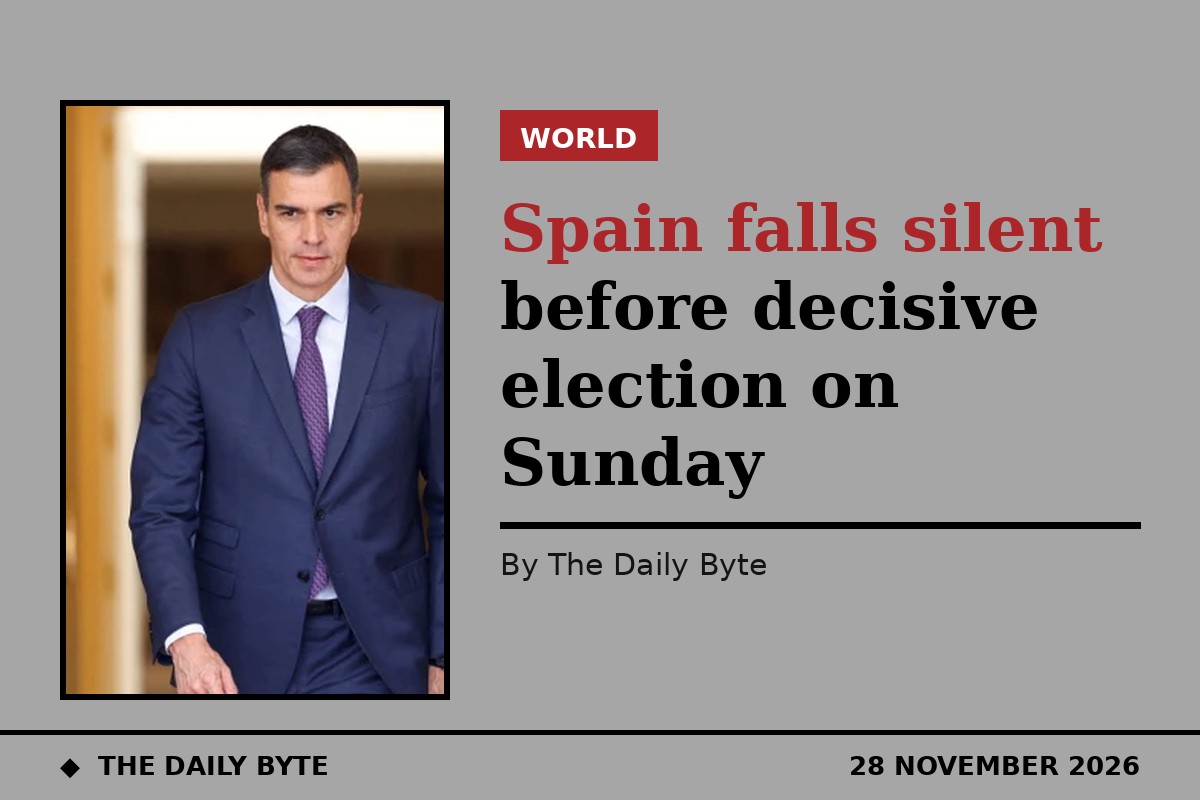
Spain fell silent on Saturday as campaigning stopped ahead of a general election on Sunday that could change the country's government and bring the far right into power for the first time since the end of Francisco Franco's dictatorship.
More than 38.6 million Spaniards are eligible to vote on Sunday, 29 November, in a snap election that will decide whether Pedro Sanchez, the Socialist prime minister who has been in power since 2018, wins another term or is replaced by Alberto Nunez Feijoo, leader of the conservative People's Party.
After two weeks of intense campaigning, the main contenders for the premiership set aside rallies and political events on Saturday to observe Spain's traditional day of reflection. Under Spanish electoral law, campaigning and the distribution of election material are banned during the day of reflection, giving voters a pause before polling day.
Polling stations will open at 9am on Sunday and close at 8pm. Around 1.6 million voters will be casting a ballot in a general election for the first time. The government will publish the first turnout figures at 2.30pm, followed by a second update at 6.30pm, and a press briefing to announce the provisional results is scheduled for 10.30pm.
How the candidates spent the day
The candidates spent the day of reflection in very different ways. Sanchez, the candidate of the Spanish Socialist Workers' Party, planned to exercise and spend time with his family. Feijoo, leader of the People's Party, travelled to Ceuta, the Spanish enclave in North Africa, where he had no political engagements planned.
Ada Colau, candidate for the left-wing Frente Amplio, returned to Barcelona to be with her family and friends after wrapping up her campaign in Madrid on Friday. Irene Montero, the Podemos candidate, took her dog for a walk, while Gabriel Rufian of the Republican Left of Catalonia planned to exercise and enjoy a family meal.
Santiago Abascal, leader of the far-right Vox party, is also a central figure in the election. If the People's Party wins but falls short of a majority, Vox could enter national government for the first time since the end of Franco's dictatorship in 1975, a prospect that has drawn attention across Europe.
The Interior Ministry has mobilised 100,727 personnel to provide security during Sunday's election, according to the prime minister's office. Authorities have also stepped up measures against cyber attacks and disinformation.
What the election is about
The election follows a turbulent period marked by the pandemic, the energy crisis, rising inflation, migration crises, the devastating floods in Valencia and a power blackout in 2025. Housing, immigration, the economy and allegations of corruption involving people close to the prime minister have dominated much of the campaign.
Sanchez called the snap election after parliament rejected housing relief measures proposed by his minority government. At his final campaign rally in Madrid on Friday, he appealed to voters to prevent Spain from moving backwards, warning that a government formed by the People's Party and Vox could reverse social reforms and weaken public services.
Final polls put the conservative People's Party and Vox on course to win together, although the Socialists have closed the gap since the vote was called. Sanchez has argued that a progressive majority remains possible if left-leaning voters turn out in large numbers.
The result matters beyond Spain. A victory for the right-wing bloc would shift the political balance in the European Union ahead of decisive budget talks in December, while a Sanchez win would keep Spain's current direction in place. The vote count can be followed live on the official election website.


