Spain Extends Bank Tax to Fund Housing
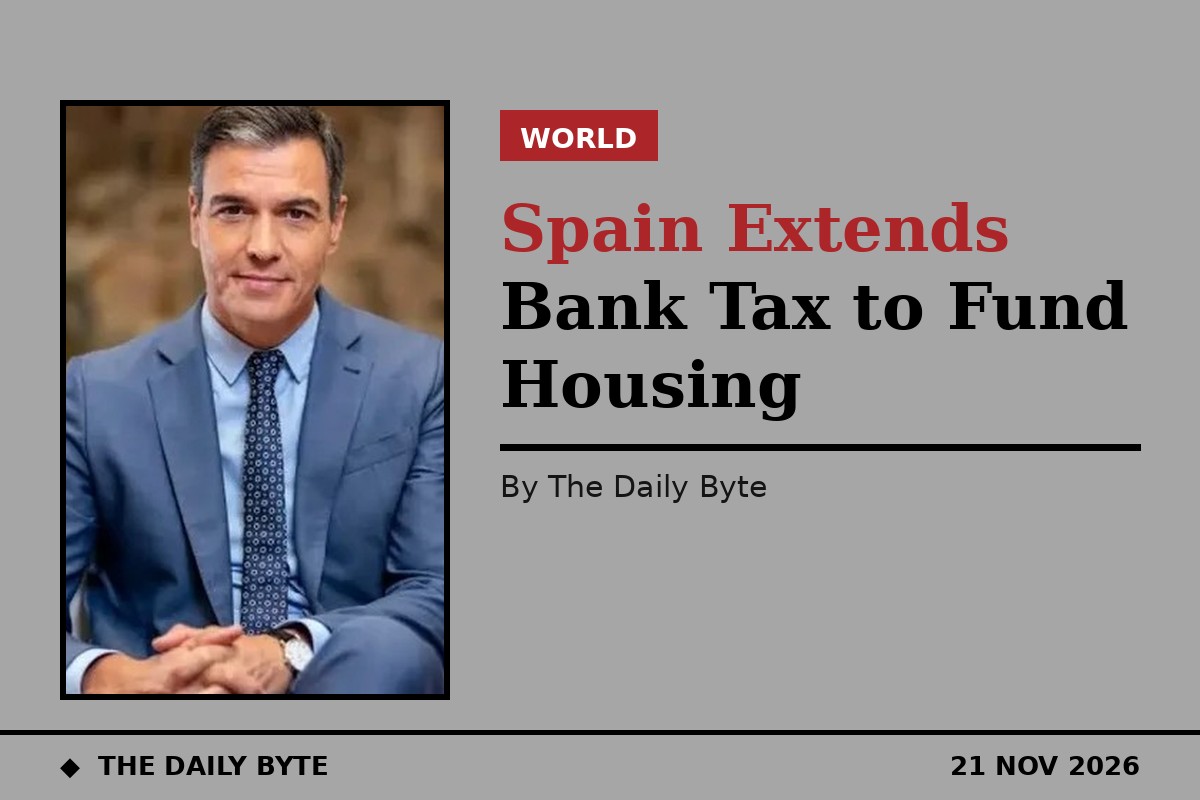
Spain will extend its banking levy into 2027 and put the money raised towards housing, Prime Minister Pedro Sánchez has announced. The government is expected to approve the extension at its cabinet meeting on Tuesday.
Mr Sánchez told Spanish radio station Onda Cero on Saturday that the levy would raise €1.4 billion. He said the revenue would be allocated in full to building social housing, offering tax incentives to tenants, and renovating homes.
The government expects the money to pay for the construction of more than 6,000 affordable homes, the renovation of around 52,000 homes, and tax breaks for nearly 120,000 tenants over the next legislature. Mr Sánchez said a law would direct all of the revenue to those housing measures.
The levy is charged on banks according to the size of their lending business. It ranges from 1% to 7% of lenders’ net interest income and commissions, replacing the previous fixed rate of 4.8%. Lenders whose annual volumes pass €5 billion pay the top rate of 7%, a band that mainly affects Santander, BBVA and CaixaBank.
The tax was first introduced as a windfall levy on banks and energy companies, and in December 2024 the government approved a three-year extension to help citizens cope with a higher cost of living. The banking levy had been due to expire at the end of 2026, so the new extension would keep it in place for a further year.
Why housing dominates the election campaign
The announcement comes eight days before a snap general election on 29 November, which Mr Sánchez called last month in a bid to harness the momentum from large housing protests. Housing costs have become one of the central issues of the campaign, with demonstrators demanding more affordable homes and stronger protection for tenants.
Opinion polls put the conservative People’s Party ahead of Mr Sánchez’s Socialists before the vote, but suggest it would probably need an alliance with the far-right Vox party to govern. Both sides have been competing to present themselves as the answer to the housing shortage, and the banking levy has become a symbol of that contest.
By tying the levy directly to housing, Mr Sánchez is presenting the tax as a practical source of funding rather than a general revenue measure. The government’s message is that banks, which have reported strong profits, should help pay for the homes and renovations that voters say they need most.
What happens next
The cabinet is due to approve the extension on Tuesday 24 November. If it does, the levy will continue through 2027, and the government will then bring forward the legislation that ring-fences the revenue for housing.
Attention will then turn to the detail of that law, including how the social housing is allocated, which renovations qualify, and how the tenant tax breaks are designed. The election result on 29 November will also shape whether the plan survives in its current form, since a change of government could revisit both the levy and the housing programme it is meant to fund.
For now, the announcement gives voters a clear figure to weigh: €1.4 billion from banks, promised in full for housing, if the cabinet signs it off on Tuesday.


