At least 68 killed in Spain high-speed crash
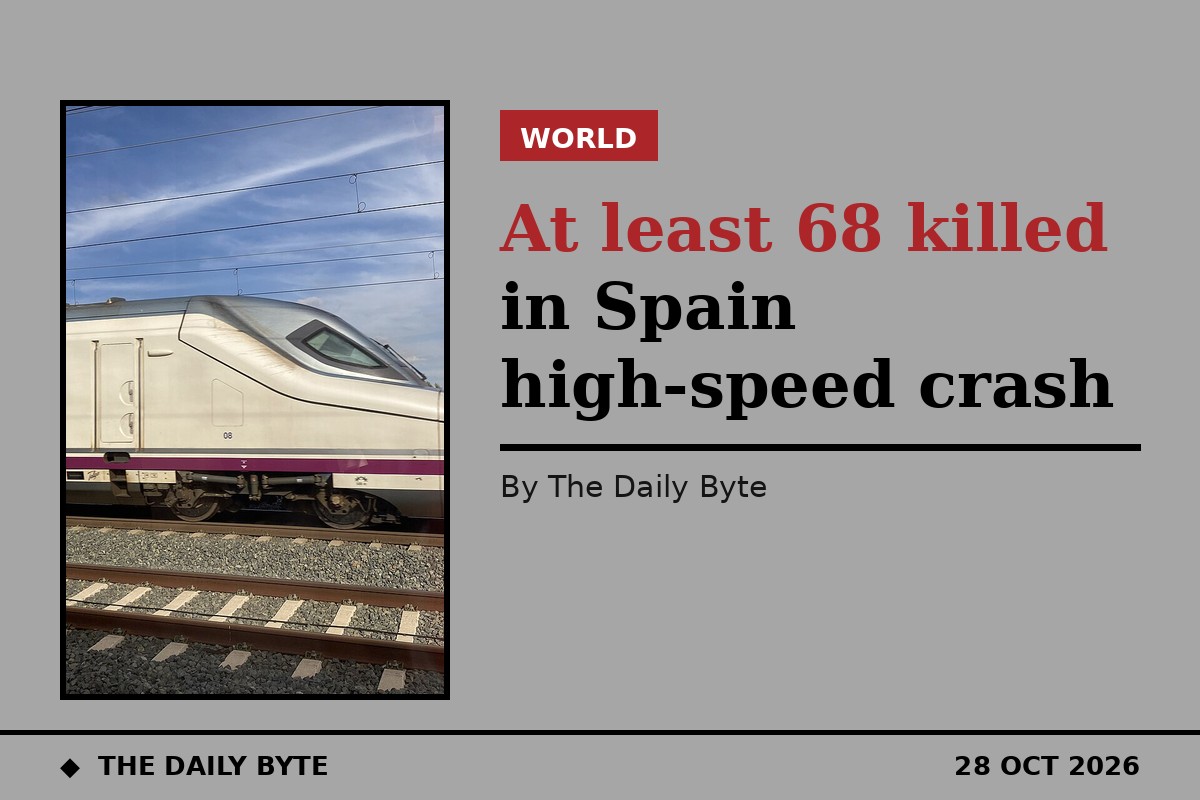
At least 68 people were killed and nearly 80 injured when two high-speed trains collided in central Spain on Wednesday 28 October, in the country's deadliest rail crash since 2013. A Renfe high-speed train struck the rear of a stationary Iryo train near Urda in Toledo province, on the Madrid-Seville line, at about 09:15 local time. Two carriages derailed into an embankment, and rail services between Madrid and Andalusia were suspended. The toll rose through the day in successive reports, so the figures here are floors, not finals: at least 68 dead, and nearly 80 injured. A figure of 179 injured circulating on social media is not used here; it does not come from the reputable tolls checked.
A collision that should not have happened
Transport Minister Óscar Puente gave a preliminary account of how the collision happened: the Renfe train was authorised to continue despite an active red signal because of the stationary train ahead, breaking protocol. He attributed the red signal to a computer communications failure and the restart to an erroneous decision. That is the minister's preliminary account, not an established technical cause, which will take the full investigation to determine. Prime Minister Pedro Sánchez said he was shocked by the serious train accident in Toledo and that emergency services were working on the ground.
The second crash on the same line in nine months
The crash is the second high-speed collision on the same line in nine months, after a January accident that killed 46 people, Reuters reported. As a mark of respect, the Royal Spanish Football Federation postponed 24 Copa del Rey first-round matches scheduled for 28 October. The human scale of the disaster, rather than the timetable of inquiries, is what matters first: families along the Madrid-Andalusia corridor are waiting for names, and the injured are being treated after a morning collision that should not have been possible under the signalling rules as they are understood.