Spain Sanchez Pledges €22bn Pre-Election Spending
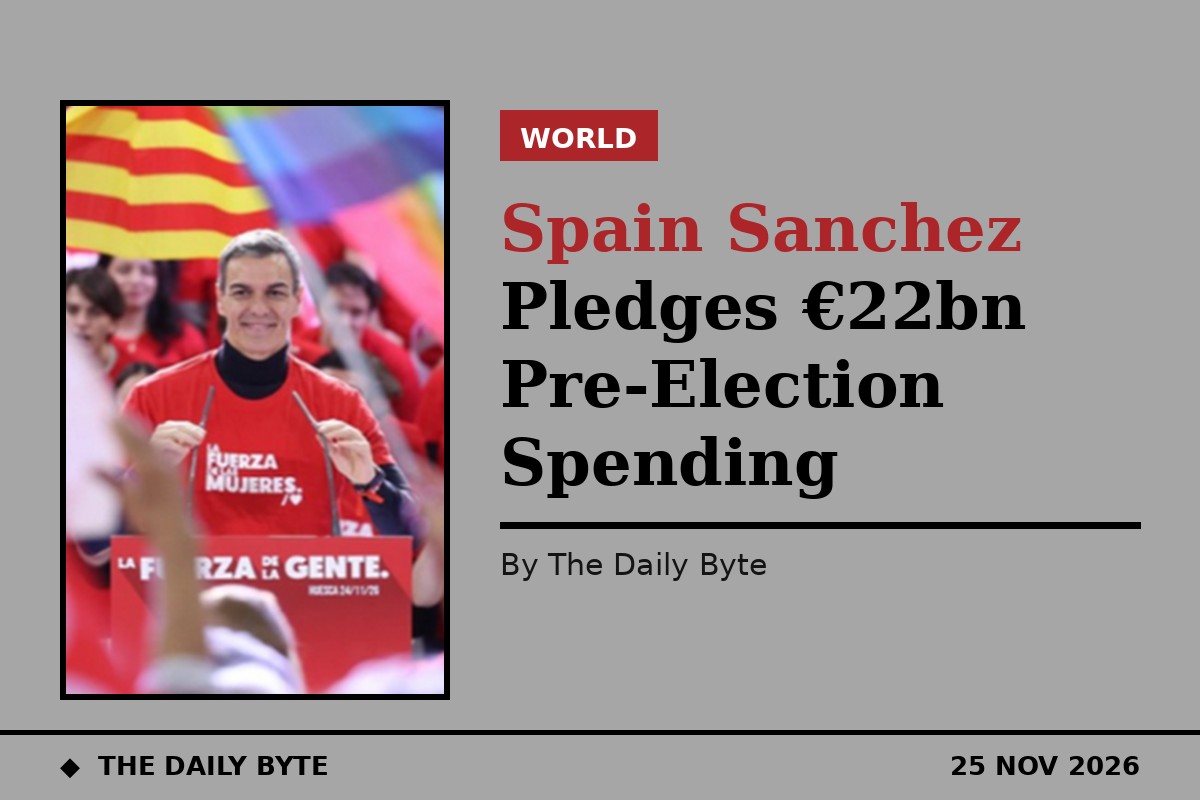
Spain's prime minister, Pedro Sánchez, has promised voters a €22 billion package of higher pensions, public-sector pay rises, tax cuts and cheaper transport in the final days before Sunday's snap election, even as the European Commission warns that Madrid is already spending beyond its agreed limits.
The €22 billion figure, calculated by the newspaper El Mundo for 2027 alone, covers measures pushed through by cabinet decree since Sánchez called the election for 29 November. The Corner, reporting on the same package on Wednesday, estimates the total cost of the measures approved since the election was called at around €30 billion, a bill the next government will have to fund.
Sánchez has governed without an approved budget for four years, rolling over the 2023 accounts and using royal decree-laws and cabinet decisions to introduce new policies. Since parliament was dissolved on 6 October, the government has approved 12 decree-laws. The decrees must be ratified by a 69-member standing committee in which the prime minister's allies hold a 35-34 majority, letting him sidestep opposition parties that voted the original measures down.
The biggest items
The two largest commitments dominate the package. Civil service pay will rise by 4.5%, at a cost of €9.2 billion, the largest public-sector pay rise since 1992. Pensions will rise by 3.6%, costing €8.4 billion.
The minimum wage will go up by 5.3% to €1,286 a month, paid 14 times a year, and workers earning the minimum wage will have no income tax deducted. Together, the pay and pension rises account for most of the €22 billion total for 2027.
The final cabinet's last batch
On Tuesday, at its final cabinet meeting before the election, the government added another set of measures. Paid parental leave will increase to 20 weeks, rising to 34 weeks for single-parent families. Paid bereavement leave will be extended from two to ten working days.
Public transport subsidies will continue throughout 2027 at a cost of €1.2 billion, while self-employed workers will receive tax reductions worth €465 million. The Corner puts the cost of this latest batch alone at around €2 billion.
The government also approved a one-year extension of the bank tax, expected to raise €1.4 billion to fund social housing construction and support for vulnerable tenants, according to Reuters. The levy had been due to expire at the end of 2026.
Brussels pushes back
The Commission has warned that Spain will exceed its agreed EU spending limits by about €5 billion this year and could face an excessive-deficit procedure next spring, triggered by its high debt. Its calculations do not include some of Sánchez's latest commitments, including the new public-sector pay rises, which could make the problem worse.
The Corner reports that Brussels has detected a material risk of non-compliance with the agreed fiscal path, noting that the government has spent more than €5 billion above the limit permitted by the Commission on its trajectory to reduce debt.
Luis Garicano, a London School of Economics economist and former politician, questioned adding to the 2027 deficit while parliament is dissolved and no budget exists, asking on X: "How is this legal?" Antonio Garamendi, head of the CEOE employers' federation, has urged the next government to scrap the measures.
A tight race
The spending promises come with the election finely balanced. The final opinion polls before Sunday's vote put Alberto Núñez Feijóo's conservative People's Party on 31.5%, against 29% for Sánchez's Socialists, with the hard-right Vox on 17.9%. The Socialists have cut a lead of about six percentage points when the election was called in October to roughly 2.5 points.
Spain has now entered its electoral polling blackout, which bans the publication of voting-intention surveys during the five days before an election. Sánchez also faces a revolt from the party's elder statesman: Felipe González, prime minister from 1982 to 1996, has said he will abstain on Sunday. Whoever wins will inherit the commitments, as well as growing pressure from Brussels to bring spending under control.


