Sri Lanka to Present 2027 Budget on 12 November
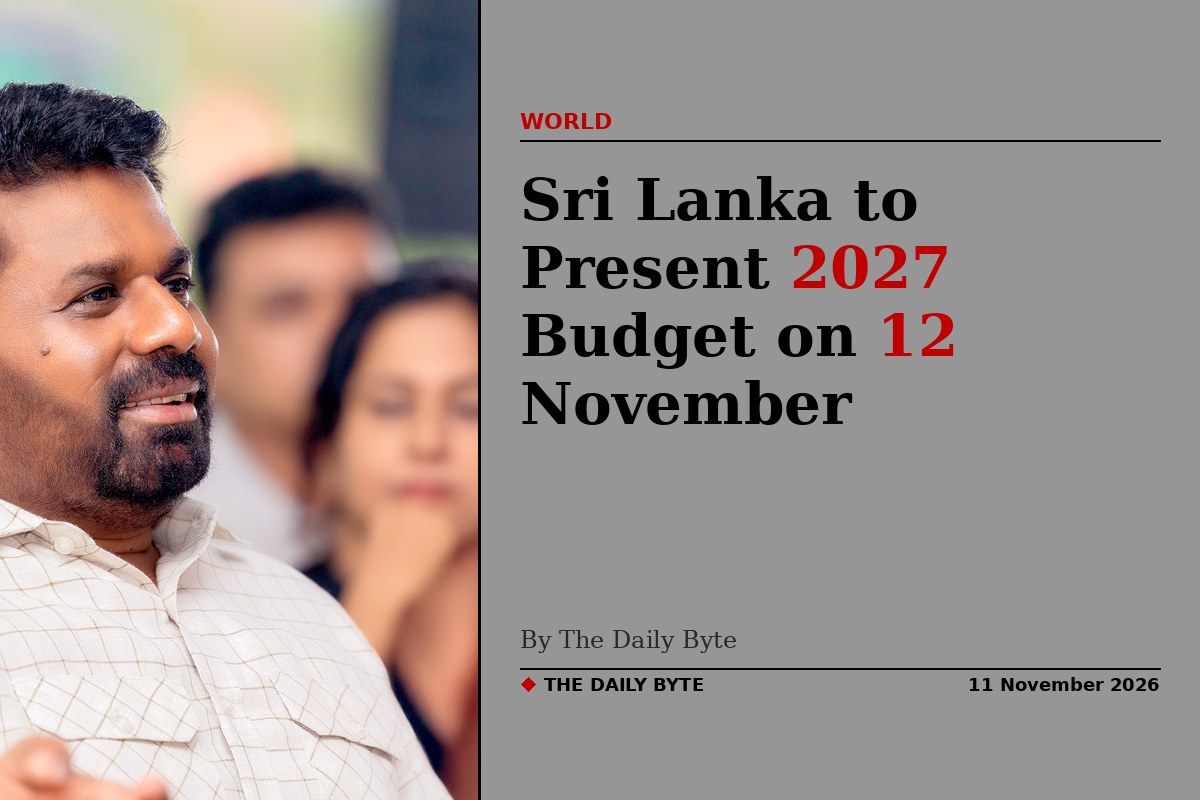
Sri Lanka's President Anura Kumara Dissanayake will present the 2027 Budget to Parliament on Thursday, 12 November, in his role as finance minister. The budget is the government's main chance to show how it plans to balance promised tax relief for workers with the revenue targets and fiscal discipline required under its programme with the International Monetary Fund (IMF).
The 2027 Appropriation Bill, presented for its first reading on 7 October, provides for total government expenditure of about Rs 4.99 trillion. The budget will be voted on in Parliament, with the vote on the third reading scheduled for 14 December.
Tax relief promised, but no figure yet
Dissanayake has promised further relief on Pay-As-You-Earn (PAYE) tax, the income tax paid by salaried workers. Speaking at the National Trade Union Convention in Colombo on 7 November, he said the government intended to raise the tax-free threshold again to ease the burden on employees, particularly higher earners in the private sector.
No new threshold figure has been given. The threshold was raised from Rs 100,000 a month to Rs 150,000 a month in April 2025, after talks with the IMF. The president has also said his government has not introduced a single new tax since coming to power, and that it has met its revenue targets without doing so. Any tax cuts will have to be weighed against the IMF programme, which places considerable emphasis on raising revenue and keeping public finances on a sustainable path.
Capital spending and the defence bill
Capital spending is set to be a central part of the budget. The president has said the government plans Rs 2 trillion in capital expenditure, including Rs 1.75 trillion in the Appropriation Bill and a further Rs 250 billion linked to recovery from the Ditwah cyclone, which he described as the highest allocation in the country's history. The money is intended for roads, bridges and electricity, as well as rural connectivity and logistics.
The spending plans also show where the government's priorities lie. The Appropriation Bill allocates Rs 458 billion to the defence ministry and Rs 230.5 billion to public security, a combined Rs 688.5 billion for the armed forces and police, against Rs 328 billion for education. The deputy finance minister, Anil Jayantha Fernando, has said the budget will focus on capital market development, investment and restructuring state-owned enterprises, as the government tries to move beyond stabilising the economy towards longer-term change.
Further details are reported by PulseLine and the Tamil Guardian.


