Sri Lanka Organised Crime Bill Clears Court
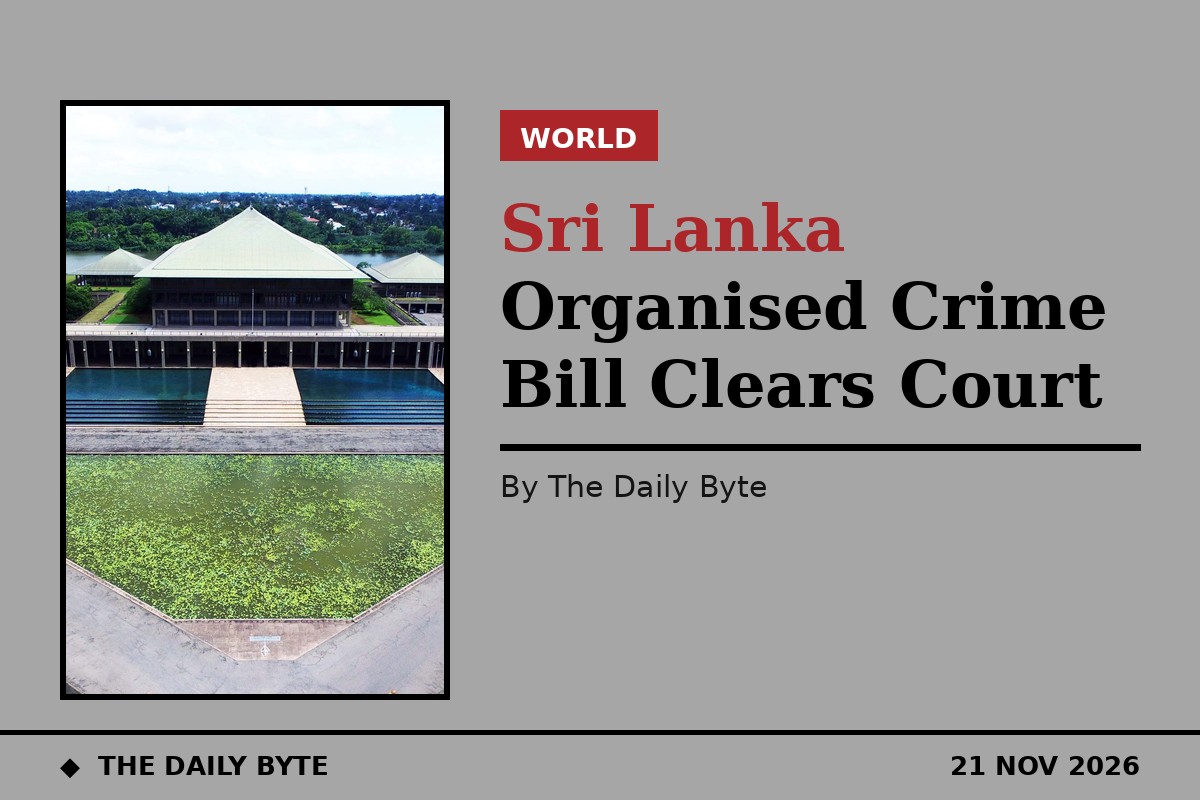
Sri Lanka's Supreme Court has cleared the government's Prevention of Organised Crime Bill for passage by a simple majority in Parliament, provided a series of amendments are made during the committee stage.
Speaker Jagath Wickramaratne announced the court's determination to Parliament on Saturday, 21 November, telling members the bill had cleared its constitutional challenge. The court found the bill was not inconsistent with the Constitution, subject to the changes it set out and others accepted by the Acting Attorney General.
The ruling matters because of the threshold it sets. Had the court found the bill inconsistent with the Constitution, the government would have needed a two-thirds majority in Parliament to pass it. By clearing the bill with conditions, the court has left the government able to advance it with a straightforward majority, once the required amendments are incorporated.
What the court ordered changed
The determination, given in case S.D. No. 10/2026, requires amendments to the bill's long title and preamble and to a long list of clauses, covering clauses 2, 3, 4, 5, 7, 8, 9, 10, 11, 12, 14, 15, 16, 17, 20, 21, 23, 24, 25, 29, 30, 31, 32, 33, 34, 36, 37, 39, 41, 42, 43, 44, 45, 46, 47, 48, 49, 50, 51, 52, 53, 54, 55, 57, 58, 61, 62, 63, 64, 65 and 66. The court also required the removal of clause 6 and the deletion of items 15, 16, 17 and 33 from the First Schedule.
Clause 6 was one of the most contentious parts of the bill. It would have allowed people to be prosecuted even if they were not affiliated with a criminal gang, and its removal was one of the changes the Acting Attorney General had already accepted.
The bill was formally introduced to Parliament on 20 October and drew 20 separate petitions challenging its constitutionality. Under Sri Lankan law, citizens may contest a bill in the Supreme Court within seven days of it being placed before Parliament. The petitions were heard by a three-judge bench led by Chief Justice Preethi Padman Surasena, with Achala Wengappuli and Sampath Abeykoon. The Speaker directed that the full determination be included in the official record of the day's proceedings.
Critics say the bill still goes too far
The ruling does not settle the argument over the bill itself. Domestic and international critics say the proposed measures give law enforcement excessive authority, pointing to broad definitions of organised crime that they fear could lead to people being profiled on the basis of their associations or appearance.
The Human Rights Commission of Sri Lanka has formally asked for the bill to be withdrawn, saying it threatens fundamental civil liberties. The Bar Association of Sri Lanka has raised concerns about the erosion of judicial oversight and established legal safeguards, and international groups including Amnesty International and Human Rights Watch have argued the bill fails to meet international human rights standards.
Among the provisions drawing the sharpest criticism are extended periods of detention, the admissibility of confessions made directly to senior police officers, restrictions on bail, and wider police powers over warrantless arrests, searches and surveillance. Critics have also warned about risks to media freedom.
What happens next
The government must now incorporate the court-mandated amendments at committee stage before the bill proceeds to a final vote. The legislation is aimed at tackling organised criminal networks in Sri Lanka, and the government has presented it as a central part of its law-and-order programme. Whether the amended version answers the critics, or simply moves the argument to the floor of Parliament, will become clear when the committee stage begins.


