Sri Lanka Parliament Row Over Anti-Terror Bill
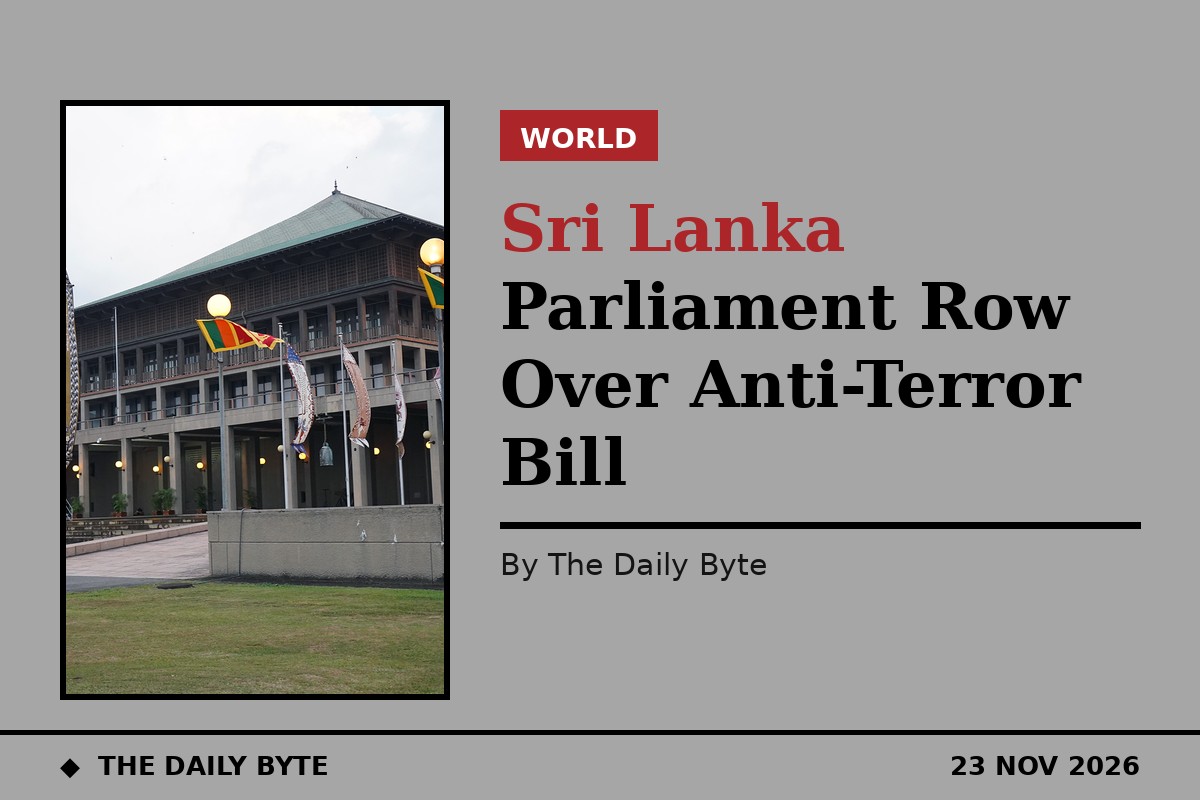
Sri Lanka’s Parliament saw heated exchanges on Monday, 23 November, as opposition MPs demanded that no final decision be taken on the proposed Protection of the State from Terrorism Act until wider public consultations have been held. The row broke out during a sitting in which the controversial anti-terror bill was due to come before a parliamentary oversight committee.
Opposition MP Shanakiyan Rasamanickam raised the matter in the House, pointing out that the Sectoral Oversight Committee on Governance was scheduled to meet that same afternoon to consider the legislation. He argued that the committee should not press ahead while the public consultation promised by the president had yet to take place.
Opposition challenges the timetable
Mr Rasamanickam told MPs that President Anura Kumara Dissanayake had publicly committed on 7 November to holding broad public consultations on the bill. He said he and fellow opposition committee members Faizer Mustapha, Ajith P. Perera, Gajendrakumar Ponnambalam and Mujibur Rahman had already submitted a formal written request to the Speaker asking for the consultation process to be honoured before any decision.
Several opposition MPs rose from their seats as the exchange grew heated. Senior opposition MP Rauff Hakeem also joined the debate, rejecting the argument that the matter should be dealt with only inside the oversight committee. The opposition’s case was that a law of this significance should not advance on a committee timetable while the promised public discussion remained outstanding.
Government points to court scrutiny
Justice Minister Harshana Nanayakkara responded by noting that the proposed legislation had already been examined by the Supreme Court. He acknowledged, however, that the president had made a commitment to consultations, and did not dispute that the promise had been given.
Deputy Speaker Rizvie Salih intervened to steer the matter back to the committee, saying there was no need for further debate in the chamber. He held firm despite the protests, telling Mr Rasamanickam that his points had been noted and directing all sides to pursue the issue at committee level.
Civil society calls the bill unworkable
The dispute in Parliament was matched by pressure from outside it. Civil society organisation Justice for All, which attended the oversight committee meeting on Monday, called for the bill to be withdrawn, describing it as unworkable in its present form and warning that it contains provisions that could make it more oppressive than Sri Lanka’s existing anti-terrorism laws.
The organisation said it had written to President Dissanayake on 9 November requesting a meeting following his statement that consultations would be held, and had sent a second letter on 19 November after receiving no reply. It said it was still awaiting a response. Activists and lawyers have also vowed to stage mass protests unless both the proposed bill and the existing Prevention of Terrorism Act are scrapped.
Why the bill is contested
The Protection of the State from Terrorism Act is intended to replace the Prevention of Terrorism Act, a law that has drawn criticism from human rights groups and minority communities for decades over its alleged misuse. Critics of the old law have long argued that its detention powers were applied far beyond their stated purpose.
Supporters of reform argue that Sri Lanka needs a modern counter-terrorism framework. Critics of the replacement reply that a new law risks repeating the old pattern unless its powers are clearly limited and properly overseen. That disagreement is at the heart of the consultation row: opponents say the public, and in particular the communities most affected by the old law, must be heard before the new one is settled.
The bill has already been examined by the Supreme Court, and reporting on that process has indicated it could proceed with a simple parliamentary majority once certain amendments are made. Even so, the president’s decision to pause the bill for consultation, following criticism from the European Union, the United Nations and local rights activists, has made the consultation promise itself a political test.
What happens next
For now, the bill remains with the oversight committee, and the opposition’s written request to the Speaker remains unanswered in public. The government has not set a date for a vote, and officials have indicated that there is no rush to bring the legislation to the floor of the House.
Whether the promised consultations now take place before the committee reports will determine whether the row subsides or deepens. If the committee advances the bill without them, the opposition and civil society groups have made clear they will treat the president’s 7 November commitment as broken. Either way, the bill has become a measure of how far the government will open its most sensitive security legislation to public scrutiny.


