St Johns River breaks 73-year flood record in Florida
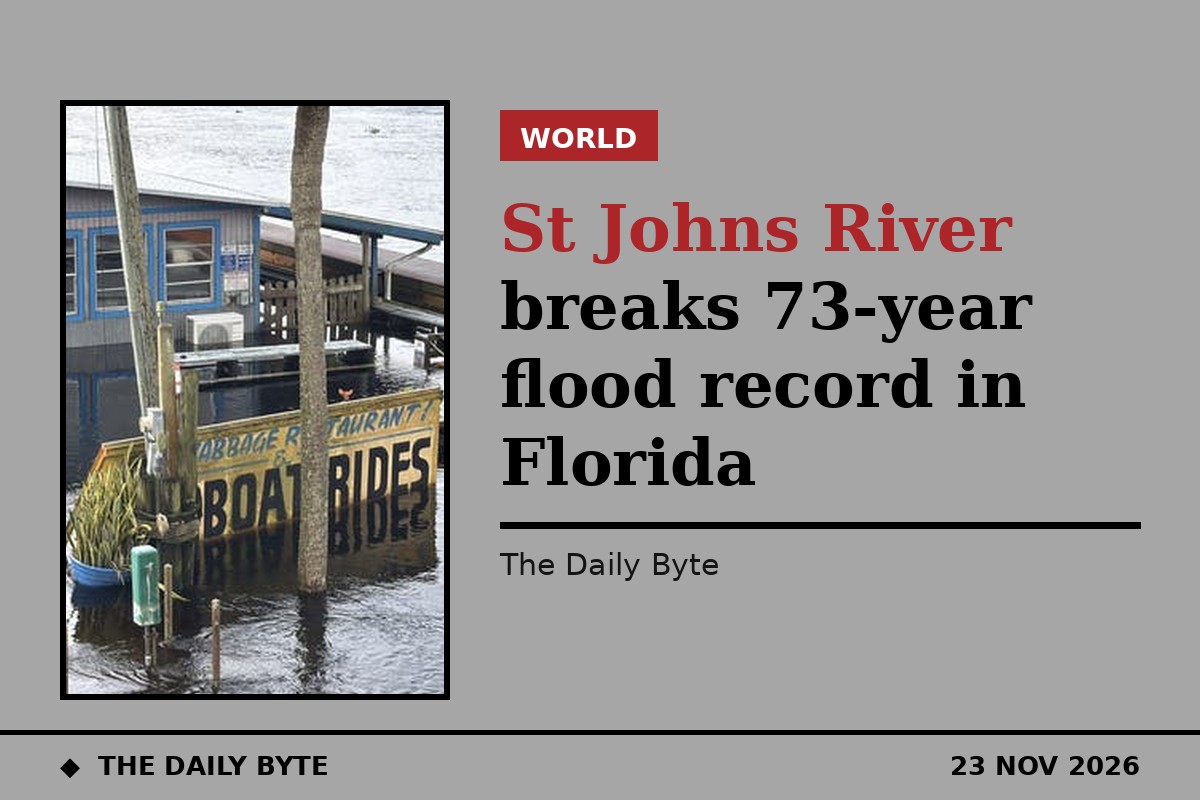
The St. Johns River near Cocoa in Florida has broken a flood record that had stood since October 1953, reaching 18.65 feet late on 22 November 2026 and cresting at a provisional 18.77 feet in the early hours of 21 November. The river is expected to stay in major flood stage through much of Thanksgiving week, with water still rising further downstream towards Sanford, DeLand and Astor.
The record crest follows a slow-moving storm that parked over Florida's Space Coast and Volusia County from 17 to 20 November and dropped more than 24 inches of rain in places, according to the National Weather Service. Melbourne has now had its wettest month since records began in 1937, with 22.59 inches through 19 November — almost 13 inches wetter than its previous wettest November, in 1963.
A river that drains slowly
The St. Johns flows north, so high water moves downstream for days after the rain stops. The gauge above Lake Harney near Geneva was forecast to crest at 13.1 feet at about 1 a.m. on 23 November, also above its record. Near Sanford, the river was at moderate flood stage and was forecast to rise to 8.2 feet by 25 November, reaching major flood stage by Thanksgiving Day. DeLand was forecast to reach 6.1 feet by 27 November.
Volusia County warned residents along the river that the worst may still be ahead for them, even as coastal flooding receded. The Daytona Beach News-Journal reported that the National Weather Service forecast major flooding over the next five days in Astor, with near-record flooding in DeLand, and said flooding impacts could persist well beyond the period of rainfall.
Rescues and the state response
Florida Governor Ron DeSantis activated the National Guard on Thursday, 20 November, after widespread flooding. The state said more than 1,000 personnel, including National Guard, State Guard and emergency management teams, had carried out nearly 200 rescues, deployed 9,000 feet of flood barriers and 20,000 sandbags, and mobilised heavy equipment and pumps to repair roads including I-95.
Brevard County said it had made more than 160 water rescues by Friday night, with the worst flooding concentrated around Cocoa, Rockledge and Merritt Island. Shelters were opened in Cocoa and Melbourne for displaced residents, and Palm Bay ordered mandatory evacuations for residents of Palm Bay Estates. A confirmed tornado occurred in Palm Beach County on Saturday, 21 November, as tornado warnings were issued across South Florida.
What residents are being told
Volusia County urged people living along the St. Johns to secure outdoor belongings, review access routes and make sure they have enough supplies in case rising water makes travel difficult. Officials warned drivers not to drive through flooded streets or around barricades, as water depths and road conditions cannot be judged from a car.
The flooding is the latest in a month of record rain across eastern Florida. Fort Lauderdale, Vero Beach and West Palm Beach have also smashed their record wettest Novembers, and the National Weather Service expects more showers and thunderstorms in southeast Florida on Tuesday and Wednesday, with some of the year's highest tides along the southeast coast from 24 to 26 November.
Frequently asked questions
Which record did the St. Johns River break? The gauge near Cocoa reached 18.65 feet on 22 November 2026, above its previous record from October 1953, and crested at a provisional 18.77 feet on 21 November.
How long will the flooding last? The river is expected to remain in major flood stage through much of Thanksgiving week, with water still rising downstream towards Sanford, DeLand and Astor.
How much rain fell? More than 24 inches fell in places on the Space Coast from 17 to 20 November, and Melbourne recorded 22.59 inches in November through 19 November, its wettest month since 1937.
What help has been mobilised? More than 1,000 state personnel have been deployed, with nearly 200 rescues carried out, and shelters opened in Cocoa and Melbourne.


