Rhysida claims 1.5TB theft from SteelTech
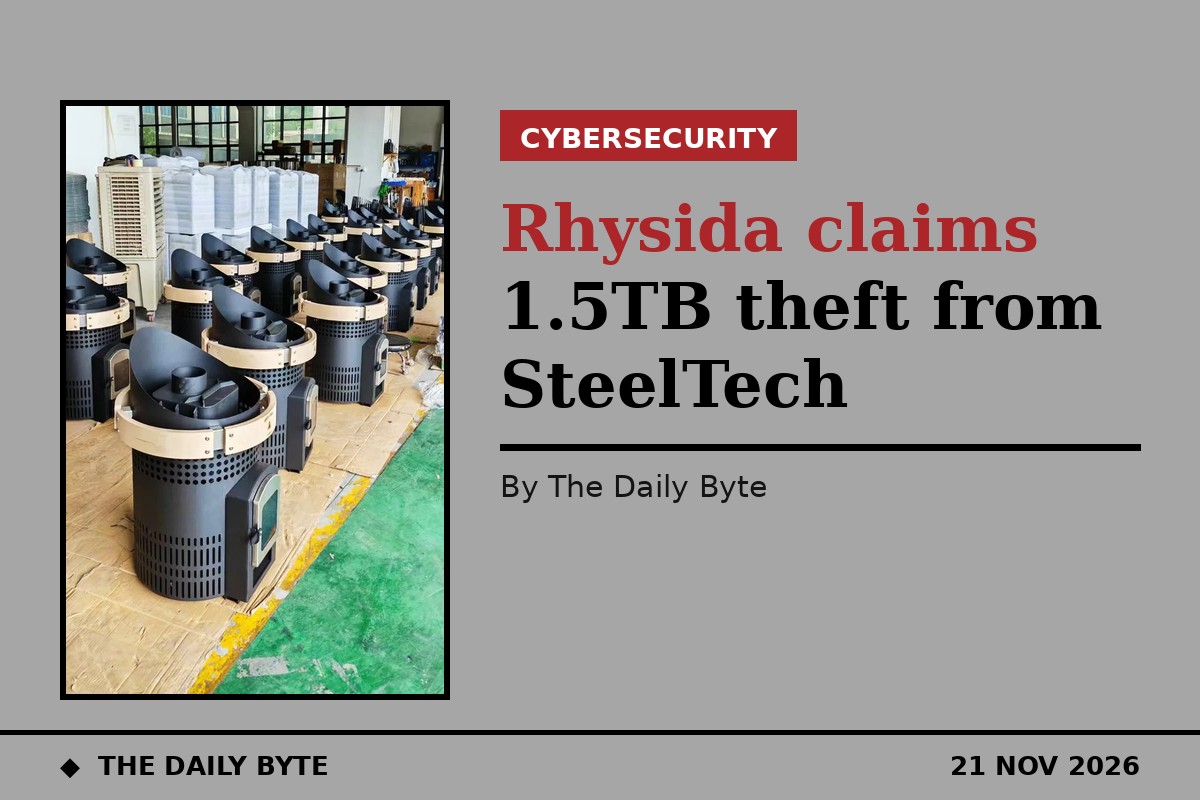
The Rhysida ransomware group has listed SteelTech Inc., a Canadian outdoor wood-furnace manufacturer trading as HeatMaster SS, on its leak site, claiming to have taken 1.37 million files totalling 1.5 terabytes. The listing appeared on 18 November 2026, and threat-intelligence trackers recorded it the same day.
The group claims the company has lost all of its servers. According to the leak-site entry, the haul includes complete Sage 50 accounting books for 2023 to 2027, both management email archives, the domain controller database containing the password hashes of every employee, and the company’s entire scan archive.
The claim has not been independently verified. No confirmation from SteelTech has appeared in the reporting seen, and the listing gives no ransom amount, no description of how the attackers got in, and no statement about whether systems were encrypted. The figures and the inventory of stolen material come from the attackers’ own account, as relayed by threat-intelligence services.
Staff identity data at the centre of the claim
The most sensitive material described in the listing concerns the company’s own workforce. The group claims to hold Social Insurance Numbers, dates of birth, addresses and phone numbers for 183 employees, stored in plain text inside the payroll table, along with bank account details for 55 employees taken from payroll payment files.
The listing is also said to include complete identity sets for underage workers in the Manitoba Youth Jobs programme, including birth certificates, Manitoba Health cards and driver’s licences. A single spreadsheet is said to contain the passwords for 73 corporate services, and a separate archive is said to cover workplace injuries from 2020 to 2026, including named investigations and asbestos correspondence.
SteelTech, based in Winkler, Manitoba, makes outdoor wood furnaces sold under the HeatMaster SS brand. The leak-site text also describes a company under financial strain, with revenue said to have fallen from 26.9 million dollars to 17.3 million dollars and an operating loss of about 3.1 million dollars. That description is part of the group’s own account and has not been independently checked.
A familiar pattern from Rhysida
Rhysida is a ransomware-as-a-service operation that emerged in May 2023. Threat-intelligence profiles describe it breaking into networks through phishing attacks and Cobalt Strike, leaving PDF ransom notes in affected folders and appending the extension “.ryshida” to encrypted files, with payment demanded in Bitcoin.
The group follows the double-extortion model now standard in ransomware: data is copied out before files are encrypted, so the victim is pressed twice, once to restore access and once to stop the stolen data being published. The leak site is the lever for the second demand, and the size of the claimed haul, 1.5 terabytes, is presented as proof that the theft is real.
Manufacturing firms are frequent targets precisely because downtime costs them money directly. The threat-intelligence database recording this incident lists 256 Rhysida victims, and the group’s November listings have also included an engineering consultancy, law firms and a police department.
What staff and the company face now
If the claimed data is genuine, the exposure for SteelTech employees is serious: identity numbers and bank details in plain text are the building blocks of identity theft, and the inclusion of young workers’ documents raises the stakes further. The standard advice after such a claim is to watch bank statements and credit reports, change passwords, above all where they were reused, and treat any contact purporting to come from the company with care.
For the company, the questions are whether it will confirm the incident, whether the data is published, and what regulators and affected staff are told. Until then, the verified facts are narrow: a ransomware group listed a Canadian manufacturer on 18 November and claims a 1.5-terabyte theft. Everything else in the account is, for now, the group’s word alone.


