Sticky Note Password Gave Away Full Network Access
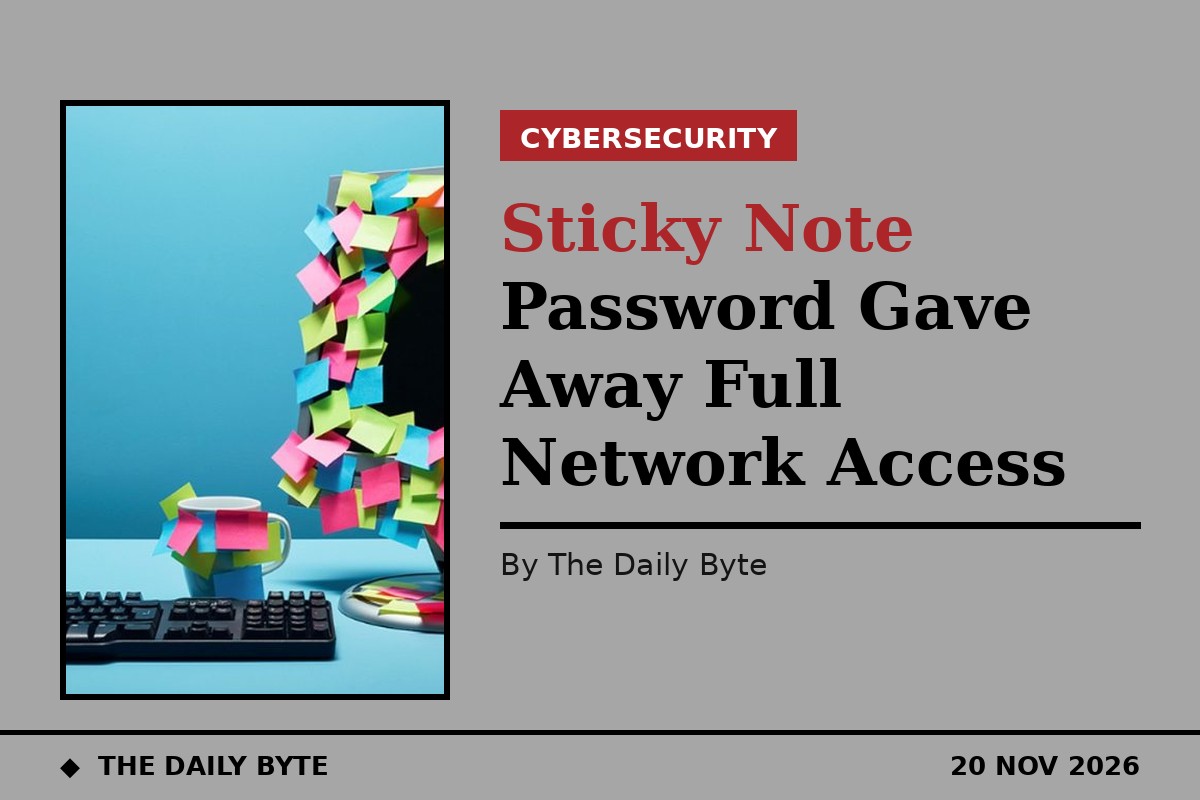
A password written on a sticky note and taped to an employee's computer monitor handed a penetration tester the keys to an entire company network. From that one desk, the tester reached the firm's VPN, its human resources files and its accounting server, all without touching a single technical vulnerability.
The test was carried out by Christian Espinosa, a certified penetration tester with more than 30 years of experience and chief executive of security company Blue Goat Cyber. He described the episode in The Register's PWNED column, which collects real cases of organisations undermining their own security. The client has not been named.
Espinosa spotted the note during a routine walkthrough of the client's office, before he had touched any system. He photographed it and tried the password on the employee's account. It worked. He then tried the same password on the company's VPN, which the employee apparently helped to maintain. That worked too.
From one desk to the whole network
Once connected to the VPN, Espinosa had full access to the company network and all of its shared drives. In a human resources folder he found personal information about employees, including home addresses, driver's licences and scanned W-4 tax forms. There were also spreadsheets listing everyone's salaries.
The same account could open a document listing internal server names and the people responsible for each one, useful material for anyone planning a phishing campaign. Another document gave instructions for logging into the accounting server. On that server, Espinosa found a folder holding vendor banking information, invoices and payment records.
"At that point, a password I had read from a sticky note during a walk-through had taken me from one desk to information that could have been used for payroll fraud, identity theft, or vendor-payment fraud," Espinosa said. He added that an attacker could have done the same thing without ever being a guest in the building: "Someone could have photographed that sticky note, walked out, connected to the VPN later that night, and started going through employee and financial records from somewhere else."
The fix, and the lesson
After seeing how far the access reached, Espinosa presented his findings to the client. The company disabled the compromised account straight away and began reviewing VPN access logs to check whether anyone else had used it. Staff searched the office for any other passwords left out in the open, and the company tightened permissions on the human resources and accounting shares so that only people who genuinely needed the data could reach it.
The episode is a reminder that physical security is still part of cybersecurity. Espinosa's rule is to walk the physical area before touching a system, because attackers do the same when scoping a target. Writing a password down and keeping it in a physically secure notebook can be acceptable; taping it to the monitor is not. As he put it, firms spend money on firewalls while "a sticky note is placed 3 feet from the front door".
The deeper lesson is about limiting access. One employee's account should never have been able to open salary spreadsheets, server inventories and vendor banking details. Passwords get exposed, whether on a note, in a phishing email or in a breach, so the damage any single account can do needs to be contained in advance.


