Stormont passes holiday meal law for 90,000 children
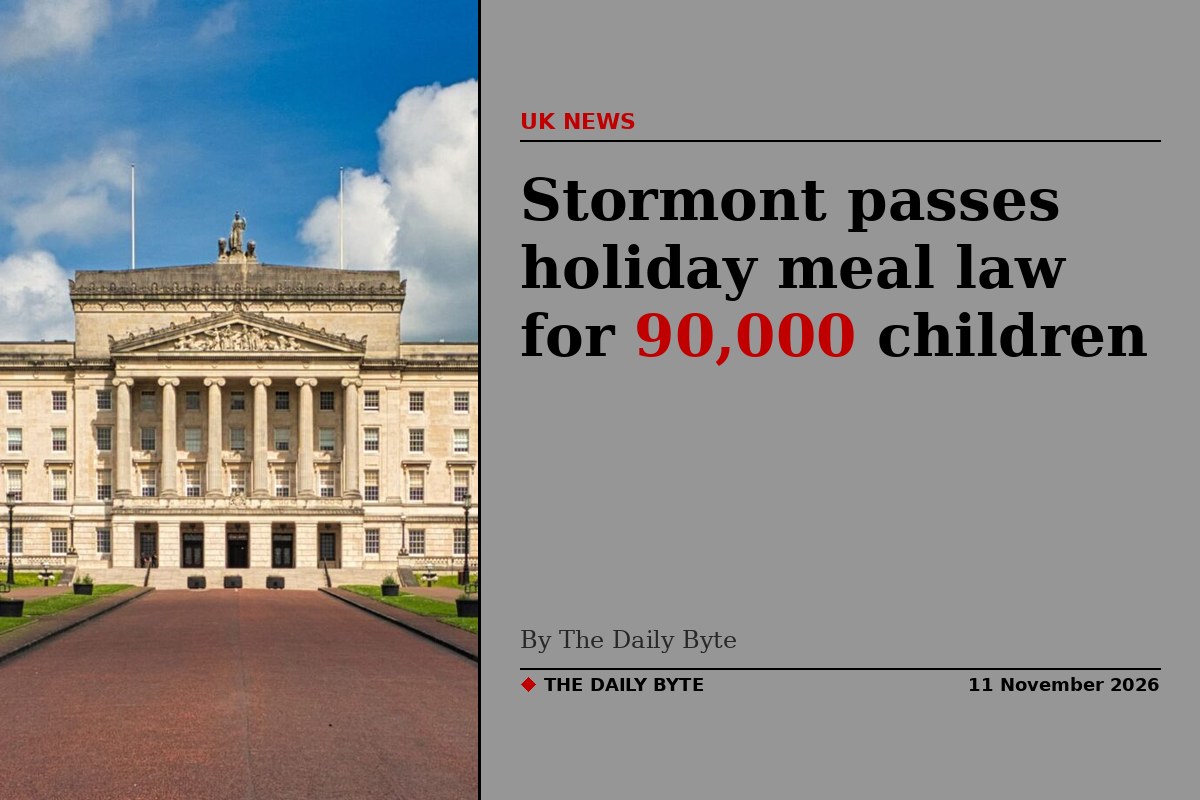
Northern Ireland's Assembly has passed a law to help lower-income families feed their children during the school holidays, closing a gap that had left the region as the only part of the United Kingdom without state-funded holiday food support.
The Education (Holiday Meal Payments) Bill was approved by 49 votes to 24 on Tuesday night, after more than four hours of debate at its final stage in the chamber. The new law creates a payment for families whose children receive free school meals, to help cover food costs outside term time, including the summer, Christmas, Halloween and half-term breaks.
The Bill was brought forward by Sinn Fein assembly member Danny Baker, who told the chamber that poverty was not a green and orange issue as he urged unionist parties to support the legislation. It was welcomed by parents and charities who had campaigned for the change.
Who will benefit from the new law
The legislation requires that the 90,000 children in Northern Ireland in receipt of free school meals receive financial help during the holidays. Children qualify for free school meals if their family's household income is below 15,390 pounds a year.
Northern Ireland became the only UK region without government-funded holiday food support after the Department of Education ended its 27-pound-per-fortnight holiday meal grant in 2023. Baker's legislation was introduced in the Northern Ireland Assembly in March and has been scrutinised by assembly members on a number of occasions over the past nine months.
Funding row as minister warns of cuts
The passage of the Bill was not without dispute. Education Minister Paul Givan, of the Democratic Unionist Party, opposed it and described it as fiscally reckless, warning that it would cost between 20 million and 30 million pounds a year and could lead to cuts elsewhere within his department.
Givan said the Bill's passing would shred whatever residue of financial credibility the Assembly retains, and that its supporters had not made clear what services he should cut in order to fund it. The Department of Education has previously warned that it is facing a funding gap of more than 800 million pounds in 2026-27.
Supporters of the Bill argued that the cost was relatively small when set against the hardship faced by families, and that the Assembly had a duty to act for children who go without meals when schools close. The available reporting does not yet establish when payments would begin or what funding arrangements would apply, and those details will fall to the Department of Education to settle as the law is put into practice.
What happens next
With the Bill now passed, attention turns to how the Department of Education will design and deliver the payments, and how the cost will be met within its budget. For the families of the 90,000 children on free school meals, the vote restores a form of support that has been absent since 2023, and brings Northern Ireland back into line with the rest of the United Kingdom.