Stroke Risk Rising in Under-55s, Signs to Know
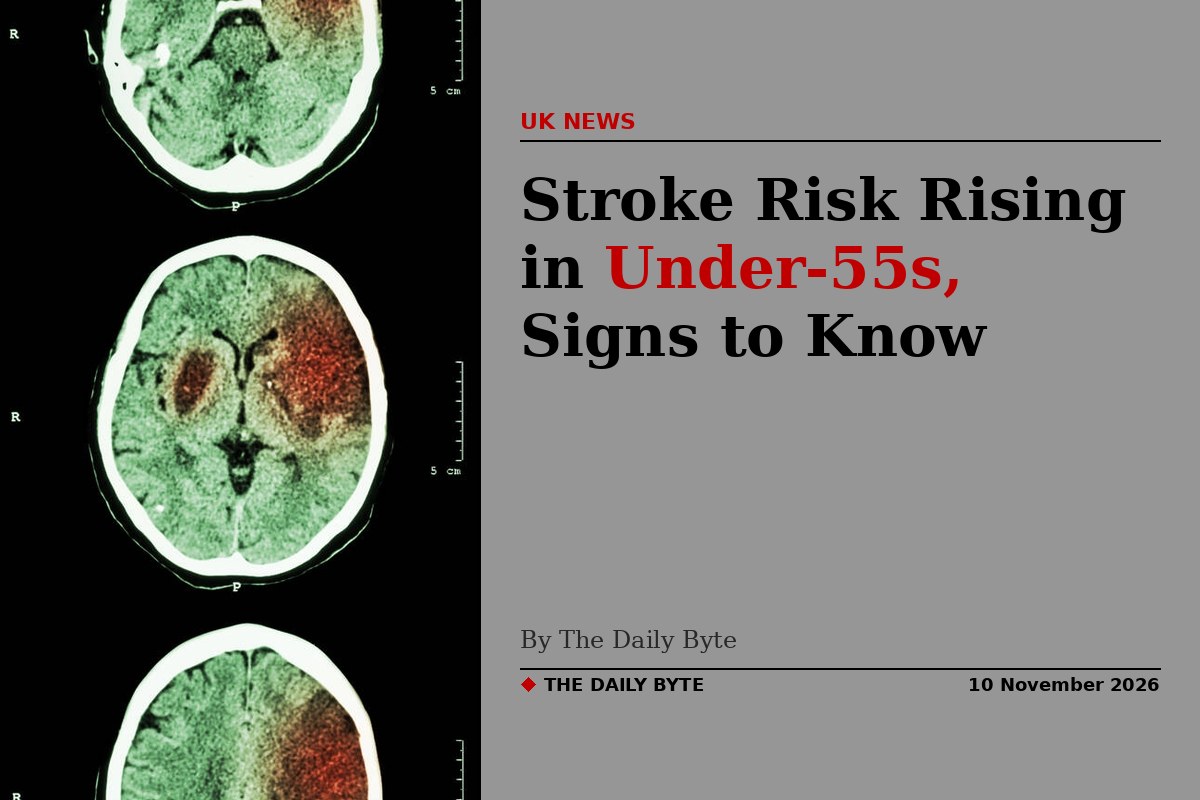
Stroke is often seen as a condition that only affects older people, but rates are rising in adults under 55 even as they fall in older age groups, according to research summarised by The Conversation on 8 November 2026. In England, stroke incidence among 35- to 54-year-olds rose by about 2 per cent a year between 2001 and 2010, and in Oxfordshire alone rates in under-55s were about 90 per cent higher in 2010–2018 than in 1981–1986.
A study of linked records in England published in PLOS Medicine found the rise continued through and after the Covid-19 pandemic: stroke incidence in under-55s rose by 7 per cent during the pandemic compared with before it, and by a further 4 per cent afterwards, with the increase most marked in Black and Asian groups. An accompanying editorial in the journal notes that stroke risk has approximately doubled among adults younger than 55 in the UK over the past decade.
What is driving the rise?
The rise appears to be driven largely by things that can be changed. A large international study identified ten modifiable risk factors that accounted for around 92 per cent of strokes in people under 55, including high blood pressure, physical inactivity, high cholesterol, poor diet, obesity, smoking, heart problems, diabetes, alcohol and stress.
High blood pressure alone accounted for almost half of strokes in people aged 55 and under, while lack of regular exercise accounted for more than a third. A UK study of 1,765 people aged 18 to 49 who were hospitalised for a stroke found 42 per cent had high blood pressure, 24 per cent had high cholesterol, 23 per cent smoked and 14 per cent had diabetes. Under-55s with diabetes were about 3.5 times as likely to suffer a stroke or mini-stroke, and those with high blood pressure about 2.5 times as likely.
But these factors do not explain everything: around half of strokes in young people caused by a blood clot had no clear cause, and researchers are now looking at other possible factors, including air pollution, autoimmune conditions, illicit drug use, stress and overworking.
The signs young people miss
Strokes in younger adults can also be easier to miss. A large US analysis found that people aged 18 to 44 were the age group most likely to be sent home from emergency departments with a missed stroke, often after complaining of dizziness or headache. A Stroke Association survey found a quarter of stroke survivors aged 60 and under said they were initially misdiagnosed.
The warning signs can also look different in younger people. Strokes at the back of the brain, which affect balance and vision rather than the face and arms, are more common in young adults, so symptoms can appear as problems with balance or eyesight, a headache, neck pain or vertigo. The familiar signs still matter: face drooping on one side, arms that cannot both be lifted, and speech that is slurred or confused. Anyone who notices these signs should call 999 immediately, even if the symptoms stop after a short time.
Speed matters: clot-busting treatment generally has to be given within 4.5 hours of symptoms starting, and the sooner it is given, the better the outcome. The best protection is to know your blood pressure, get checked for diabetes and high cholesterol, not smoke, keep alcohol to no more than 14 units a week, eat less salt and more fibre, and aim for at least 150 minutes of moderate activity a week. Read the full explainer on Evening Report and the PLOS Medicine study.
Frequently asked questions
What are the signs of stroke in younger adults? As well as face drooping, arm weakness and slurred speech, younger people may have balance or eyesight problems, headache, neck pain or vertigo.
How quickly must stroke treatment start? Clot-busting treatment generally has to be given within 4.5 hours of symptoms starting, so call 999 immediately.