Khartoum drone strikes kill four, damage UN building
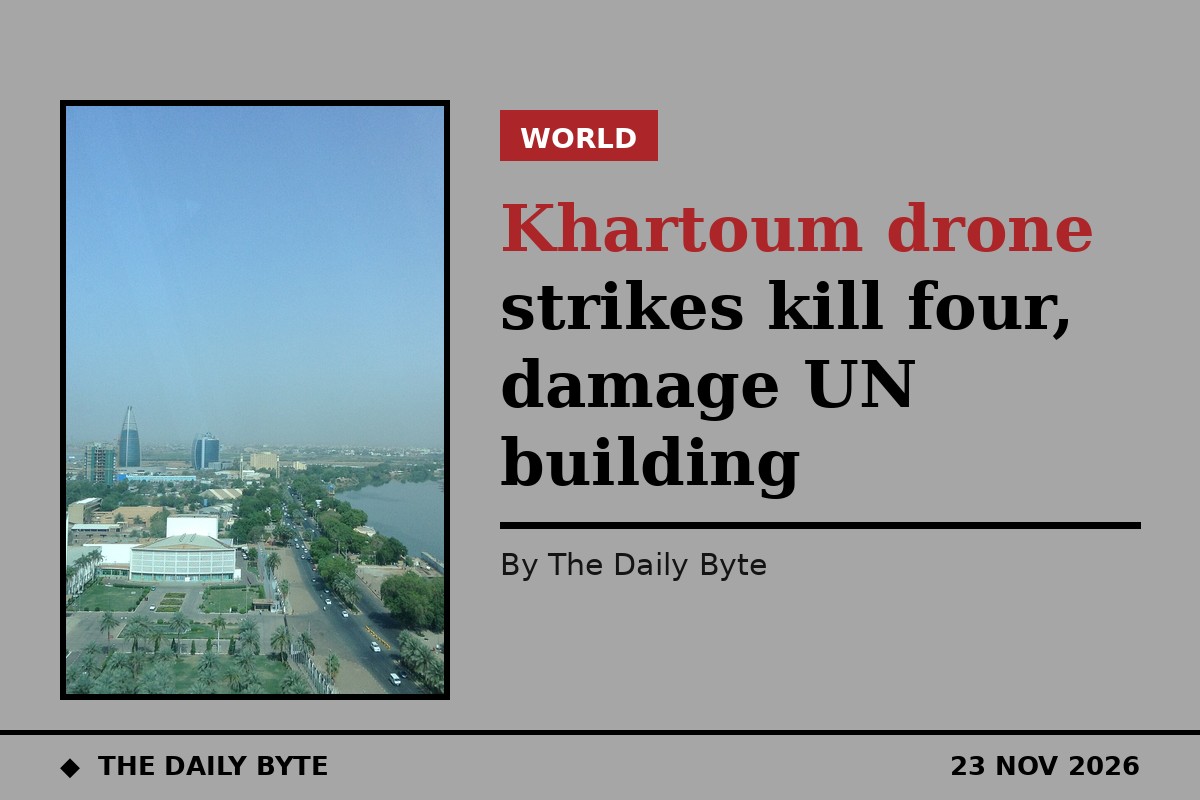
The United Nations and the United States condemned drone strikes on Sudan's capital, Khartoum, on Monday, 23 November, after attacks in the early hours of the previous day killed at least four civilians, injured at least nine others and damaged a United Nations building while staff were inside.
The strikes hit residential areas in Khartoum, neighbouring Omdurman and Jebel Aulia, about 45 kilometres south of the capital, between about 2am and 4.30am local time on Sunday, 22 November. Explosions were reported around Khartoum International Airport as army air defences fired at incoming drones.
Three members of one family were killed when a drone struck their home in northern Omdurman, according to the Sudan Tribune, while a 10-year-old child was killed in a separate strike in Jebel Aulia. Local reports cited by Al Jazeera put the number of injured at nine.
UN building hit with staff inside
The United Nations said one of its premises in a residential neighbourhood of Khartoum was damaged while staff were inside. Denise Brown, the UN Resident and Humanitarian Coordinator in Sudan, said in a statement on Sunday that the building had been hit in a civilian area.
"Drones targeted Khartoum early this morning. A UN premises, with UN colleagues in the building, was damaged. This occurred in a civilian neighborhood," Brown said. "It is unacceptable that we are put at such risk."
Brown added that humanitarian personnel and assets are protected under international humanitarian law, and that drone strikes across the country were causing civilian deaths and untold suffering.
On Monday, Massad Boulos, the US Senior Advisor for Arab and African Affairs, amplified a statement by the UN Office for the Coordination of Humanitarian Affairs in Sudan. "Nearly every day, strikes like these, using foreign-supplied drones, are killing civilians across Sudan and impeding humanitarian work," Brown said in her statement.
Who is blamed, and the Ethiopia claim
The UN statement attributed the attacks to the Rapid Support Forces, saying they were reportedly launched by the group, which has been fighting the Sudanese army since April 2023. Responsibility for the strikes has not been independently established.
Separately, a Sudanese army source told the AFP news agency that the drones had been launched from Bahir Dar airport in Ethiopia's Amhara region. That allegation has not been independently verified, and Ethiopia has previously denied claims that its territory is being used to facilitate Rapid Support Forces operations.
The claim comes amid rising diplomatic tension between Khartoum and Addis Ababa. In early November, Sudan's army-aligned Transitional Sovereignty Council said it had documented 70 drone attacks involving 187 one-way attack drones launched from Ethiopian territory between mid-February and late October 2026, causing 484 civilian casualties and killing 176 Sudanese soldiers. Sudan has also filed complaints against Ethiopia with the UN Security Council and the African Union's Peace and Security Council.
Drones now the deadliest threat to civilians
The Khartoum strikes underline a wider pattern documented by the UN Human Rights Office. In a report published on 17 November, the office said at least 2,230 civilians were killed in Sudan between January and the end of October 2026, and that more than 1,630 of them died in drone strikes.
The report found that 1,390 civilians were killed in the first six months of the year, with more than 80 per cent of those deaths caused by drones. A further 840 were killed in the four months that followed, of whom close to 520 died in drone attacks. The office said the figures covered only the deaths it could confirm, and that the real toll was likely to be higher.
In the first half of the year, the office documented drone strikes on 39 markets, 20 civilian vehicles, 17 fuel tankers and depots, and 16 health facilities. It also recorded 29 drone strikes between 20 October and 4 November, attributed to the Rapid Support Forces, that hit electricity facilities and fuel stations in 11 states.
UN High Commissioner for Human Rights Volker Turk said the findings provided more evidence of the ceaselessly unbearable civilian suffering of the war. The Human Rights Office warned that attacks on civilians and civilian infrastructure may amount to serious violations of the laws of war and, in some circumstances, war crimes.
A war in its fourth year
The conflict between the Sudanese Armed Forces and the Rapid Support Forces began in April 2023 and has spread far beyond the front lines, with drones extending attacks into areas previously considered safer. The return of civilian life to parts of Khartoum after the army retook the capital has not brought lasting security.
The International Criminal Court has separately warned that reports of mass killings, rapes and starvation from El-Fasher, the city in Darfur recently taken by the Rapid Support Forces, may constitute war crimes and crimes against humanity.


