Sudan Left Off Chemical Weapons Watchdog Council as Army Faces Abuse Claims
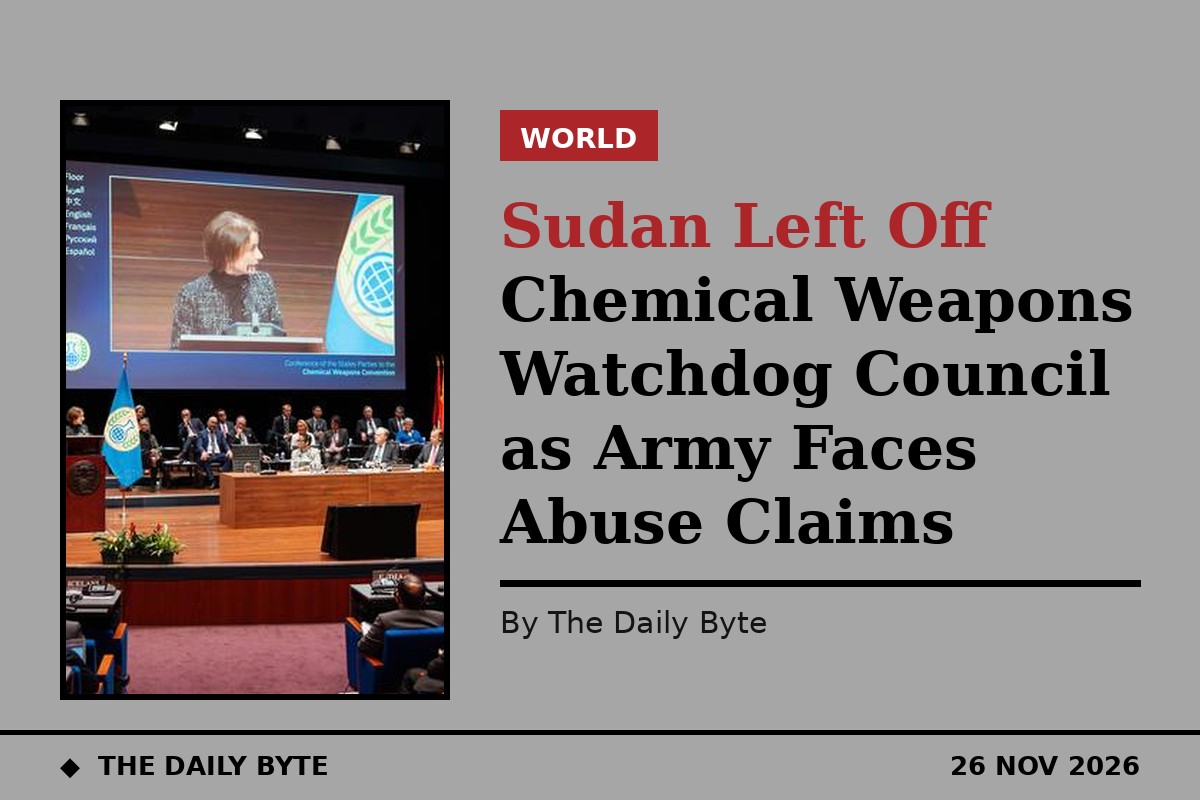
Sudan has been left off the African slate elected to the Executive Council of the Organisation for the Prohibition of Chemical Weapons (OPCW), a diplomatic setback for the army-aligned government in Port Sudan as the watchdog examines claims that its forces used chemical weapons in the civil war.
The Conference of the States Parties approved the new African line-up on Tuesday, 25 November, during its 31st annual conference in The Hague, which runs from 23 to 27 November. Morocco, Angola, Cameroon, Tanzania and Tunisia will represent Africa on the council from 2027, with Tunisia taking the seat Sudan held.
Sudan will therefore leave the 41-member Executive Council when its current term ends in May 2027. The council oversees compliance with the Chemical Weapons Convention and addresses suspected violations, including allegations involving the use of prohibited chemical agents.
OPCW Director-General Sabrina Dallafior confirmed on Tuesday that Sudan's case remains before the Executive Council, with several member states requesting formal clarifications under Article IX of the Chemical Weapons Convention. She said it was disappointing that, despite the concerns raised in the OPCW and media reporting of the allegations, no detailed information had yet been shared with the secretariat.
Ms Dallafior said the organisation had offered Sudan technical assistance for its national investigation and urged countries holding relevant evidence to share it with the organisation, including through confidential channels. The United Kingdom has renewed its call for a credible investigation into the claims.
The exclusion comes amid mounting international pressure on the government led by General Abdel Fattah al-Burhan. In 2025 the United States formally determined that the Sudanese Armed Forces used chemical weapons in 2024, in violation of international law, and imposed sanctions on the army-aligned administration. Washington imposed further sanctions in 2026.
Separate investigations by international media outlets have pointed to the alleged development, testing and stockpiling of chemical weapons by the Sudanese army, including evidence suggesting the weaponisation of chlorine gas. The Sudanese Armed Forces have denied the accusations, and Sudan's interim national investigation, circulated at an OPCW session in July, said it found no evidence substantiating the allegations in the locations examined.
Sudan's rival RSF-aligned Peace Government welcomed the decision and called for an independent inquiry into the chemical weapons claims.
The loss of the seat is another diplomatic blow for the Port Sudan authorities as they face international demands for transparency over their conduct in a war that erupted in April 2023 between the army and the paramilitary Rapid Support Forces, killing tens of thousands of people and displacing millions.


