Sudan lifts ban on Kenyan tea imports
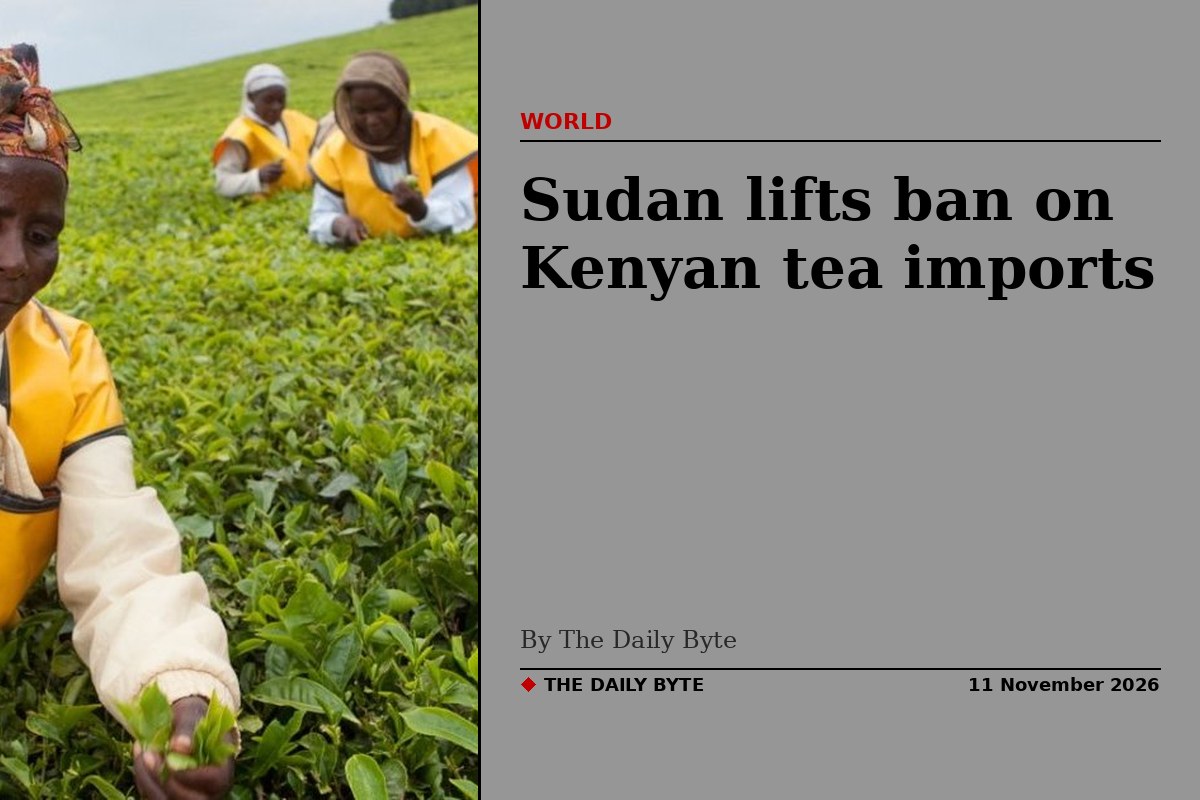
Sudan has formally lifted its ban on Kenyan tea imports, reopening a market worth about Sh9 billion a year to Kenyan exporters after a trade freeze that lasted 20 months.
The decision was set out in Ministerial Order No. 25 of 2026, signed on Sunday, 8 November, by Sudan's Minister of Industry and Trade, Mahasin Ali Yaqoub. The order states plainly: "The ban on tea imports from Kenya is lifted." It directs all relevant authorities to implement the decision, which took effect immediately on signing, according to The Eastleigh Voice.
The order followed a letter from Sudan's Sovereignty Council dated 2 November approving the lifting of the ban, and a Cabinet communication issued on 5 November. It also followed months of diplomatic engagement between Nairobi and Khartoum, including talks between senior security officials, as Kenya pressed for the restrictions to be removed.
Sudan imposed the ban in March 2025, when diplomatic relations between the two countries had deteriorated sharply. The trigger was Kenya hosting meetings involving the Rapid Support Forces (RSF), the paramilitary group fighting the Sudanese Armed Forces in Sudan's civil war. In February 2025, the RSF and allied groups signed a charter in Nairobi outlining plans for a parallel government in Sudan. Khartoum accused Nairobi of interfering in its internal affairs and undermining its sovereignty, while Kenya maintained that hosting the meetings was aimed at supporting dialogue.
A market worth Sh9 billion a year
Before the restrictions, Sudan was among Kenya's leading tea export destinations, buying about 35 million kilogrammes of Kenyan tea a year, valued at roughly $70 million, or Sh9 billion. The ban therefore cut exporters off from one of their most important traditional markets, and the disruption was felt well beyond the tea trade itself.
When the restrictions took effect, tea consignments worth more than $24 million, or Sh3.1 billion, were either in transit to Sudan or awaiting shipment. At the Port of Mombasa, 207 forty-foot containers carrying tea were left stranded as traders struggled to find alternative arrangements for their cargo.
The East Africa Tea Trade Association has said that more than 3.44 million kilogrammes of tea, valued at over $10.3 million, remained in warehouses in Mombasa. The tea had been specially blended and packaged for the Sudanese market, which made it difficult for exporters to redirect it elsewhere. The association's managing director, George Omuga, has previously said that teas prepared for one market cannot easily be sent to another, and that the resulting losses depressed auction prices and reduced the earnings of Kenyan tea farmers, People Daily reported.
Relief for farmers and exporters
The lifting of the ban is expected to bring relief across the tea value chain, from smallholder farmers and processors to transporters and exporters. Kenya's tea industry depends heavily on international markets to sustain demand, support farming communities and generate foreign exchange, so restoring access to Sudan removes a trade barrier that has weighed on the sector since last year.
The decision also followed sustained appeals from within Kenya's tea industry. In August 2026, Wiper Party leader Kalonzo Musyoka visited the Sudanese Embassy in Nairobi and presented an appeal for the resumption of tea imports, warning that the ban was hurting farmers and exporters. In October, Sudan's Ambassador to Kenya, Kamal Jabara Gubara, said the process of reviewing the restrictions had reached its final stages, crediting sustained requests and appeals from Kenyan farmers, traders and exporters.
What happens next
With the formal authorisation now in place, Kenyan exporters can begin re-engaging Sudanese buyers and working towards restoring supplies to a market that has historically been an important destination for Kenyan tea. The restrictions had covered several Kenyan products, including food and pharmaceuticals, but the latest order specifically lifts the ban on tea imports.
How quickly trade recovers will depend on how fast traders reconnect with their Sudanese counterparts and normalise shipments after the prolonged interruption. Exporters will also need to rebuild commercial relationships that were disrupted when the ban took effect, and the volume of orders placed by Sudanese buyers will determine how far the market returns to its previous levels.


