Sudan lifts Kenya tea import ban after 20 months
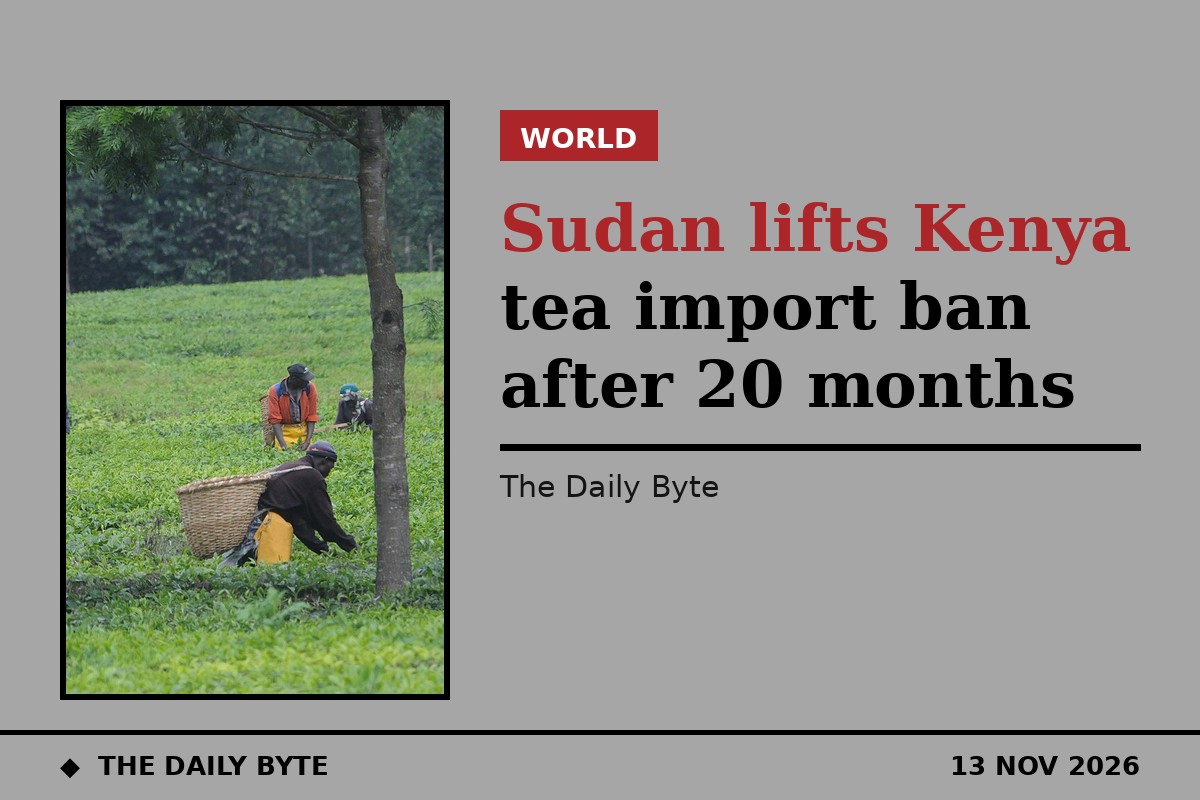
Sudan has formally lifted its ban on Kenyan tea imports, ending a 20-month trade restriction that cut exporters off from one of their most important markets and left millions of kilogrammes of tea stranded in warehouses in Mombasa.
The decision was set out in Ministerial Order No. 25 of 2026, signed by Sudan's Minister of Industry and Trade, Mahasin Ali Yaqoub, on Sunday 8 November. The order, titled Lifting of the Ban on Tea Imports from Kenya, took immediate effect and directs all relevant Sudanese authorities to implement the decision.
Kenya's President William Ruto welcomed the move on Wednesday 11 November, saying it followed his engagement with Sudanese Prime Minister Kamil Idris on the sidelines of the Common Market for Eastern and Southern Africa (COMESA) summit in Harare, Zimbabwe. Ruto said the reopening would create renewed opportunities for Kenyan exporters while supporting farmers, processors and other businesses that depend on the tea industry.
"This progress demonstrates what dialogue and constructive diplomacy can achieve. We look forward to strengthening our bilateral relations, expanding trade and working together for peace, stability and shared prosperity in our region," Ruto said.
How the dispute began
Sudan imposed the restrictions in March 2025, suspending imports of products originating from Kenya through its ports, airports and land crossings. The dispute followed Nairobi's decision to host meetings involving Sudan's Rapid Support Forces (RSF), the paramilitary group fighting the Sudanese Armed Forces in the country's civil war.
In February 2025, RSF leader Mohamed Hamdan Dagalo, known as Hemedti, and allied political groups attended meetings in Nairobi, where they signed a political charter intended to establish a parallel administration in Sudan. Khartoum viewed Kenya's hosting of the meetings as interference in its internal affairs, while Kenya maintained that it was providing a platform for political dialogue.
The lifting of the ban followed a sequence of approvals inside Sudan. The Sovereignty Council approved the move in a letter dated 2 November 2026, and a Cabinet communication on the same matter followed on 5 November, three days before the ministerial order was signed.
Millions of kilogrammes stranded
The restriction hit an export trade that had already been shrinking. Official trade figures show Kenya exported 15.9 million kilogrammes of tea to Sudan in 2023, valued at US$29.6 million. The volume fell to 7.61 million kilogrammes in 2024, worth US$11.33 million, before declining further to 6.8 million kilogrammes in 2025.
Before the ban, Sudan had been buying about 35 million kilogrammes of Kenyan tea a year, generating an estimated US$70 million, or about nine billion Kenyan shillings, in export earnings. The disruption left exporters holding substantial stocks. By August 2026, more than 3.44 million kilogrammes of tea valued at over US$10.3 million were still sitting in Mombasa warehouses, according to industry accounts, and 207 forty-foot containers carrying tea were left stranded at the Port of Mombasa.
Some consignments had been specially blended and packaged for Sudanese buyers, making it difficult to find alternative markets, and particular grades, including BP1, also faced weaker demand from other destinations.
What happens next for farmers
Kenya's tea industry relies heavily on export markets, with tea sold through established trading channels and the Mombasa auction serving as a major price-discovery and marketing platform. Production is split between large corporate plantations, which account for about 40 per cent, and smallholder farmers working through the Kenya Tea Development Agency, who account for about 60 per cent.
Restored demand from Sudan could improve the market for traders dealing in grades traditionally purchased by Sudanese importers, and stronger export orders may support demand from factories and the smallholder farmers who supply them. However, farmers should not expect an immediate increase in payments simply because the restriction has been lifted. The impact will depend on actual orders, auction demand, export prices and how quickly previous commercial relationships are rebuilt.
The order covers tea only. It should not be interpreted as confirmation that every Kenyan product previously affected by Sudan's broader import suspension has automatically regained market access, and it does not specify how much tea Sudanese buyers intend to purchase or when the first new consignments will arrive. For Kenya's exporters, the immediate task is to re-establish supply arrangements, negotiate new orders and coordinate shipments with Sudanese importers.


