Sudan RSF Accepts US-Arab Humanitarian Ceasefire Plan
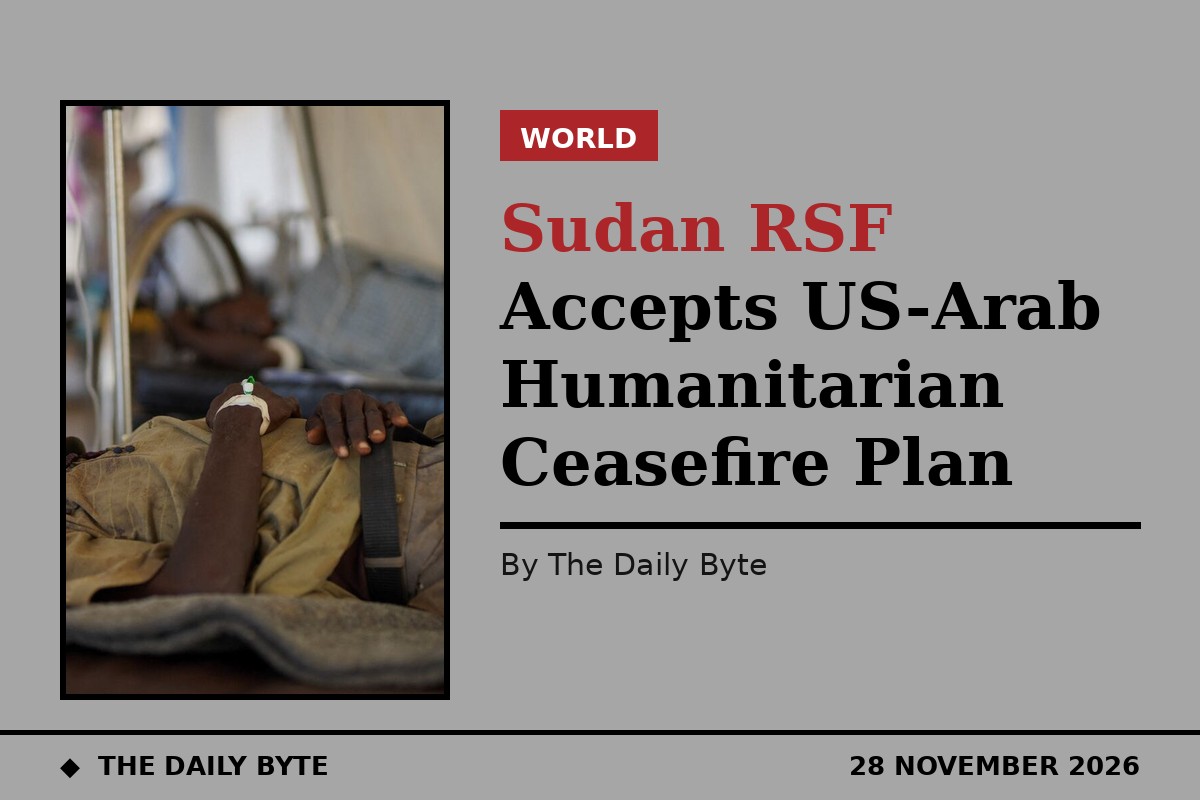
Sudan’s paramilitary Rapid Support Forces (RSF) have accepted a proposal from the United States and Arab powers for a humanitarian ceasefire, in the first sign of movement on a US-led truce plan for the country’s devastating civil war.
The RSF announced its acceptance on Thursday, 26 November, saying it was open to talks on a halt to hostilities and the principles that should guide Sudan’s political process. “We also look forward to executing the agreement and promptly beginning discussions regarding the terms for a cessation of hostilities and the core principles that will guide Sudan’s political process,” the group said in its statement.
The announcement drew no immediate response from the Sudanese army. Earlier in the week, the army-led Security and Defense Council met but did not give a definitive answer to the proposal, despite some key leaders and allies within the army expressing disapproval, according to reports.
Army Wants Full RSF Withdrawal First
A military representative from Sudan told The Associated Press that the army is supportive of the proposal but will only agree to a ceasefire if the RSF withdraws completely from civilian zones and relinquishes its weapons, as stipulated in earlier peace agreements. The official requested anonymity to discuss the situation.
Massad Boulos, a US adviser focusing on African affairs, said efforts were under way with both the Sudanese army and the RSF to establish a humanitarian truce, with an announcement potentially forthcoming “soon”.
“We have been working on this for almost ten days with both parties, aiming to finalize the specifics,” Boulos told AP in an interview on Monday. He said the US-led initiative would begin with a three-month humanitarian ceasefire, followed by a nine-month political process.
In September, the United States, Saudi Arabia, the United Arab Emirates and Egypt called for a three-month humanitarian truce in Sudan to be followed by a permanent ceasefire. The United States continues to engage directly with both parties, according to a US State Department spokesperson, who has urged both sides to respond positively to the US-led effort because of the urgent need to de-escalate the violence and end the suffering of the Sudanese people.
Acceptance Follows Fall of El Fasher
The RSF’s announcement follows the group’s capture of El Fasher, a famine-stricken city that had endured a blockade for more than 18 months and was the last military bastion of Sudan in the western Darfur region. The RSF took control of the city in late October, consolidating its grip on the vast western region of Darfur.
Both the RSF and the Sudanese army have agreed to various ceasefire proposals during their two-and-a-half-year-old conflict, though none has been successfully implemented.
Witnesses have reported that the RSF killed and abducted civilians during and after the seizure of El Fasher, including summary executions, raising international alarm. The United Nations human rights office estimated last week that hundreds of civilians and unarmed combatants may have been executed during the RSF’s takeover, an act regarded as a war crime.
Doctors Without Borders said eyewitnesses reported that about 500 civilians and soldiers from the Sudanese Armed Forces and affiliated groups attempted to escape on 26 October, but the majority were either killed or captured. The RSF leadership has said it is investigating misconduct by its personnel and that several individuals have been apprehended.
A War With No End in Sight
The conflict between the Sudanese army and the RSF began in April 2023, when the two forces, who were previously partners in power, clashed over integration plans for their forces.
According to the World Health Organization, the fighting has killed at least 40,000 people and displaced about 12 million, although aid agencies say the actual death toll could be significantly higher. More than 24 million people are facing severe food shortages, according to the World Food Program.
Humanitarian agencies have consistently described Sudan as one of the most severe displacement crises in the world. El Fasher, the capital of North Darfur, is among two regions facing famine, according to the Integrated Food Security Phase Classification, a global hunger monitoring body.


