Sweden Watchdog: Banks Resilient but AI Risks Grow
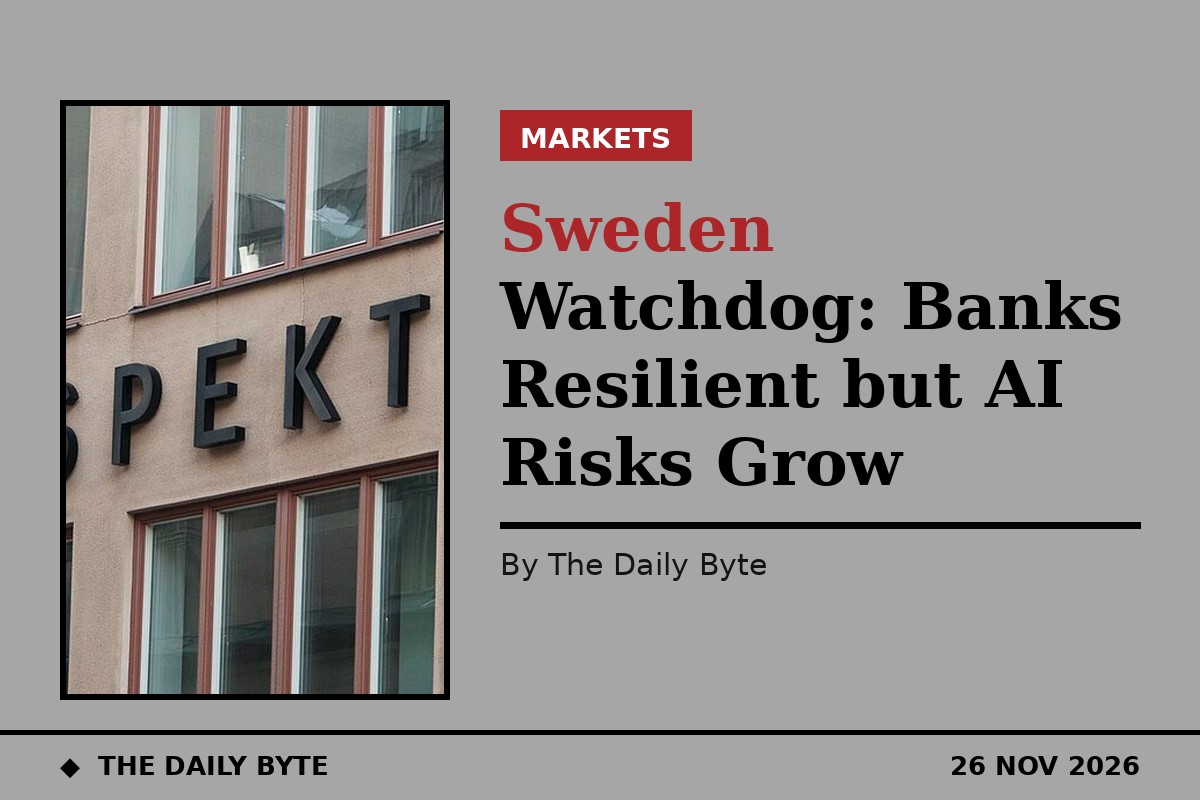
Sweden's financial watchdog says the country's financial system is stable and resilient, but has warned that rapid advances in artificial intelligence, geopolitical uncertainty and the coming threat of quantum computers could test that resilience.
Finansinspektionen, the Swedish Financial Supervisory Authority, published its biannual stability assessment on Tuesday 24 November. Its headline verdict was reassuring: the Swedish financial system is stable, has good resilience, and the financial sector's preparedness for crisis and war continues to strengthen.
The warning sits underneath that verdict. Sweden's financial system is heavily affected by developments abroad, the regulator said, and the rapid development of AI, the uncertain geopolitical situation and weak public finances in some major economies have increased the likelihood of shocks in the global financial system.
AI brings new vulnerabilities
The regulator said AI is expected to raise productivity, but it also creates new vulnerabilities for the financial sector. The Swedish financial system is closely interconnected and highly digitised, so a disruption at a single financial firm or a critical supplier can spread to other parts of the system.
Technological change is adding to operational risks in general, and to cyber risks in particular, the assessment said. That requires strong operational resilience among financial firms, the regulator added.
It also flagged an emerging risk further out: advanced quantum computers could eventually make current encryption methods vulnerable. Financial firms need to ensure a gradual and structured transition to post-quantum cryptography, Finansinspektionen said.
Essential financial services must keep running even in times of heightened preparedness and war, the regulator said. During 2026 the structure for public-private cooperation in the financial sector has been further developed, with a focus on understanding and managing the sector's dependence on critical societal infrastructure and on strengthening defences against antagonistic threats.
Property debt is the weak spot
On the economic side, the regulator pointed to high asset prices, driven in part by optimism about AI, alongside weak public finances in some major economies. A large market correction, particularly in the form of rising interest rates and increased volatility in global interest rate markets, could spill over into Sweden.
Geopolitical uncertainty could also cause supply disruptions that push up inflation and interest rates while slowing global growth. Such a scenario would put renewed pressure on commercial real estate firms carrying high debt, short interest rate fixation periods and high vacancy rates, which could in turn lead to higher credit losses in the Swedish banking sector.
Against those risks, the regulator said the major Swedish banks hold significant capital buffers, good profitability and a good liquidity position, making them resilient to increased credit losses and shocks in global financial markets. Sweden also has strong public finances, it added.
The assessment comes days before Sweden's central bank publishes its own verdict. The Riksbank's Financial Stability Report 2026:2, originally scheduled for 26 November, will now be published on Monday 30 November, according to the bank's calendar.


