Syria Decides to Join Makkah Defence Pact, AP Reports
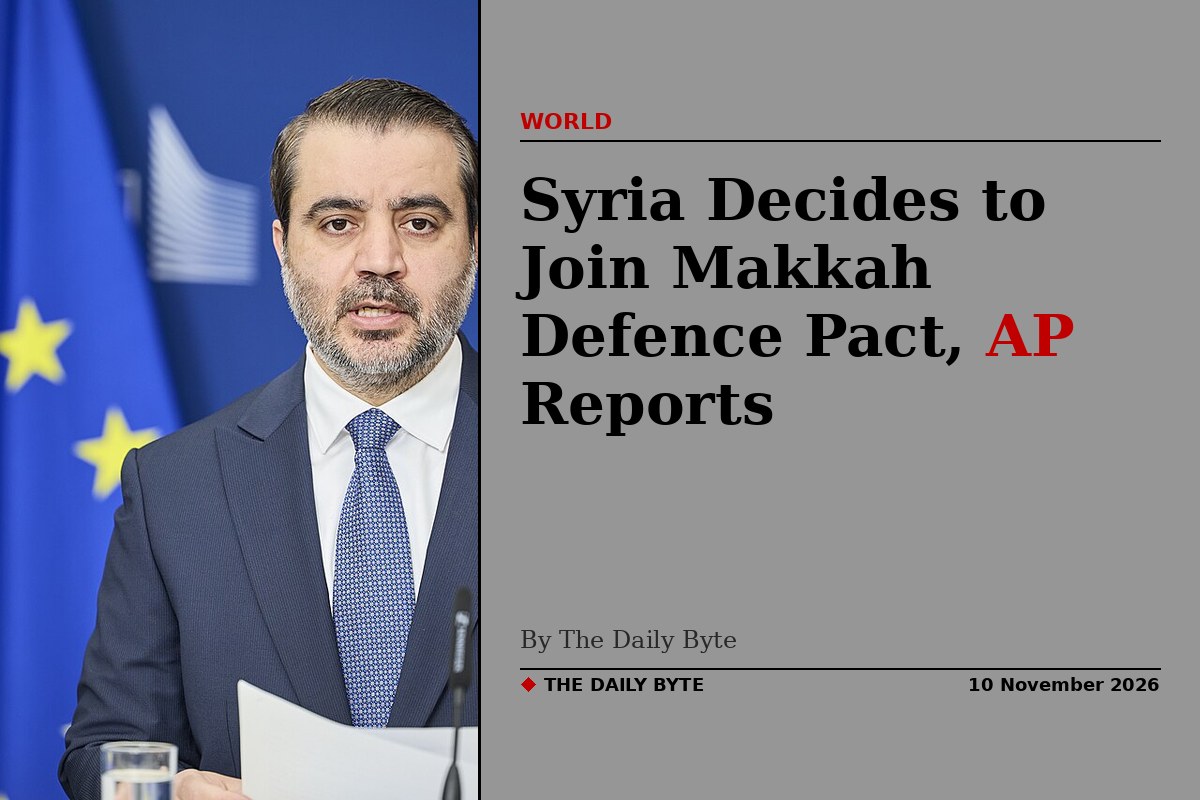
Syria has reportedly decided to join the Makkah Joint Defence Agreement, the mutual defence pact signed by Saudi Arabia, Türkiye and Pakistan, according to a report by the Associated Press published on Sunday. Two Syrian officials told the news agency that Damascus had already made its decision but had kept it quiet, while a regional official said membership talks were still under way, suggesting the arrangement is not yet final.
The report is the strongest signal yet that Syria is moving from discussing the pact to joining it. Syria's Foreign Minister, Asaad al-Shaibani, publicly confirmed at the Manama Dialogue in Bahrain on 31 October that discussions were under way to evaluate Syria's entry into the alliance, but he stopped short of saying a decision had been taken.
What the Makkah pact is
The Makkah Joint Defence Agreement was signed in the Saudi city of Makkah on 7 August by Saudi Arabia, Türkiye and Pakistan. Under its terms, the three countries treat an armed attack on one member as an attack on all, and they have also agreed to deepen cooperation on intelligence sharing, defence production, training and joint exercises.
The signatories have described the pact as defensive and say it is open to other states that respect sovereignty and territorial integrity. Reports say accession would need the agreement of all three founding members, so Syria's entry is not automatic even if Damascus has decided in principle to join.
Why Syria is moving closer to Riyadh
Syria's interest in the pact comes as Saudi Arabia faces renewed attacks from Yemen's Iran-backed Houthis. Fighting in Yemen resumed in July after years of relative calm, and debris from a Houthi attack damaged an Aramco office tower in Riyadh on Sunday, according to reports of the incident.
Riyadh and Damascus signed a military cooperation agreement during President Ahmad al-Sharaa's visit to Saudi Arabia on 4 November, although neither side released its terms. During the same visit, Saudi Arabia agreed to lend Syria more than $400 million for post-war reconstruction of homes and basic infrastructure. Riyadh has become a key backer of Syria's recovery since al-Sharaa's forces toppled Bashar al-Assad, an ally of Iran, in December 2024.
The question of Syrian troops
The same Associated Press report said Syria was preparing to send about 600 special forces fighters to Saudi Arabia in the coming week, to deploy along the kingdom's border and potentially help fight the Houthis in Yemen. A regional official and two Syrian officials said Syrian military advisers were already in Saudi Arabia, but that no fighters had been deployed to Yemen.
Damascus has pushed back on parts of that account. A Syrian diplomatic source told the state news agency SANA on Saturday that reports of Syrian forces heading to Yemen were untrue, and that the agreement with Saudi Arabia focuses on training, building military capabilities and exchanging expertise. Al-Shaibani told reporters on Monday that Syria had no troops in Yemen and no plans to send any soon, adding that any overseas deployment would be announced publicly.
What could complicate membership
One concern raised in the report is that Syria might ask the other members for support against Israel. Following the fall of Assad in December 2024, Israeli forces seized control of a United Nations-patrolled buffer zone in southern Syria and have occupied it since. Al-Sharaa has said his government does not seek a conflict with Israel and has called for Israeli forces to withdraw.
For now, the reported decision remains unconfirmed in public. Neither Damascus nor Riyadh has formally announced Syrian membership of the pact, and Saudi officials did not immediately respond to requests for comment when the Associated Press report was published. If confirmed, Syria would become the fourth member of a defence bloc stretching from the Bosphorus to the Indus, and a further sign of how far Damascus has moved towards Riyadh since the end of the Assad government.


