Syria foils Daesh plot near Damascus, soldier killed
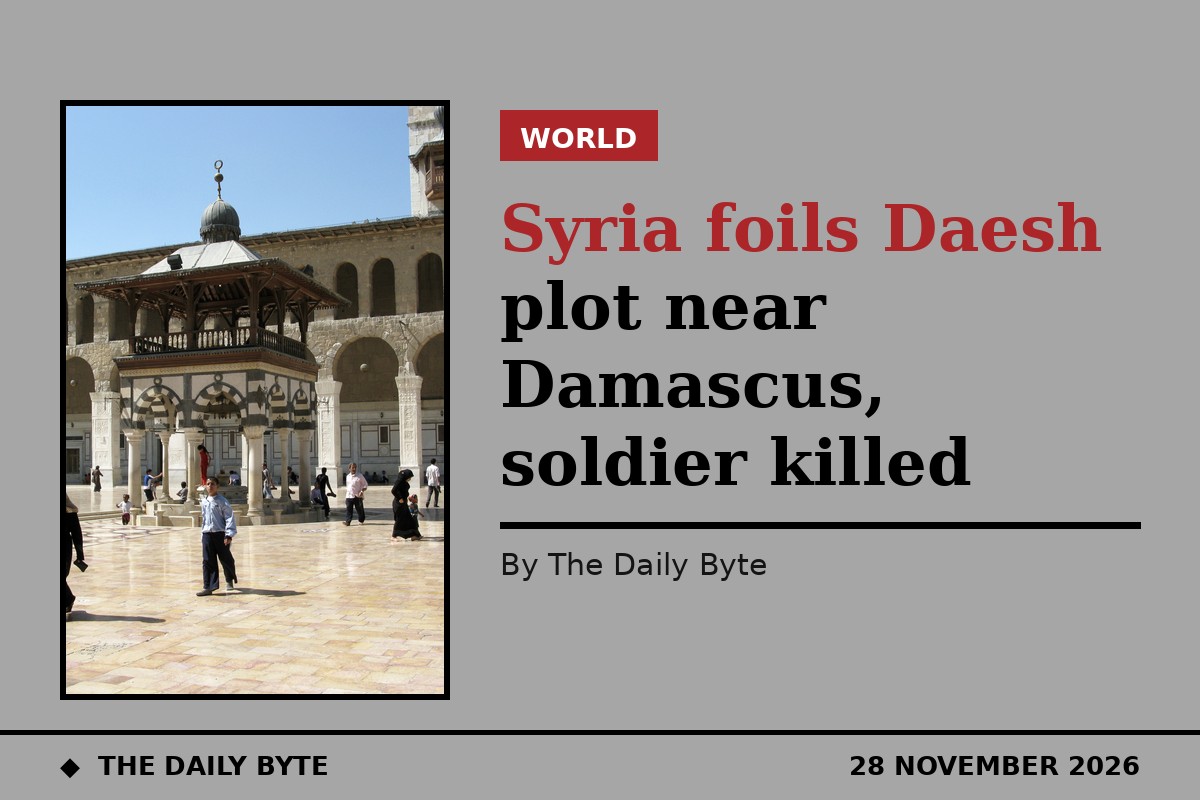
Syrian authorities said on Saturday they had foiled a suspected Daesh plot to attack a police patrol near Damascus, arresting two suspects and seizing an explosive device, in the latest sign of the security challenge facing the country's transitional government.
The General Intelligence Department, working with the Internal Security Forces, arrested the two suspects, who were described as allegedly affiliated with Daesh, also known as ISIS. The state news agency SANA reported that officers seized an explosive device that had been prepared for detonation.
In a statement issued on Friday, the Internal Security Forces identified the suspects only by their initials, M.K. and A.H., and said investigations were continuing to establish the circumstances, scope and links of the alleged plot. No further details about the suspects or the planned target were released, and the allegations have not been tested in court.
A pattern of foiled plots
The authorities said the operation followed the dismantling of another cell linked to Daesh in the Al-Houla area of the Homs countryside on 10 October. That operation, SANA reported, foiled plots targeting places of worship and Internal Security Forces patrols.
Daesh lost its territorial holdings in Syria in 2019, but its cells have continued to mount attacks on security forces and civilian targets. The transitional government of President Ahmed al-Sharaa, which took power after Bashar al-Assad was ousted in December 2024, has carried out a series of raids against suspected ISIL cells as it works to rebuild the security services and bring the country's armed groups under central control.
Soldier killed clearing mines in Tanf
In a separate incident on Saturday, a Syrian Arab Army soldier was killed and another was seriously wounded while clearing mines and unexploded ordnance in the Tanf area of the eastern Homs countryside. The Defence Ministry's media directorate told SANA that the soldiers belonged to the army's Military Engineering Directorate and were dismantling mines and explosive remnants left by the ousted regime.
It was not the first such death. On 28 July, another soldier was killed and a fellow soldier wounded when a mine left by the former regime exploded during clearance work near Kabina village in the northern Latakia countryside, according to SANA.
The two incidents illustrate the twin pressures on the new authorities: an armed extremist underground that has survived the fall of the old regime, and a landscape littered with mines and unexploded ordnance after more than a decade of war.
Syria has sought outside help with the clearance task. Damascus has signed a humanitarian cooperation agreement with Ukraine to strengthen demining work, and Poland has provided funding to support mine clearance in the country, as the authorities try to make farmland, roads and former front lines safe again.
For Syrians, the latest incidents are a reminder that the end of Assad's rule has not ended the dangers left by the war, or removed the threat posed by extremist networks operating in the shadows.


