Four Million Syrians Home as Mines Kill 30 in a Month
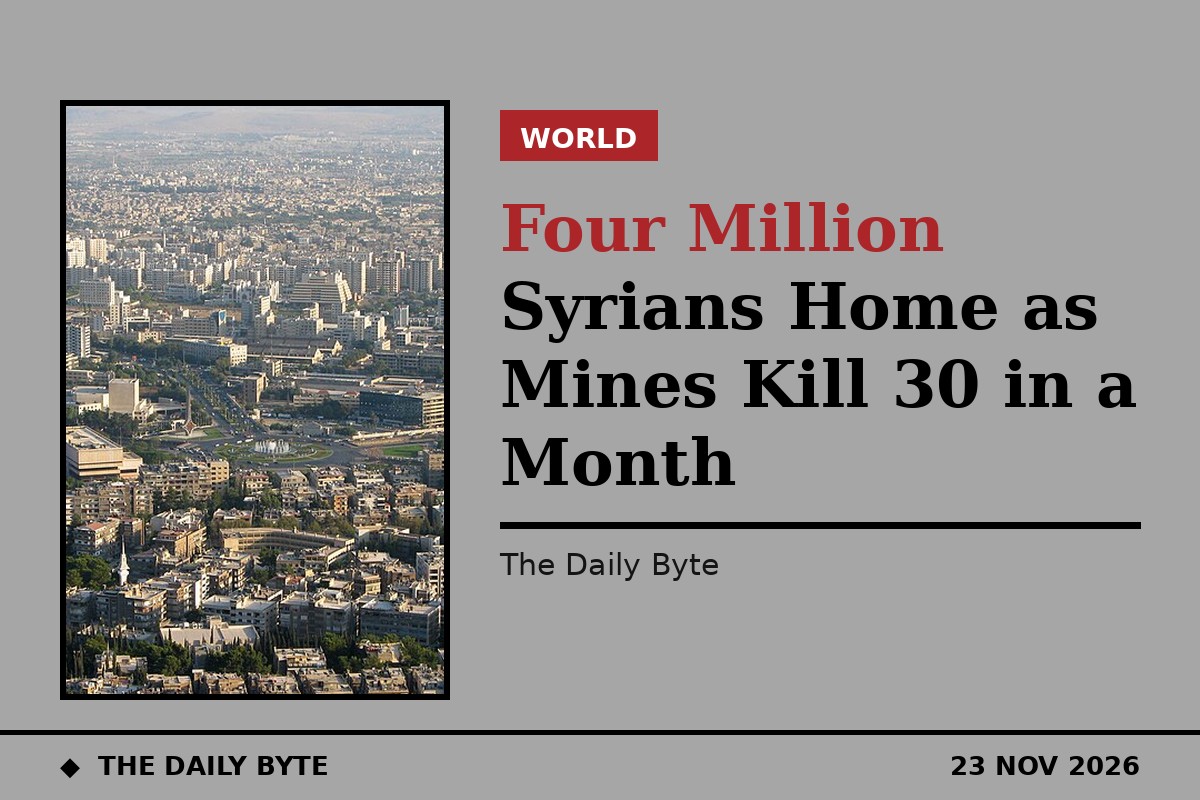
Nearly four million Syrians have voluntarily returned home since December 2024, the United Nations told the Security Council on 16 November 2026, but the returns have not ended the humanitarian crisis — and the dangers facing families going back are growing. In the month before the briefing alone, at least 30 people were killed by explosive ordnance, 19 of them children, and more than 80 were injured, including 35 children, UN News reported.
"In short, the situation is not improving," Mohamed Yahya, Assistant Secretary-General for Humanitarian Affairs, told the Council, briefing on behalf of UN relief chief Tom Fletcher. Since the Council's previous meeting in October, a further 60,000 internally displaced people and 18,000 refugees have returned. Yet, Yahya stressed, "returns do not mean humanitarian needs have ended", with more than 730,000 people still living in camps and nearly 200,000 displaced people and returnees sheltering in damaged buildings.
Unexploded ordnance is killing children
Explosive remnants of war are now one of the biggest obstacles to safe and sustainable returns. Partners cleared more than 700,000 square metres of contaminated land in the first half of this year, but far more clearance is needed as families move back into areas that were fought over. Recent flash floods have also displaced explosive ordnance into areas previously considered safer, pushing the risk into places families thought were clear.
The toll reported to the Council covers only the period since its October briefing: at least 30 people killed, 19 of them children, and more than 80 injured, 35 of them children. The Syrian Observer's account of the session gives the same figures and notes that war remnants and landmines continue to obstruct safe returns across the country.
Winter funding is running short
An estimated 2.4 million people will need additional assistance this winter, while the winter response plan — which targets more than 970,000 of those most at risk — is only 40 per cent funded. The country's overall humanitarian appeal is only a third funded. That shortfall is already biting: the World Food Programme is halving its food assistance programme, and the UN sexual and reproductive health agency, UNFPA, has closed 28 health facilities. "Time is running out," Yahya warned the Council.
Poliovirus has also been detected in two children in Deir Ez Zor, another reminder of how fragile health services remain. On the political track, Deputy Special Envoy for Syria Claudio Cordone welcomed the formal submission last week of the draft Law on Transitional Justice to the interim People's Assembly, stressing that accountability must apply to crimes "regardless of the perpetrators or the victims". He put the World Bank's estimate for rebuilding damaged physical assets alone at $216 billion and called for sustained international support.
The briefing also heard that more than 100 Kurdish families trying to return to Tel Abyad in late October reportedly faced violence and intimidation, and that Sweida remains in a "tense security and political stalemate". Cordone said Israeli military activities had continued "relentlessly in violation of Syria's sovereignty and territorial integrity", deploring the killing of a man with a disability during an Israeli operation in Jamla, western Dara'a, on 21 October. Jordanian airstrikes in Dara'a on 27 October, which Jordan said targeted Da'esh militants and a weapons depot, also caused civilian casualties, with three children among those reported killed. Reporting on 23 November 2026.
Frequently asked questions
How many Syrians have returned home? Nearly four million refugees and internally displaced people have voluntarily returned since December 2024, including 60,000 internally displaced people and 18,000 refugees since October 2026.
How many people were killed by explosive ordnance? At least 30 people, including 19 children, were killed and more than 80 injured, including 35 children, in the month before the Security Council briefing on 16 November 2026.
Why is winter assistance at risk? About 2.4 million people need extra help this winter, but the winter response plan is only 40 per cent funded and the overall humanitarian appeal is only a third funded, forcing the World Food Programme to halve food assistance.
What did the UN say about Syria's recovery? Senior officials told the Council the progress since the fall of the Assad regime is real but fragile, and urged the Council to sustain funding and support mine action and the winter response.
Sources: UN News; The Syrian Observer. Reporting on 23 November 2026.


