Syria Hails Historic UN Resolution on Reforms
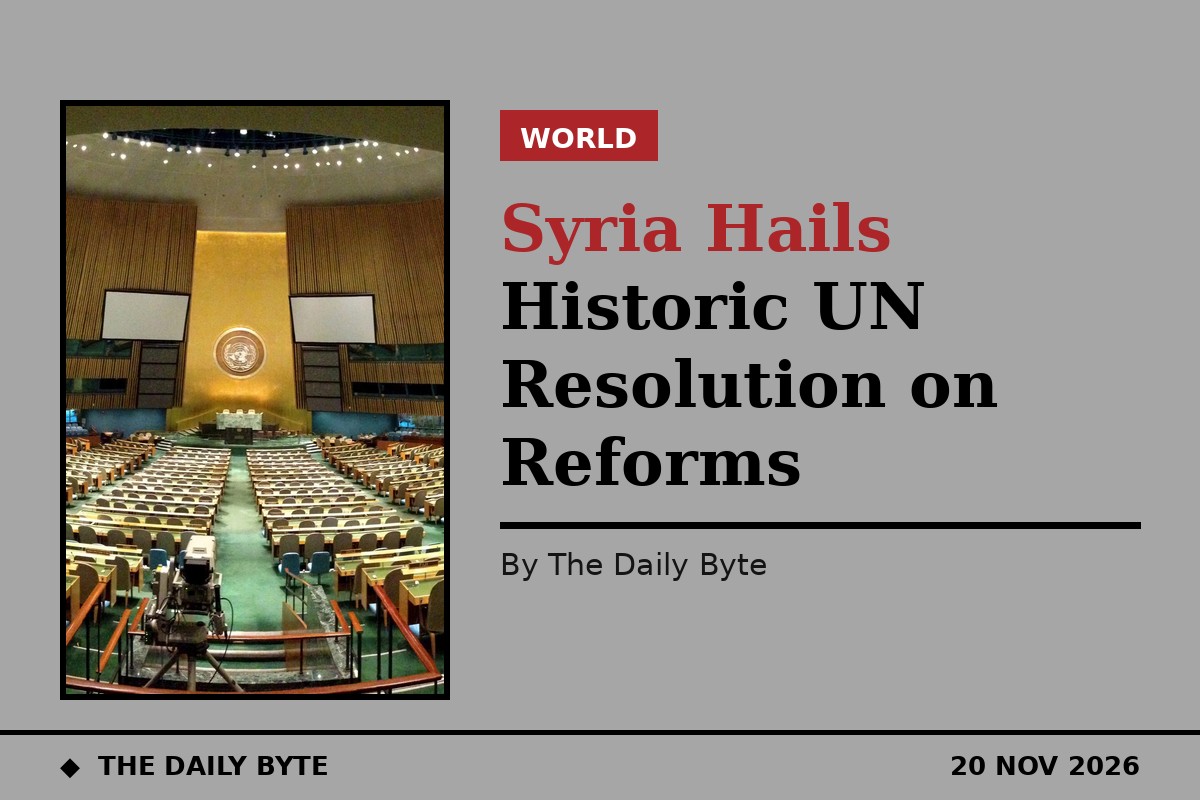
Syria has welcomed a United Nations General Assembly resolution adopted by consensus recognising the country's post-war progress and reforms, describing the outcome as a historic diplomatic milestone.
Syria's Permanent Representative to the United Nations, Ibrahim Olabi, said the resolution reflected a shift in the international community's approach to Syria, moving beyond documenting past violations towards recognising developments, supporting recovery and encouraging efforts to build a future grounded in rights, dignity and participation.
The resolution, titled "Supporting human rights in the Syrian Arab Republic", was adopted by the General Assembly's Third Committee on Wednesday. The United States introduced the text, and Olabi said it was adopted by consensus for the first time.
What the resolution recognises
According to Olabi, the resolution welcomes the formation of the People's Assembly and the Supreme Constitutional Court, institutional reforms and the abolition of exceptional courts, alongside developments related to freedom of expression, assembly, association and civil society participation.
It also highlights the establishment of the National Commission for Transitional Justice and the National Commission for Missing Persons, which Olabi described as part of broader efforts to address the consequences of years of conflict and support justice, accountability and national recovery.
The resolution addresses equal rights for all citizens, including the protection of Syrian Kurds' cultural and linguistic rights and efforts to resolve cases involving people who have been deprived of nationality. It also welcomes initiatives aimed at creating conditions for the safe and voluntary return of refugees and displaced people.
Introducing the resolution, the United States said Syria had established its People's Assembly and Constitutional Court, continued to reform its judicial system, joined the Global Coalition to Defeat ISIS, regained its rights under the Chemical Weapons Convention and resolved a longstanding safeguards non-compliance finding with the International Atomic Energy Agency. The statement said approximately 1.8 million refugees and more than two million internally displaced Syrians had returned home since December 2024.
A shift in tone at the United Nations
For more than a decade, this annual resolution held the government of Bashar al-Assad accountable for abuses against the Syrian people, the United States said. Last year, the committee turned a new page and began using the resolution to welcome a new Syria, and this year's text builds on that foundation.
The resolution also places emphasis on respecting the 1974 Disengagement Agreement, protecting civilians and preserving Syria's sovereignty and territorial integrity. Olabi said the consensus reached by member states, the participation of 45 countries in a gathering organised by Syria on 11 September and the Security Council's consensus on implementing the agreement underlined the importance of respecting its provisions.
Addressing the situation in southern Syria, Olabi expressed concern over continuing violations attributed to the Israeli occupation, saying civilians remained affected in their homes, communities, livelihoods and daily lives.
Challenges remain
Olabi acknowledged that significant challenges remained, stressing that Syria's recovery required continued international support. He called on member states, regional organisations, international financial institutions and UN agencies to contribute to reconstruction, economic recovery, mine clearance, humanitarian initiatives and institutional capacity-building.
He also emphasised closer cooperation between Damascus, the Office of the United Nations High Commissioner for Human Rights and relevant UN mechanisms, saying such cooperation should take into account Syria's circumstances, respect institutional mandates and support Syrian-led priorities. Syria was seeking international expertise and assistance to help its institutions uncover the truth, pursue justice and safeguard citizens' rights, he said.
Committee resolutions are normally put to the full General Assembly for final adoption. Olabi described the consensus adoption as a historic moment for Syria, saying the determination and resilience of Syrians over the past 15 years had shaped the international discussion and continued to influence the country's efforts towards renewal.


