Syria and IMF to Resume Economic Reviews in March 2027
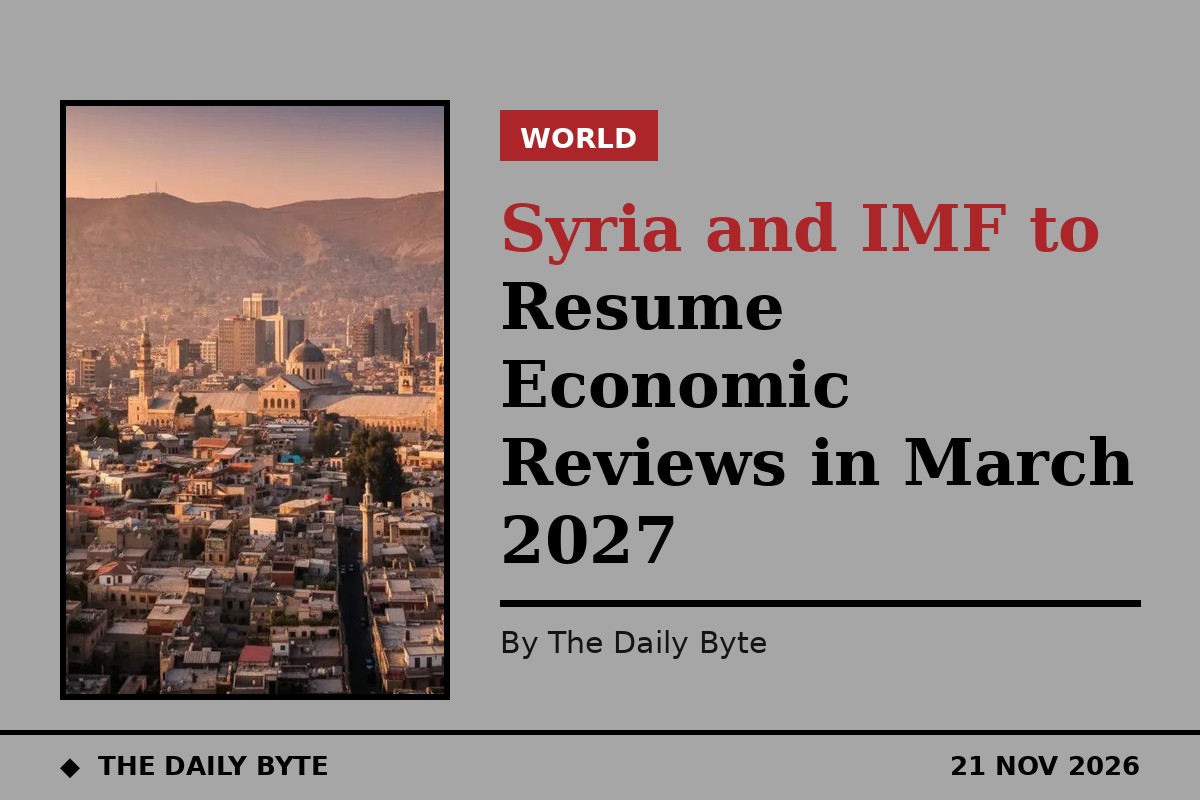
Syria and the International Monetary Fund have agreed to resume formal economic consultations in March 2027, in the latest step in Damascus's return to the international financial system after years of isolation.
The agreement was reached at the end of a visit by an IMF delegation to the Syrian capital, during a meeting between the finance minister, the head of the IMF mission and their accompanying delegation. The two sides reviewed growth projections and financial performance for 2026, and the IMF mission noted that indicators for public revenue and spending were tracking in line with established targets.
What the review will cover
Article IV consultations are the IMF's regular health check on a member country's economy, carried out under the Fund's Articles of Agreement. IMF staff visit the country, gather economic and financial data, hold talks with the authorities on developments and policies, and then prepare a report that forms the basis for discussion by the Fund's Executive Board.
The March 2027 round will be the first such consultation for Syria since 2009. The Fund has been rebuilding its engagement with Damascus in stages: staff teams visited the capital in November 2025 and again in February and July 2026, assessing economic conditions, discussing reform progress and agreeing extensive technical assistance, including work on statistics, public finances and the framework for monetary policy.
During the latest visit, the two sides also examined preparations for the 2027 budget. A particular focus was a finance ministry initiative to improve transparency in the performance of public economic institutions and to provide accurate data on the cost of government subsidies, an area where the ministry has been working with the Fund on government finance statistics. In September, the ministry held talks with an IMF mission on technical assistance reports covering government finance data, reviewing preliminary results against the Government Finance Statistics Manual, the internationally recognised standard for preparing such figures.
Reforms praised, but challenges remain
The IMF mission expressed appreciation for the pace of structural reforms being carried out by the Syrian state, saying progress in that area contributed positively to fiscal sustainability. The Fund's August assessment noted that the Syrian economy was showing signs of recovery, with double-digit growth expected in 2026, while stressing that the authorities' ability to mobilise external financing would depend on progress in addressing Syria's legacy debts.
The resumption of Article IV consultations does not by itself unlock IMF lending, and the March mission will not automatically lead to a board discussion. But for a government trying to rebuild shattered public finances, restore basic services and attract investment after more than a decade of war and sanctions, a regular, published IMF assessment is a significant marker of normalisation. It gives donors, investors and creditors a shared, independently produced picture of where the economy stands, and it sets a timetable against which Damascus's reform promises can be measured.
Syria's finance minister, Mohamad Yisr Barnieh, has led the government's side of the engagement, meeting IMF mission chief Ron van Rooden and Central Bank governor Abdulkader Husrieh during the earlier visits. The March consultations will test whether the recovery the Fund has begun to describe can be sustained, and whether the government can turn better revenue collection and subsidy reform into lasting fiscal stability.