Syria and Iraq seize 400,000 Captagon pills in joint raid
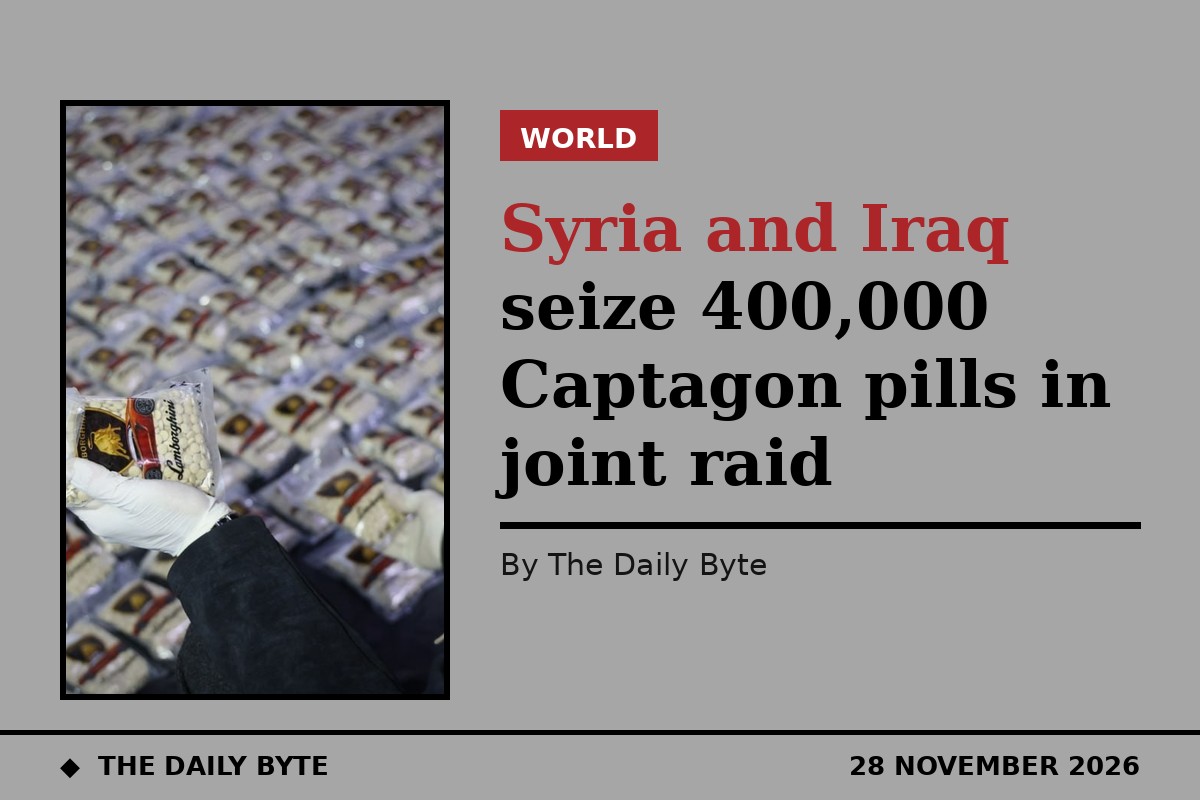
Syrian and Iraqi authorities have seized 400,000 Captagon pills and arrested three suspected traffickers in a joint operation against a shipment smuggled from Lebanon, officials in both countries said on Thursday.
Iraq's General Directorate for Narcotics and Psychotropic Substances said the operation was carried out in coordination with the Syrian side and that the shipment was bound for neighbouring countries. The directorate said authorities would keep pursuing international trafficking networks together with security agencies across the region. Syria's Drug Enforcement Department gave the same figures in a statement on Facebook.
Earlier on Thursday, the Syrian department said it had seized about 2.3 million Captagon pills and arrested two suspects at a drug storage site in Tartous province, on Syria's Mediterranean coast. Taken together, the Syrian authorities announced the seizure of 2.7 million Captagon pills and the arrest of five suspected drug traffickers in two separate operations on the same day, according to the Syrian state news agency SANA. Neither side named the suspects or said where the arrests were made.
Crystal meth seized at Iran border crossing
In a separate case, Iraq's Federal Intelligence and Investigations Agency said it had detained a foreign traveller who tried to bring one kilogram of crystal methamphetamine into the country through the Shalamcheh border crossing with Iran in Basra province. The agency said the suspect confessed during questioning and had been referred to the courts.
Captagon, an amphetamine-type stimulant, has become one of the most lucrative drugs in the region, and Iraq sits on trafficking routes running from Syria and Lebanon towards the Gulf. Iraqi agencies have announced a string of seizures in recent months, including joint operations with the United Arab Emirates and Libya, but officials seldom say what happens to the suspects once their cases reach court.
The two operations announced on Thursday show both the scale of the trade and the way it moves. The 400,000-pill shipment came from Lebanon and was heading for neighbouring countries, while the 2.3 million pills found in Tartous were held at a storage site inside Syria, pointing to stockpiles as well as transit routes. Iraq's directorate said it would keep pursuing the international networks behind the trade together with regional security agencies, and Syria's department published the same figures, a sign of how closely the two sides coordinated the announcements.
For Iraq, the seizures underline the scale of the drugs flowing across its western border. The route from Lebanon through Syria into Iraq, and onwards towards Gulf markets, has been used by traffickers for years, and Iraqi border forces have intercepted several large shipments in the same area in recent months. Officials in Baghdad said the operation showed that coordination with Damascus was producing results, and that further joint action against the networks behind the trade would follow.


