Taiwan Closes Papua New Guinea Office Over China
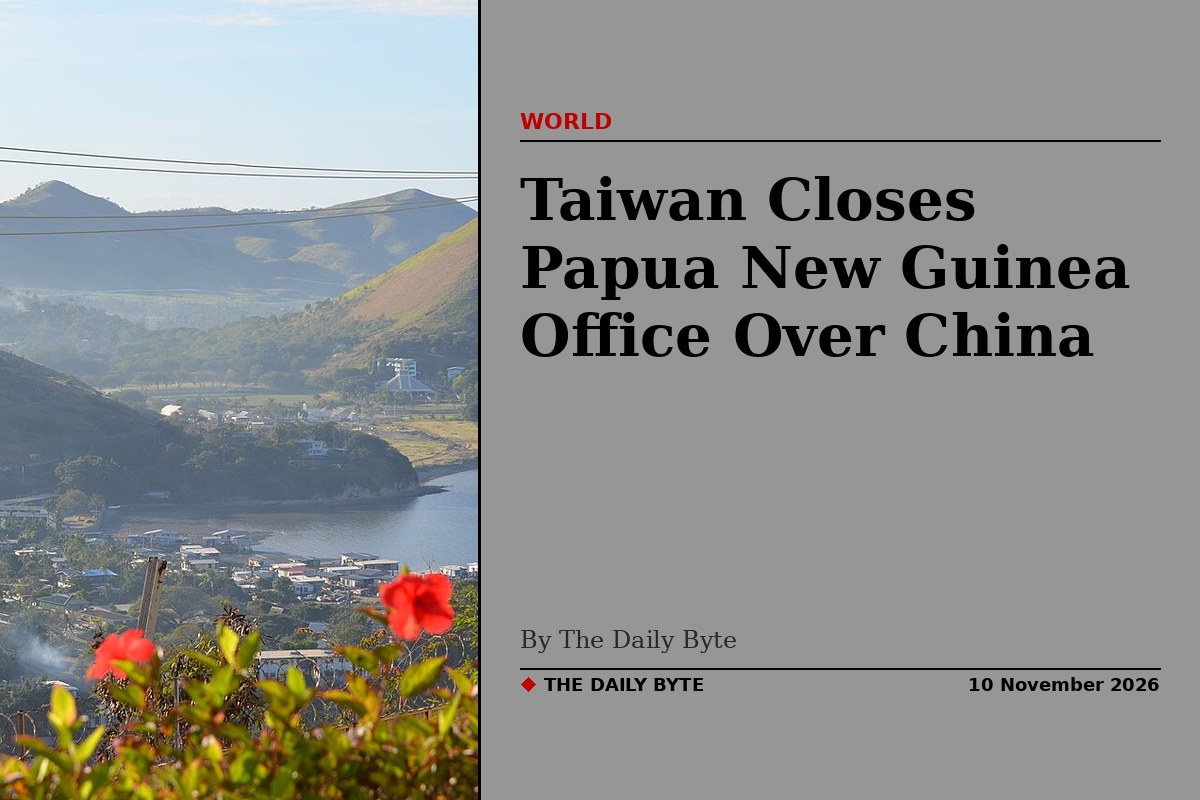
Taiwan will close its representative office in Papua New Guinea, withdraw all its staff and end aid programmes there, blaming Chinese pressure for the forced shutdown of its mission in Port Moresby.
The decision, announced by Taiwan’s foreign ministry on Friday 6 November, also halts new spot purchases of liquefied natural gas (LNG) from Papua New Guinea, a trade worth about a third of the Pacific nation’s gas exports. It is the latest flashpoint in the contest for influence among Pacific island states.
A dispute that began in July
Papua New Guinea first ordered the closure of Taiwan’s office in July, a decision welcomed by Beijing, but the mission remained open while the two sides wrangled over its status. Taiwan’s foreign ministry said Port Moresby had now renewed its demand that staff leave by a set deadline, prompting Taipei to withdraw its personnel and close the office altogether.
The ministry said Papua New Guinea’s actions “reflect China’s continued use of political pressure and economic influence to interfere in other countries’ diplomatic decisions”, according to reports of the announcement. It said the closure was decided after a comprehensive assessment of national dignity, diplomatic autonomy and Taiwan’s overall interests.
Papua New Guinea, which briefly had diplomatic relations with Taiwan in 1999, adheres to a one-China policy and recognises Beijing. The United States has expressed concern over the forced closure of the office, Focus Taiwan reported.
Gas trade at stake
Alongside the diplomatic withdrawal, Taiwan said it had stopped buying Papua New Guinean LNG through the spot market and would sign no new spot purchase contracts. Taipei had planned to buy about 500,000 metric tonnes of spot LNG from the country in the first half of 2026.
Taiwan has long been an important market for Papua New Guinea’s natural gas, with its purchases accounting for roughly a third of the country’s total LNG exports, the foreign ministry said. The ministry added that Taiwan’s energy security would not be affected, as it had secured alternative supplies and adjusted its procurement plans.
The restriction applies only to spot purchases, which are bought cargo by cargo rather than under long-term contracts. A long-term agreement covering about 1.2 million tonnes a year remains in force, so the move does not end all gas imports from Papua New Guinea.
What ends with the office
The closure also ends the technical cooperation and assistance programmes Taiwan ran from Port Moresby, including medical missions, scholarships and professional training. All four were named in the ministry’s statement as coming to an end.
The programmes were a visible part of Taiwan’s presence in Papua New Guinea, one of the largest and most populous Pacific island states. Their loss, alongside the withdrawal of diplomatic staff, removes one of Taipei’s few remaining footholds in the region.
Wider Pacific contest
Taiwan now has formal diplomatic ties with 12 countries, three of them Pacific states: Palau, Tuvalu and the Marshall Islands. China has steadily expanded its presence across the Pacific, signing security and policing agreements with several island nations, while Australia, the United States and other partners have stepped up their own engagement in response.
Papua New Guinea sits at the centre of that competition. It is the Pacific’s largest island nation by population, a major LNG exporter and a neighbour of Australia. Port Moresby has balanced relations with Beijing, Canberra and Washington, and its decision on Taiwan’s office shows how that balancing act is playing out in practice, as the London Daily News noted.
For Taiwan, the episode is a further narrowing of its international space. For Papua New Guinea, the test will be whether the loss of a major gas customer and aid partner is offset by what it gains from closer ties with Beijing.


