Taiwan Nuclear Vote Looms as Debates End
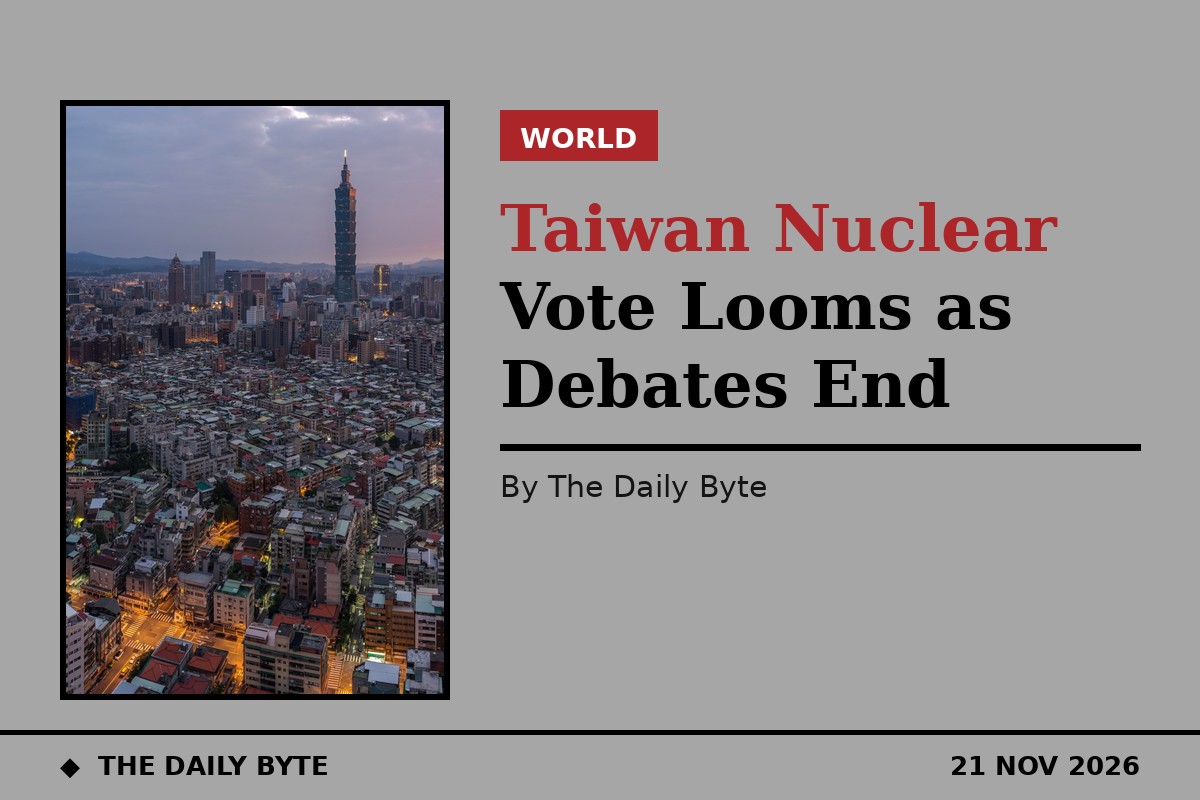
Taiwan is one week away from a referendum on whether to abandon its nuclear-free homeland energy policy, after the last of five televised debates was held on Friday, 20 November. Voters will decide national referendum No. 22 on Saturday, 28 November, alongside local elections.
The question asks voters whether they agree that the government should adopt nuclear power, which reinvigorates the economy, in order to abolish the energy policy of a nuclear-free homeland. The proposal was put forward by the Kuomintang legislative caucus and is supported by the Taiwan People's Party. The ruling Democratic Progressive Party opposes it.
What voters are being asked
The Central Election Commission approved the referendum question on 28 August 2026, and organised five televised presentations and debates on the issue between 12 and 20 November. Under Taiwan's Referendum Act, the proposal passes only if votes in favour outnumber votes against and also reach at least a quarter of all eligible voters.
The referendum sets a broad direction for energy policy rather than deciding the fate of any single plant. If it passes, decisions about which reactors might restart, what new facilities could be built and how nuclear waste would be handled would all follow separately.
Taiwan shut its last operating reactor, at the Maanshan Nuclear Power Plant in Pingtung County, on 17 May 2025, completing the phase-out the Democratic Progressive Party had promised. On 21 March this year, President Lai Ching-te said the Ministry of Economic Affairs had determined that Maanshan and the No. 2 Nuclear Power Plant in Wanli District, New Taipei, met the conditions to begin the restart process, and that state-run Taiwan Power Co. was preparing the next steps. The government has not announced a specific plan for reintroducing nuclear power.
The case for nuclear power
Supporters argue that nuclear power would give Taiwan a stable electricity supply and cut carbon emissions. At a televised forum in Taipei on Monday, 16 November, nuclear power supporter Huang Shih-hsiu said the nuclear-free policy had increased reliance on natural gas and other thermal generation, while renewable energy targets had not been met.
Supporters also point to cost. At a debate on 18 November, they promised electricity for artificial intelligence and savings of between NT$70 billion and NT$100 billion a year in fuel costs. Supporters have separately said ageing reactors could be restarted within 18 months to three years. President Lai has himself cited rising electricity demand linked to artificial intelligence, the European Union's Carbon Border Adjustment Mechanism and geopolitical risks, while reaffirming support for renewable energy.
The case against
Opponents say the referendum leaves the hardest questions unanswered. At the same Taipei forum, anti-nuclear spokeswoman Shen Pei-ling acknowledged nuclear power's low emissions and stable output, but said those advantages did not resolve questions about nuclear waste, plant safety or the practical steps needed to bring reactors back into service.
Shen said the referendum set out no plans, timelines or strategies for disposing of nuclear waste, and did not specify how nuclear power would return. The options could include restarting the Fourth Nuclear Power Plant, building new facilities or introducing small modular reactors, she said. She also said local communities had not been adequately consulted and there was no broad public consensus, and called on the government to present a comprehensive energy supply plan.
The government is assessing the existing reactors while opposing the proposal, so the vote will not by itself switch any plant back on. What it will settle, on 28 November, is whether voters want the nuclear-free homeland policy itself to go, after a debate that has run through the final week of campaigning for the local elections held on the same day.


