Taiz Health Crisis Deepens Under Houthi Siege
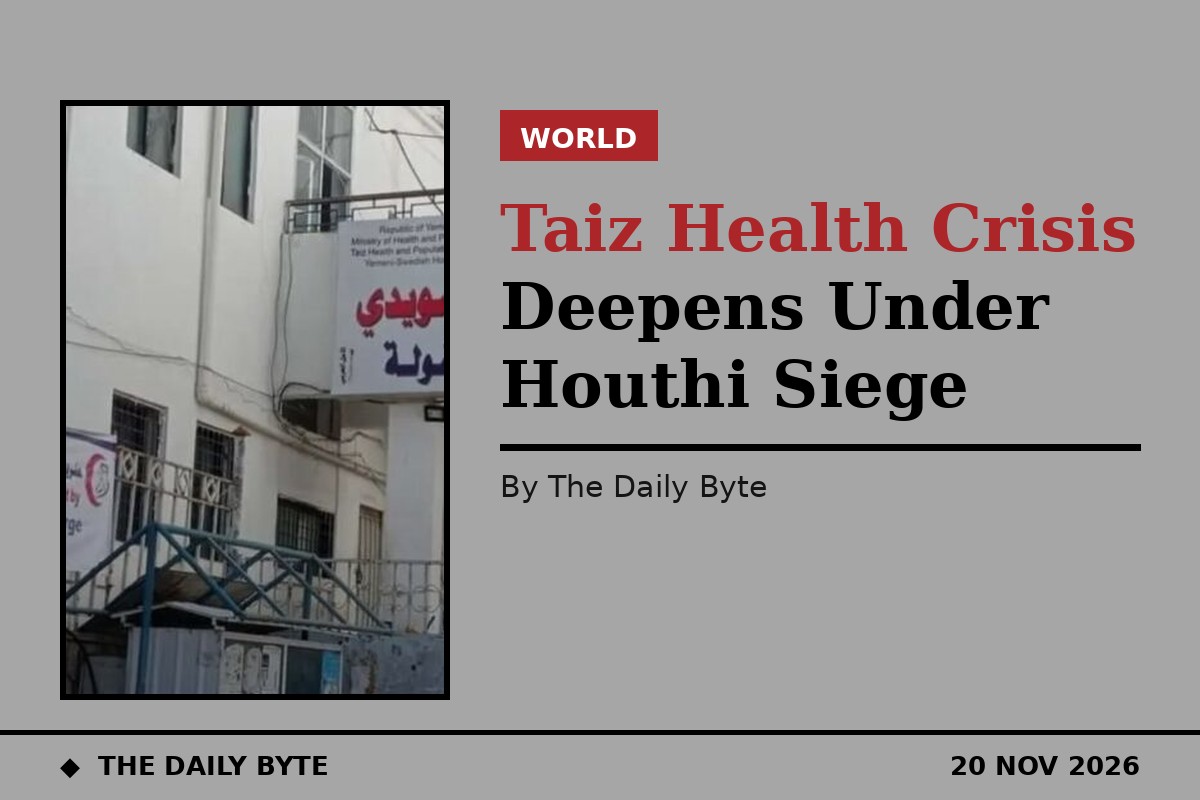
A new human rights report has warned that the health system in the besieged Yemeni city of Taiz is on the verge of collapse, with fuel and oxygen almost exhausted, hospitals shutting down and the lives of intensive care patients, newborns and kidney patients at grave risk.
The report, "When Treatment Becomes Impossible", was published by the SAM Organization for Rights and Liberties as the third release in its "Witness and Impact" series. Covering August to November 2026, it documents the impact of the Houthi siege on healthcare and patients' lives in Taiz, drawing on testimony from doctors, hospital officials and patients alongside verified health data.
Hospitals running out of fuel and oxygen
The report found that 120 health facilities have completely ceased operations and 66 others are operating only partially in Houthi-controlled districts, while services at 12 hospitals and 18 health centres face the risk of disruption. It also recorded acute shortages of medical supplies at 42 health facilities.
Available fuel for health facilities covers only 5 percent of actual needs, oxygen supplies do not exceed 2 percent, and medicines, medical supplies and emergency equipment stand at 30 percent. The report estimated the monthly fuel requirement for the monitored health facilities and ambulances at more than 156,000 litres.
The report warned that the lives of 192 patients in intensive care units, 154 infants in incubators and more than 1,100 kidney disease patients are at grave risk if supply disruptions persist.
Dialysis and maternity care under strain
At the Dialysis Center at Al-Thawra Hospital Authority, which receives more than 400 patients and conducts about 120 dialysis sessions a day, patients face growing obstacles reaching treatment. More than 30 patients from outside the city were unable to reach the centre in recent weeks, and the transit time for dialysis solutions arriving from Aden has increased from one or two days to two or three weeks. At Al-Jumhouri Hospital, dialysis sessions have been cut from four hours to two and a half hours because of shortages.
Maternal and newborn care has also deteriorated sharply. More than 13,100 pregnant women were unable to access basic healthcare, and reproductive health services were disrupted for more than 147,600 women and girls. Only five of 27 facilities designated for emergency obstetric and newborn care were operating partially.
At the Yemeni-Swedish Hospital, the number of working incubators fell from 40 to just 10, and the average number of daily deliveries dropped from about 10 to five. The report documented the case of a seven-month-old infant whose family was delayed by three days for scheduled surgery; the child died after being admitted to intensive care.
Children facing malnutrition and measles
The report recorded more than 52,000 cases of acute malnutrition among more than 168,000 children screened in Taiz during 2026, including 5,057 cases of severe acute malnutrition and 27,752 cases of moderate acute malnutrition. It also found 9,454 infants deprived of routine vaccinations and recorded 2,738 measles infections and 26 deaths in Taiz from the start of 2026 through the end of October.
Water supplies have also collapsed. Taiz city needs about 35,000 cubic metres of water a day, but available supplies before the recent escalation did not exceed 5,000 cubic metres. Water pumping systems serving nearly three million people are at risk of shutting down because of the diesel crisis, while the cost of trucked water has tripled.
Attacks on ambulances and health workers
The report documented attacks on health facilities and ambulances during the monitoring period. On 2 November, an attack on the Al-Saqiyah Health Center in Al-Mudaraba district, Lahj governorate, killed five people and injured 15, including health workers. On 20 October, an ambulance was targeted in the Al-Shaqab area, killing its female driver and an injured 18-year-old girl, Taiba Abdulraqeeb, and injuring a doctor. Another ambulance was put out of service in the Al-Awat area on 28 October.
At the national level, 27 health facilities and seven ambulances were damaged or destroyed and six health workers killed since the military escalation began in August 2026.
Local authorities in Taiz warned on 15 November that about 246,000 people have been deprived of basic healthcare and 12 major hospitals face the risk of shutting down, with more than 290 civilian casualties, 69 killed and 221 injured, recorded between August and October. SAM called for the immediate lifting of restrictions on civilian movement, the opening of roads for patients, ambulances, fuel and medicines, and independent investigations into attacks on health facilities.


