Tanzania BOOST Exceeds Target with 16,000 Classrooms
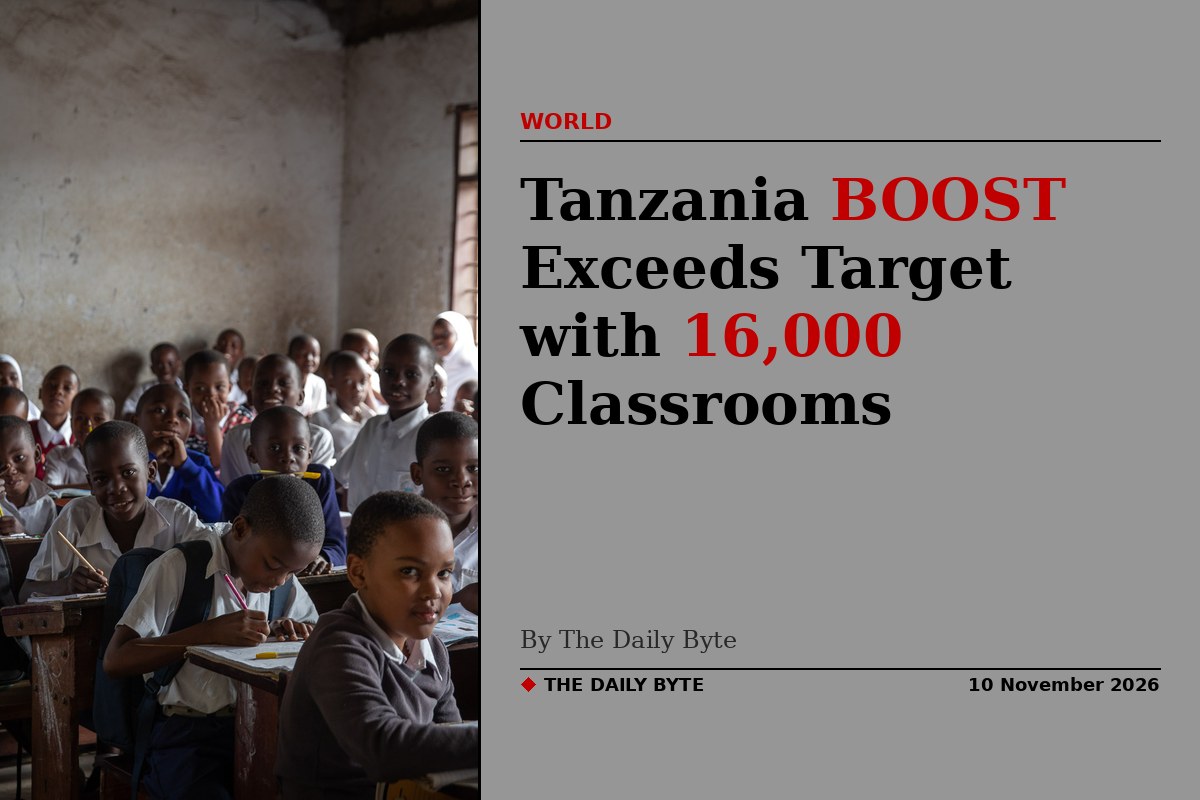
Tanzania's flagship primary education programme has finished well ahead of its own targets, building more than 16,000 classrooms against an original goal of 12,000, government officials have announced.
The BOOST Primary Student Learning Programme, launched in 2022 and due to close at the end of December 2026, recorded a 140 percent performance rate, according to Deputy Minister in the President's Office for Regional Administration and Local Government, Dr Festo Dugange.
The government says about 1.15 trillion Tanzanian shillings was invested in the programme, which combined new classroom construction with the repair of existing schools and the introduction of information and communications technology into the learning environment.
More than classrooms
Dr Dugange announced the results during an inspection of newly built facilities at Samia Primary School in Nyamagala District and Kigongo Primary School in Misungwi District, both in the Mwanza Region.
Of the total funds, 237.9 billion shillings went to the rehabilitation of 1,059 primary schools, while a separate 53.9 billion shillings supported the restoration of 369 more schools and the complete reconstruction of 51 structures judged unsafe or beyond repair.
Officials credited the programme's progress to policy direction from the administration led by President Samia Suluhu Hassan, describing it as part of a wider reform agenda to modernise the country's educational infrastructure.
A World Bank-backed programme
BOOST is supported by the World Bank through 500 million US dollars in financing from the International Development Association, approved in December 2021. The Bank's latest implementation report says the programme has directly benefited more than 27 million pre-primary and primary pupils, with pre-primary enrolment in the poorest local government areas reaching 67.4 percent, above the 65.6 percent end target.
The programme is regarded as one of the largest public investments in Tanzania's education sector in recent years, covering the country's 26 regions. Its focus on early childhood and primary education is intended to expand access to learning and raise the quality of teaching.
What comes next
As the project reaches its conclusion, attention is expected to shift to maintenance, teacher training and future phases of investment. Education stakeholders have stressed that new buildings alone are not enough without a matching focus on teaching quality and curriculum development.
Dr Dugange said the improved learning environments would benefit both pupils and teachers, and could help improve retention and academic performance in the years ahead. Officials remain optimistic that the completion rate shows the government's commitment to education as a foundation for national development.
Many countries across sub-Saharan Africa face classroom shortages and ageing school buildings, a challenge made worse by rising enrolment. Tanzania's approach, combining large-scale construction with rehabilitation and digital investment, is being watched as a model that puts scale and sustainability side by side.


