Tanzania PM Orders Probe into Farmer-Herder Killings
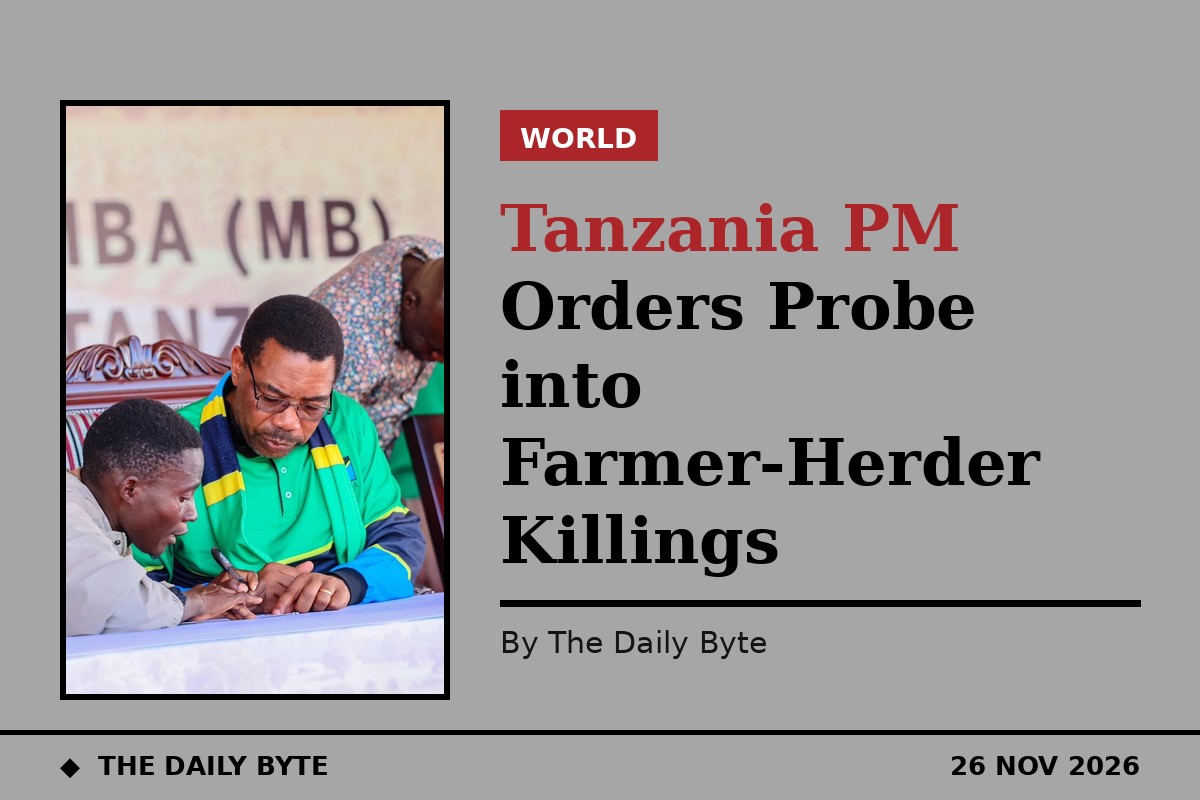
Tanzanian Prime Minister Mwigulu Nchemba has ordered an investigation into killings linked to farmer-herder conflicts in Ifakara, and told the town council there to obey a court order to compensate a resident whose house it demolished unlawfully.
Nchemba issued the orders on Wednesday, 25 November 2026, during a public meeting in Ifakara, Kilombero District, in the Morogoro Region, after listening to residents' complaints about unresolved land and property disputes.
Addressing residents, the prime minister said no amount of land or livestock could justify taking human lives. He condemned both the deliberate destruction of crops by herders and retaliatory attacks on livestock, and said anti-corruption officials must follow up on land dispute cases, citing bribery and the failure to enforce laws as key factors driving the violence.
"Even if we fight, land does not increase. We must respect the laws, the plans we have established and one another in our daily lives," he said, calling on citizens to safeguard national peace, security and unity.
He warned farmers against mob justice and against blaming entire pastoralist communities for offences committed by individuals, and cautioned livestock keepers against grazing cattle on cultivated farms. He said an offence committed by one person should not be attributed to an entire tribe or community, noting that the constitution recognises all citizens as Tanzanians with equal rights.
"We must not take the law into our own hands. Revenge and retaliatory attacks could deepen divisions among communities," he said.
The prime minister directed local government leaders to enforce land-use regulations and ensure disputes are addressed through established legal and community mechanisms. He also raised concern over corruption in land allocation, particularly cases where grazing areas are illegally allocated for farming and vice versa, saying such practices fuel tensions between communities.
The meeting also dealt with a long-running case in which Ifakara Town Council demolished a resident's house in 2017. Yusuf Faya told the prime minister the council had failed to comply with a court judgment following the demolition. After the council's lawyer read the judgment, it emerged that the demolition had been declared unlawful, and the council had been ordered to assess the demolished property, pay compensation and legal costs, and stop harassing the resident.
Nchemba questioned why the council had not implemented the ruling despite failing to appeal against it. "Such actions create unnecessary resentment. If you believe a primary court or district court has made an incorrect decision, even if you are the government, you must appeal," he said. "Go and implement that court judgment," he ordered.
Ifakara Town Council Director Pili Kitwana acknowledged the failure to comply with the ruling and pledged that the council would implement the court's decision.
In another case, Nchemba ordered a halt to plans to demolish the house of Pili Mavimba, an elderly woman who said she had lived on the property in Ifakara since 1958 but was facing eviction over an inheritance-related ownership dispute. After reviewing the documents and hearing explanations from local officials, he directed authorities to address the legal issues surrounding the property and facilitate the issuance of a title deed to the woman, in line with directives issued by President Samia Suluhu Hassan in 2024.
He also instructed Kilombero District Commissioner Dunstan Kyobya to coordinate with the Regional Administrative Secretary and land experts to resolve a separate dispute involving the family of the late Omari Mtenga, concerning the division of a five-acre farm, which he said should be surveyed and allocated in accordance with an existing court judgment.
The prime minister used the visit to press local officials on service delivery as well, ordering authorities to budget for ambulance fuel instead of charging patients, and directing hospitals not to withhold bodies over unpaid bills. He also demanded completion of a stalled school project in Malinyi by January, without further contributions from residents.
The intervention follows warnings Nchemba gave a day earlier during his working tour of Morogoro Region, when he told farmers and livestock keepers to respect land-use plans and the rule of law. Deputy Minister for Lands Kaspar Mmuya said at the time that land experts had inspected boundaries between residents and the Morogoro Sugar farm, and that a former ministry employee who allegedly collected money from residents by promising to help them obtain land titles had been dismissed.
Farmer-herder conflicts over land and grazing rights are a recurring source of violence in parts of Tanzania, and the government has in recent weeks warned local officials that they will face disciplinary and legal action if they fail to control illegal livestock movements. Nchemba's orders in Ifakara put the responsibility on local authorities to turn court decisions into action, particularly in disputes affecting residents' homes, property rights and livelihoods.


