Tanzania warns firms sitting on idle mining licences
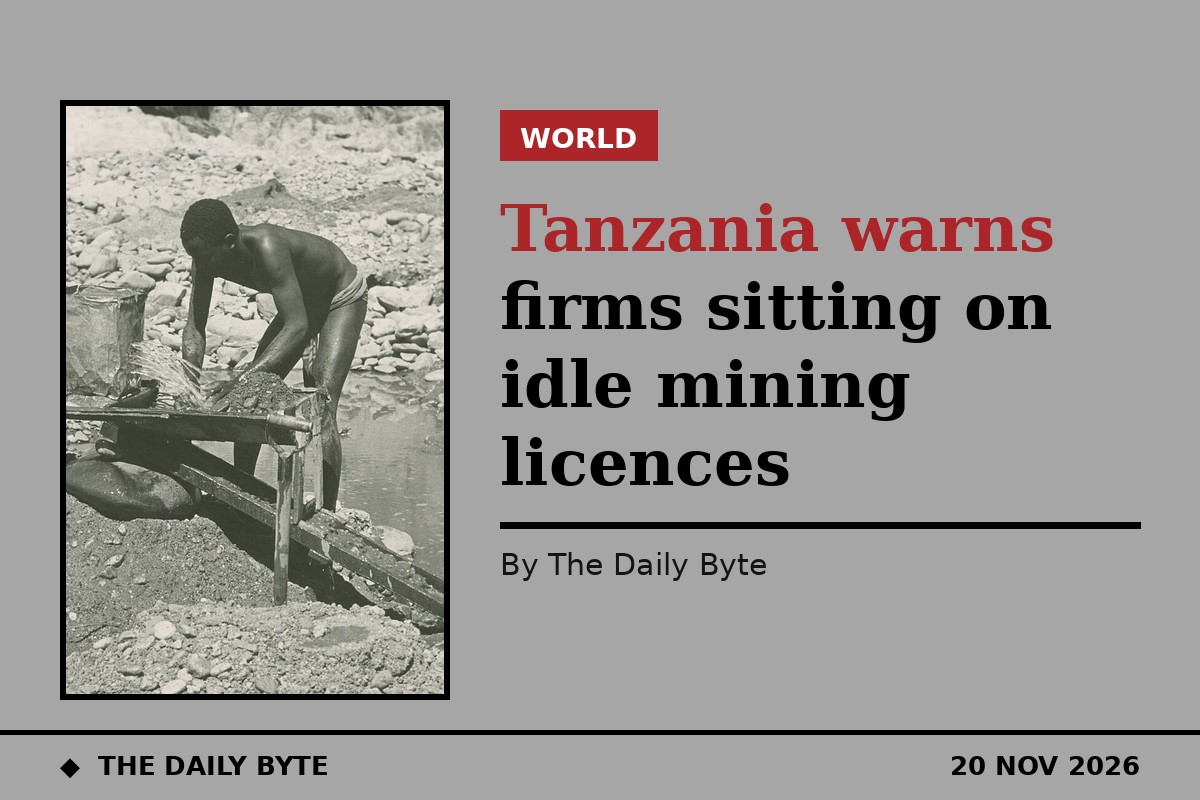
Tanzania has warned mining investors who hold licences without developing their projects that the government will take action against them, as it steps up efforts to turn the country's mineral wealth into jobs, industrial investment and increased revenue. Vice-President Deogratius Ndejembi delivered the warning at the 2026 Tanzania Mining and Investment Conference in Dar es Salaam, telling licence holders they must meet the conditions attached to their licences and start work on the ground they have been allocated.
Use it or lose it warning
Ndejembi said the government would not hesitate to act against investors delaying projects, according to IPP Media. "Investors holding licences should ensure they comply with their conditions and commence mining operations. When the time comes, the government will not hesitate to take action against those who hold licences without developing them," he said.
He singled out a uranium mining project in Namtumbo District, in Ruvuma Region, where a company holding a mining licence had yet to begin development despite the project's strategic importance, something he had observed during a recent tour of the region. Delays affecting other major strategic mineral projects, involving graphite, niobium, helium and nickel, were also preventing the country from fully exploiting the opportunities available in the sector, he said.
The conference, held from 19 to 21 November at the Julius Nyerere International Convention Centre, brought together government officials, investors and mining stakeholders under the theme "Value-Added Minerals: The Engine of Industrialisation and Economic Growth", according to TanzaniaInvest.
The push to process minerals at home
At the heart of the government's message is a shift from exporting raw minerals to processing them inside Tanzania. Ndejembi said the country needed to move beyond extraction and raw exports by strengthening the whole value chain, including refining, smelting, cutting, polishing and manufacturing finished products.
Minerals Minister Anthony Mavunde said the government was already implementing reforms to increase domestic processing and ensure more of the economic benefits of mining stayed in Tanzania. The government has approved the allocation of 10 per cent of mining revenue to finance geological research and exploration through the Minerals Survey Fund, money the ministry must ensure is properly managed, Ndejembi added.
The push is also about electricity and skills in mining areas. Ndejembi called for stronger power infrastructure in minerals-producing areas such as Chunya, where existing supplies are insufficient, and pointed to the construction of a major substation at Iganjo under the Tanzania-Zambia power link project. Small-scale mining accounts for about 40 per cent of minerals production, and he urged financial institutions to expand lending to small miners so they can improve their operations and add value to what they produce.
What the sector is worth
The figures presented at the conference underline why the government is pressing the point. The mining sector contributed 10.3 per cent to gross domestic product, while mineral exports had reached $5.4 billion, with eight gold-refining plants already operating and a further 16 mineral-processing factories under construction, mainly targeting nickel and copper.
About 18,974 Tanzanians were directly employed in the formal mining sector, while more than seven million people participate in the wider mining value chain. The Bank of Tanzania had accumulated 39.6 tonnes of gold reserves following domestic gold purchasing arrangements, and the sector had contributed 1.393 trillion Tanzanian shillings to the Consolidated Fund in the 2025/26 financial year. In the first three months of the current financial year it had already collected 555 billion shillings, above the quarterly target of 483 billion.
The government wants at least 60 per cent of the 5.2 trillion shillings spent annually by mining companies on goods and services to remain in the domestic economy through local suppliers, Mavunde said. Among the investments highlighted were a heavy mineral sands separation plant in Pangani, in Tanga Region, and a planned large copper and niobium processing facility in Songwe Valley, in Mbeya Region.
What happens next
The warning to idle licence holders is now the test. The government has said negotiations on one major strategic project are progressing well and an agreement should soon be signed, but it has not named the companies facing action or set a deadline for them to start work. Investors, and the communities around the stalled projects, will be watching whether the threat of action is followed by revocations, or by movement on the ground in places such as Namtumbo.
Sources: IPP Media (The Guardian) and TanzaniaInvest.


