Teen Held for Selling Agniveer Data on Dark Web
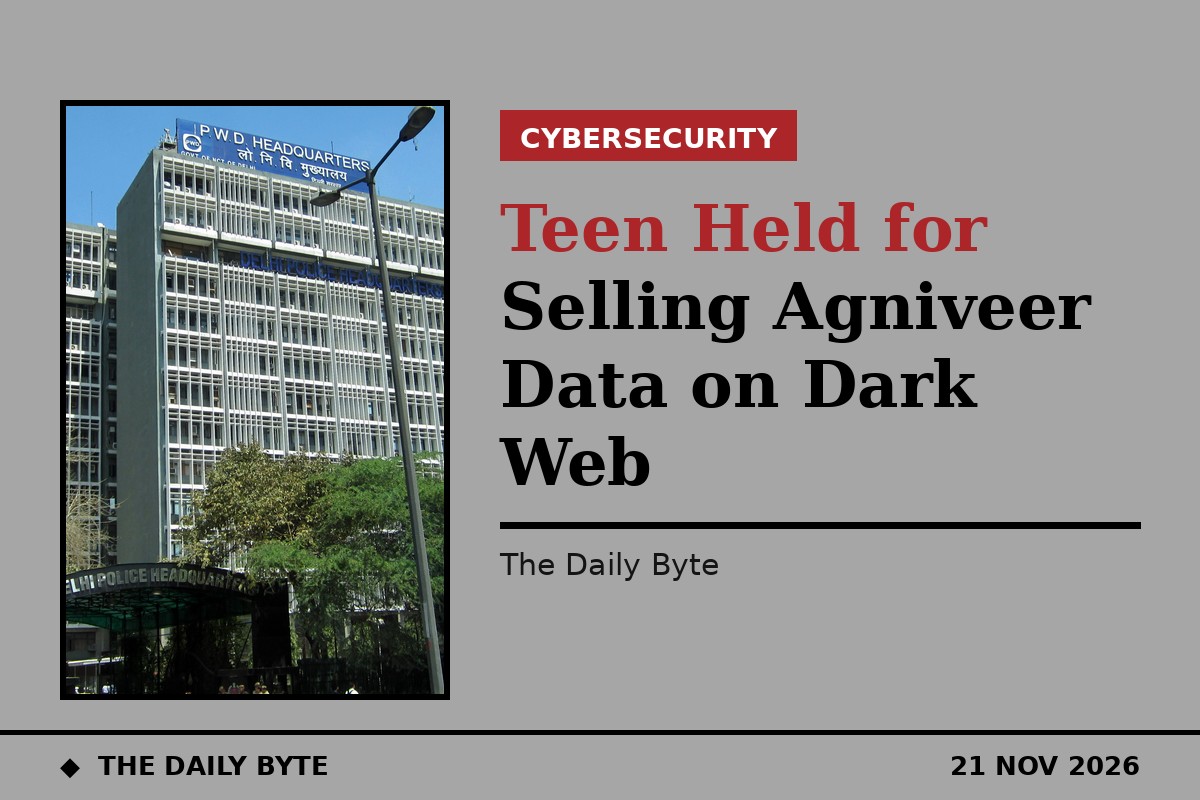
Delhi Police have apprehended a 14-year-old boy accused of breaking into a government test website for former soldiers and trying to sell their personal details on the dark web for 500 dollars. The case, reported on 21 November, has drawn attention because investigators say the teenager used artificial intelligence tools to help him get in, and because the data at stake belongs to people who served in India's armed forces.
The boy, from Ballabhgarh in Haryana, was detained by the Intelligence Fusion and Strategic Operations unit, known as IFSO, part of the Delhi Police Special Cell. Investigators say he gained unauthorised access to a test website built for former Agniveers, the personnel recruited under the Agnipath scheme, and then advertised the information he claimed to have taken on a dark web marketplace.
What police say happened
According to investigators, the IFSO unit spotted the listing during routine monitoring of the dark web in September. The advertisement offered what it described as verified administrator credentials for the Career Progression Portal, a Ministry of Home Affairs site meant to help former Agniveers move into jobs in the central armed police forces, Assam Rifles, state police and private security. The listing also claimed to include records of more than 2,500 personnel across 47 government departments, along with an encryption key, sign-on integration details, a map of the site's back-end routes, ready-made scripts and full access to the admin panel. Some reports put the advertised figure higher, at about 4,000 personnel, and the asking price at 500 dollars in cryptocurrency.
Officers traced the digital trail to the teenager and detained him in October. They seized material from his devices and questioned him under juvenile justice procedures before handing him back to his family. A case has been registered under the relevant provisions of the Information Technology Act. Police say they are still establishing whether any buyer was contacted and whether any data actually changed hands.
Was the data real?
That question is still open. The website involved was a test or development version of the portal, which has not yet been formally launched, and investigators have not confirmed whether the files recovered from the boy's devices contain genuine personal information. Delhi Police have written to the Ministry of Home Affairs asking for the official Agniveer database so the recovered material can be checked against it. Until that comparison is done, the scale of any leak remains unverified, and police have not said whether a live production system was ever compromised.
Investigators are also examining how the site was reached. Police say artificial intelligence tools were used while the teenager was trying to access the website, and they are looking into whether those tools were used to find weaknesses, to get past its defences, or to help with other parts of the alleged activity. The precise technical method is still under examination, and no details of the technique have been made public.
Why the case matters
The Agnipath scheme was introduced by the Indian government in June 2022 and recruits personnel into the Army, Navy and Air Force for four years of service. The Career Progression Portal was set up to help those leaving after their tenure to find work elsewhere in government service. A breach of a system holding their details would put former service personnel at risk of identity theft and targeted fraud, which is why police are treating the claim seriously even though the data has not yet been verified.
The case also underlines how easily available digital tools can be turned to unlawful use. A school-age teenager, working alone and with the help of AI tools, is accused of reaching a government-linked system and putting its data up for sale within weeks. For the organisations that run such portals, the lesson is that test and development sites need the same protection as live ones, because attackers do not distinguish between the two. For everyone else, it is a reminder that personal data advertised on the dark web is not always what it claims to be, and that the police investigation into this case is still under way.