Telstra satellite texting reaches iPhones in outback
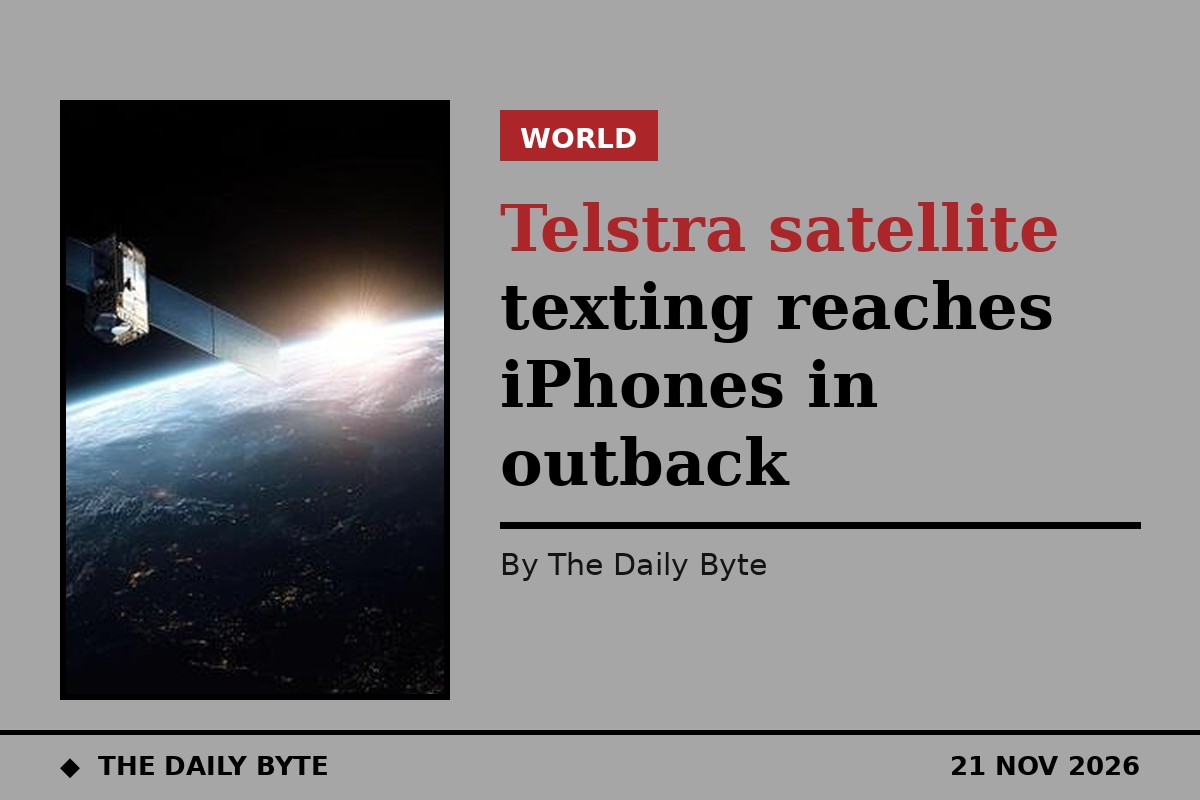
Telstra's satellite-to-mobile texting service has expanded from Samsung phones to iPhones, giving people in remote parts of Australia a way to send messages from places where no mobile signal reaches.
The service, delivered through SpaceX's Starlink satellites, began with a limited rollout on Samsung Galaxy S25 handsets last week. Over the weekend it expanded to Apple iPhone 13, iPhone 14, iPhone 15 and iPhone 16 models, according to the Regional Tech Hub, which published its account of the rollout on 21 November.
Telstra is the first Australian telecommunications provider to offer the service. It lets customers send and receive text messages in areas beyond the reach of its mobile network, using satellites fitted with equipment that acts like a phone tower in space.
No new handset needed
The rollout comes at no extra cost for Telstra customers on standard upfront plans. For many Samsung and iPhone users, no new handset is required, just a software update, which for most people has already happened automatically.
Users can tell when the service is active by looking at the signal bar. Samsung phones show a small satellite icon, while iPhones display the words "Telstra SpaceX" and "SAT" instead of 4G or 5G. Apple's Emergency SOS texting feature, available on iPhone 14 and newer models, continues to work alongside it.
There are limits. The service does not cover Western Australia's radio quiet zone or Australia's remote offshore territories and islands. It also cannot be switched on manually. If a phone can detect even the faintest mobile signal, it is unlikely to switch to satellite, and messages can take a few minutes to send depending on location and satellite availability.
Voice calls still some way off
For now the service handles text messages only. Voice calls and low-speed data are planned under the same Starlink partnership, but Telstra's technology chief, Channa Seneviratne, said they are unlikely before 2027.
The delay comes down to satellite density. Starlink's current fleet of around 500 direct-to-cell satellites is not yet dense enough to support reliable voice services in Australia. "Sending a text message with Starlink is a short burst of data, but with a phone call, you're talking about something that is many minutes, and the satellite is moving at 25,000 kilometres an hour," Seneviratne said.
Telstra says it has invested 11.8 billion Australian dollars in its network over the past seven years, including 4.3 billion dollars in regional Australia. The federal government has also commissioned a 20 million dollar connectivity audit through Australia Post and Accenture, which is expected to be completed in 2027.
Rivals are behind
Telstra's rivals are working on similar services but have not yet launched them. Optus signed a Starlink partnership in 2023 and promised remote text messaging by late 2024, but missed the deadline after regulatory setbacks affecting SpaceX in the United States. TPG Telecom, which owns Vodafone, has partnered with Lynk Global, which operates competing low-earth orbit satellites.
For people living and travelling in the outback, the change is practical rather than dramatic. Satellite-to-mobile does not replace a mobile network, and it will not help in an emergency as quickly as a normal call. But for a farmer, a traveller or a family camping beyond coverage, being able to send a text at all is a step forward, and Telstra says voice and data will follow as the satellite fleet grows.


