Ten nations sign JEF naval pact in Oslo
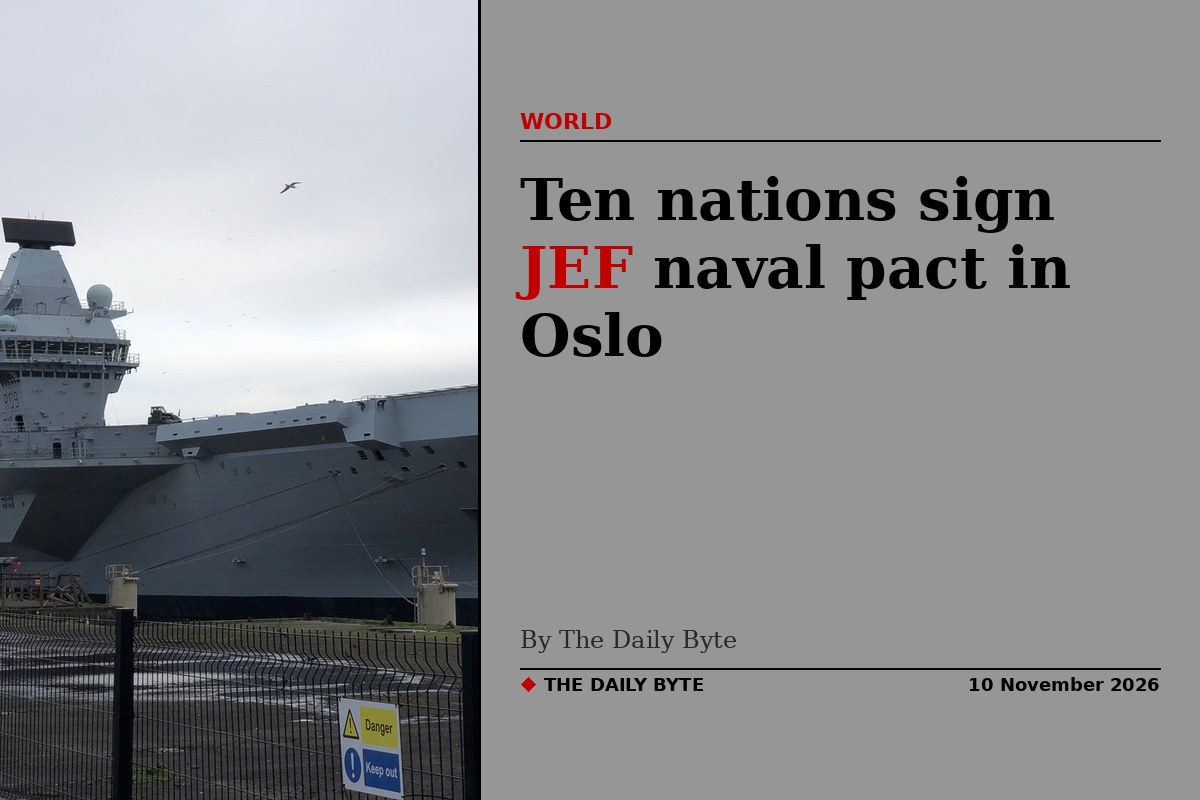
Ten northern European nations signed a naval partnership agreement in Oslo on Tuesday, 10 November 2026, pledging joint action to deter Russian submarines and to protect the shipping lanes and undersea cables and pipelines that carry Europe's data and energy. The signing took place aboard the British aircraft carrier HMS Prince of Wales, which is hosting defence conferences in the Norwegian capital this week.
The pact binds the members of the UK-led Joint Expeditionary Force (JEF) — the United Kingdom, Denmark, Estonia, Finland, Iceland, Latvia, Lithuania, the Netherlands, Norway and Sweden — to coordinated naval operations across the North Atlantic, the Arctic and the Baltic Sea. The Financial Times first reported the planned signing, which was announced on 8 November by General Sir Richard Knighton, Britain's Chief of the Defence Staff.
Knighton said the group would move from "memorandums of understanding, information exchange and consultations" to practical joint action. The central task is deterring submarine threats to shipping in wartime and safeguarding the underwater infrastructure on which the region depends.
What the pact covers
Under the agreement, the ten JEF countries commit to coordinated naval operations to monitor submarine movements and to respond together to threats against shipping and seabed infrastructure. The focus covers three seas: the North Atlantic, the Arctic and the Baltic, where Western officials have warned of increased Russian activity around cables and pipelines.
The JEF has operated under British leadership since 2014 as a rapid-reaction grouping built to respond quickly to crises in northern Europe. The new naval partnership turns that cooperation into a standing arrangement for the Baltic and the wider northern seas, rather than a series of one-off exercises.
HMS Prince of Wales, the Royal Navy's largest warship, arrived in Oslo on Friday escorted by the destroyer HMS Dauntless, the Norwegian frigate KNM Fridtjof Nansen and the coast guard vessel KV Nornen. The 284-metre carrier is hosting the International Sea Power Conference and the Atlantic Future Forum this week.
Britain announces £90m for drones and sensors
On the same day in Oslo, Britain announced it would spend £90 million on drones, sensors and artificial intelligence systems to help the Royal Navy counter Russian undersea threats and protect critical infrastructure. The framework with Hampshire-based company Ocean Infinity Solutions, announced at the International Sea Power Conference, is the first phase of the Royal Navy's Atlantic Bastion programme and is expected to support almost 200 skilled jobs.
Atlantic Bastion is the Royal Navy's plan to create a hybrid naval force of crewed and uncrewed vessels to hunt and track enemy submarines. Working alongside NATO and JEF allies, it aims to strengthen protection against interference, sabotage and hostile activity, with the new Atlantic Net system increasing the scale and persistence of underwater surveillance.
Why northern Europe is acting now
Concern about seabed infrastructure has grown sharply in recent years, with governments warning that cables and pipelines are vulnerable to sabotage. In April 2026 Britain said it had deployed vessels to deter Russian submarines that had spent more than a month in and around British waters.
Russia has denied allegations of targeting undersea infrastructure. But for the ten JEF nations, the Oslo pact is intended as a visible signal that the group can act together at sea, quickly, if shipping or cables come under threat. Further details of joint patrols and exercises under the partnership are expected to follow from the conferences aboard HMS Prince of Wales this week.


