Tesla EU Vote on Self-Driving Set for 15 December
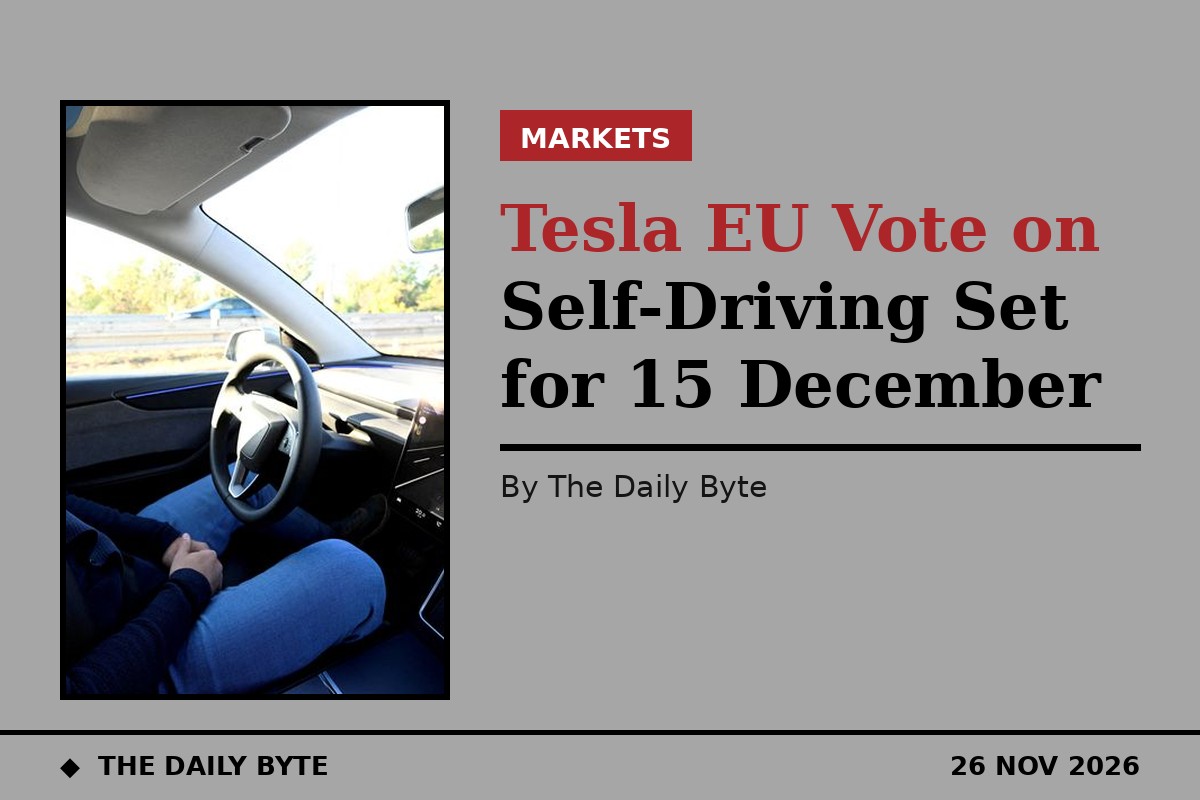
European Union countries may vote on 15 December on whether to approve Tesla's assisted-driving system across the whole bloc, according to a draft agenda published by the European Commission on Thursday 26 November.
The agenda says member states will further examine the Dutch request to grant type approval for the system “with possible vote”. It is the first time the Commission has explicitly raised the possibility of a vote, Reuters reported from Stockholm.
The meeting was postponed from 1 December to 15 December, in a process that was initially expected to conclude in October. The outcome will decide whether Tesla can roll out its driver-assistance technology across Europe, or face a setback in one of its most important markets.
What the vote decides
Bloc-wide approval needs the backing of at least 15 of the European Union's 27 member states, representing 65 percent of the bloc's population. Tesla has already secured national approval in 12 countries, with Italy the latest to authorise the system after the Netherlands, Lithuania, Estonia, Denmark, Belgium, Slovenia, Czechia, Croatia, Slovakia, Latvia and Finland.
The Netherlands became the first EU country to approve the technology independently in April. But support from larger economies remains critical, and Germany has been a particularly important prospect after pushing Tesla to address concerns about the system's capabilities and safety.
The stakes go beyond new sales. If the EU rejects wider approval, the existing national authorisations could be invalidated, potentially leaving customers in the 12 approved countries unable to use the system. That makes the December meeting a binary event for Tesla's European driver-assistance business.
How Tesla changed the system to win regulators over
Tesla has adjusted both its branding and its software in response to regulatory scrutiny. In Europe it replaced the Full Self-Driving (Supervised) name with Tesla Assisted Driving, making clear that the system assists drivers rather than offering full autonomy.
The company also cut the maximum speed offset from 50 percent to 10 percent above the posted limit. The setting now resets to zero each time the vehicle starts, addressing concerns about excessive speed. Drivers must still remain attentive and responsible for driving at all times.
The changes show how far Tesla has been willing to go to satisfy European regulators, and how different the European rollout is from the system sold in North America.
Why the decision matters commercially
The regulatory push matters because Tesla is trying to build recurring software revenue beyond vehicle sales. Its paid Full Self-Driving customer base rose 67 percent year on year to 1.74 million in the third quarter of 2026, and more than 75 percent of new vehicle deliveries in North America included paid subscriptions at delivery.
Wider geographic availability could support vehicle demand and improve long-term profitability, but approvals alone will not guarantee subscription growth. Actual take-up will depend on whether customers are willing to pay, how useful they find the technology, and whether Tesla keeps meeting local regulatory requirements.
Competition is also advancing. Alphabet's Waymo is preparing to bring its driverless ride-hailing service to Munich, with commercial operations targeted towards the end of 2027, subject to regulatory clearance. Rivian is pursuing supervised autonomy through its Autonomy+ package.
Tesla shares have gained 7 percent over the past three months, compared with 5 percent growth for the industry, according to Zacks. The 15 December meeting will test whether that momentum can survive the bloc's verdict.


