Thai Car Output Falls 35% as Floods Hit Factories
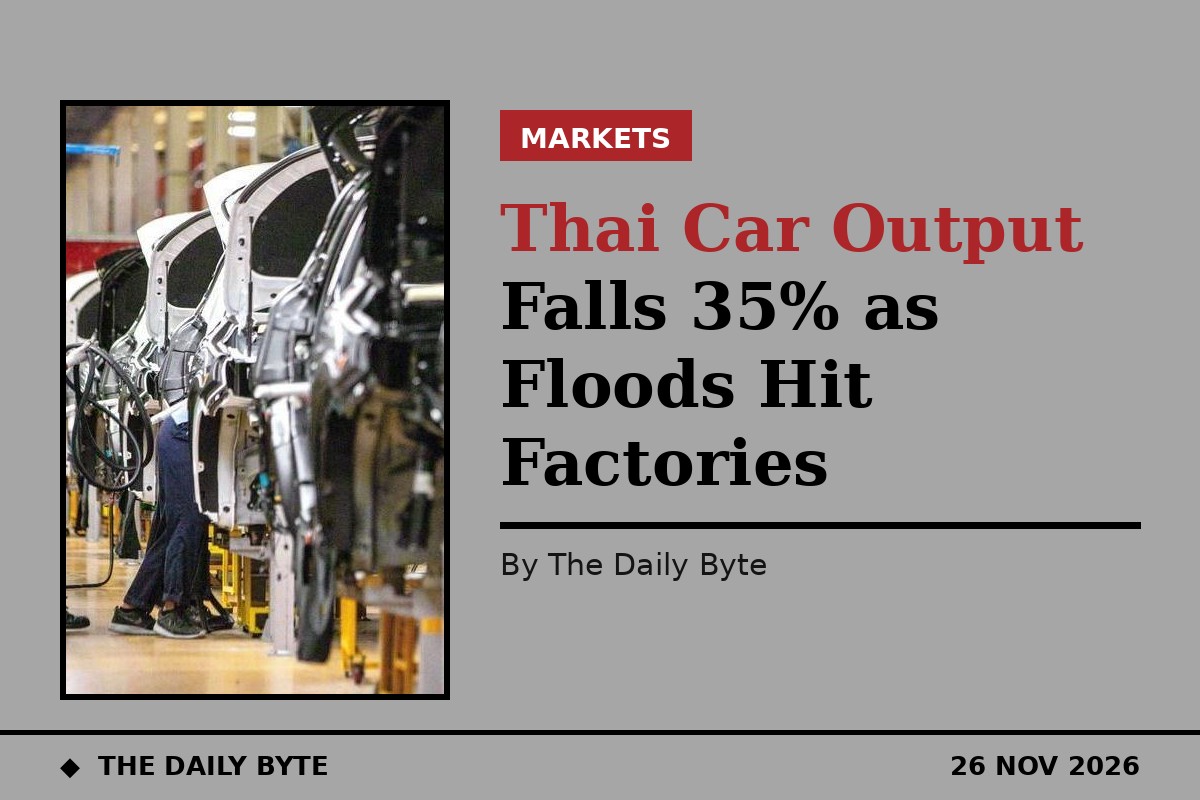
Thailand built 87,938 vehicles in October, down 35.19% on a year earlier, after floods disrupted factories and left parts suppliers unable to deliver.
The Federation of Thai Industries (FTI) said the fall was far steeper than September's 6.08% annual decline, and output was more than 26% lower than in September. Flooding from late September to mid-October forced several assembly plants to suspend production as component makers could not deliver parts and some workers could not reach their workplaces.
The disruption hit hybrid passenger cars, pick-up trucks and PPVs hardest, according to Surapong Paisitpattanapong, adviser and spokesman for the FTI Automotive Industry Club.
Passenger-car output fell 42.60% in October to 32,141 units. Production for export reached 56,514 vehicles, down 33.51% on the year, while production for the domestic market fell 38% to 31,424 units.
Exports took the hit
Actual exports of completely built-up vehicles fell 34.38% in October to 54,503 units, largely pick-ups and internal-combustion passenger cars, reversing 4.55% growth in September. The federation attributed the decline to component shortages caused by the floods.
Thailand is a major regional vehicle manufacturing and export base for companies including Toyota and Honda, so the disruption matters beyond its own market. Over the first ten months of the year, export production stood at 743,161 vehicles, down 6.62%, while total production reached 1,167,968 vehicles, down 3.59%.
Domestic sales moved in the opposite direction. Sales totalled 51,127 vehicles in October, up 8.71% on a year earlier after a 14.28% gain in September, although they were down 7.47% from September. The federation said sales of imported electric cars, still subject to a low 10% excise rate, contributed to the increase. Total sales in the first ten months rose 15.63% to 572,353 vehicles.
The full-year target still stands
Despite the October slump, the industry remains confident it can produce 1.45 million vehicles in 2026. Manufacturers expect to recover the lost output by the end of November now that parts supplies have resumed.
The government is also moving to protect domestic manufacturing. The Cabinet has approved a revised excise-tax structure for imported vehicles, raising excise duty on imported battery electric vehicles and range-extended electric vehicles to as much as 35% from 1 January 2027. The policy is intended to support Thailand's role as a production and export base and safeguard an automotive supply chain employing at least 800,000 Thai workers.
Trade talks with the United States remain unfinished. The FTI said the Thailand-US Agreement on Reciprocal Trade, for which the two countries signed a joint statement on 17 November, is not yet a final agreement and has no legal effect. It could lower import costs and create trade opportunities, but may also increase competitive pressure on Thailand's vehicle sector.
The October figures show how quickly a natural disaster can interrupt a manufacturing hub, even while showroom demand holds up. Whether the promised November recovery arrives will decide if the full-year target survives the floods.
Frequently asked questions
How many vehicles did Thailand build in October 2026?
Thailand assembled 87,938 vehicles in October, down 35.19% from a year earlier, according to the Federation of Thai Industries.
Why did output fall so sharply?
Flooding from late September to mid-October disrupted parts supplies and forced several assembly plants to suspend production.
Did Thai car sales fall too?
No. Domestic vehicle sales rose 8.71% on the year to 51,127 in October, helped by sales of imported electric cars.


