Thailand halves jail term for MP in royal insult case
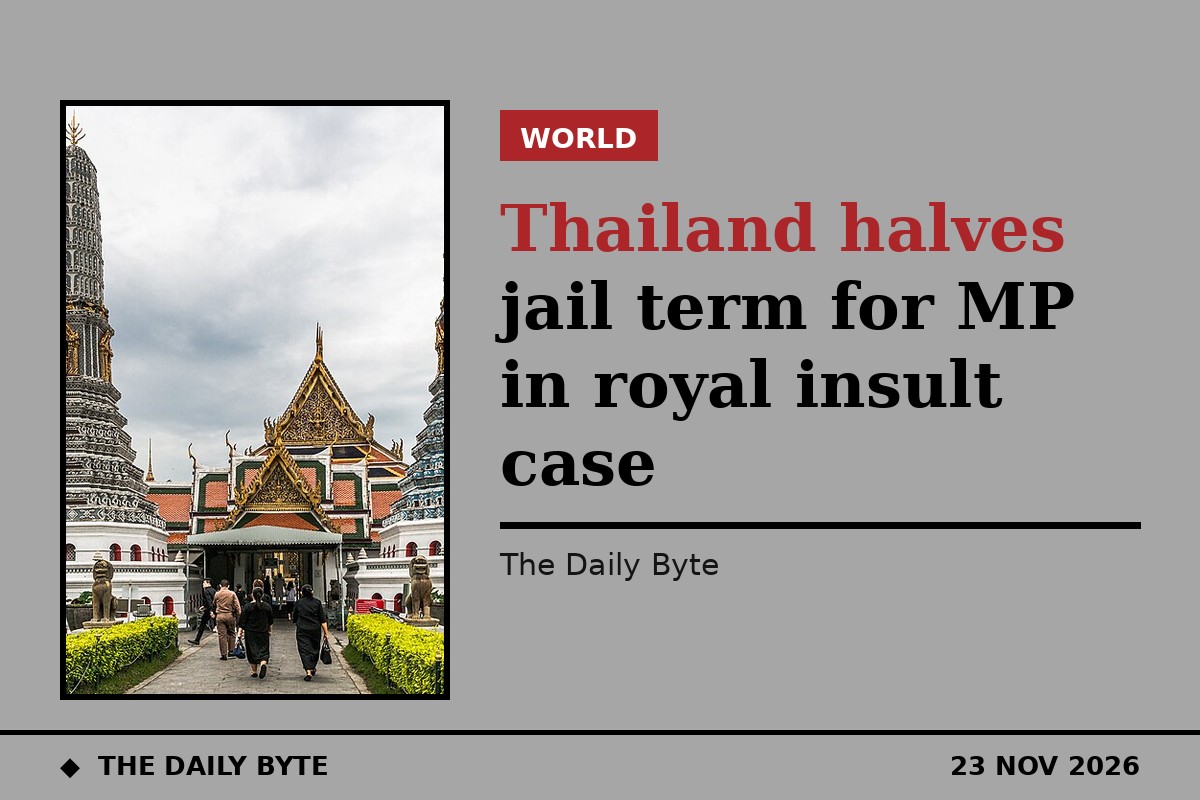
Thailand's Court of Appeal halved the jail term of opposition lawmaker Rukchanok Srinork on Monday 23 November 2026, cutting a six-year sentence for insulting the monarchy to three years, and acquitting her of a separate computer crime charge. Rukchanok, a People's Party lawmaker known locally as Ice, has denied wrongdoing and is seeking bail while her team prepares an appeal to the Supreme Court.
The ruling was delivered on Monday morning at the Criminal Court on Ratchadaphisek Road in Bangkok, according to Reuters. The court said it acquitted her of sharing the social media post at the centre of the case, which halved the jail term. A second report confirmed the three-year sentence was imposed without suspension under Section 112 of the Criminal Code, Thailand's lese-majeste law, and that the Computer Crime Act charge resulted in an acquittal, according to The Library.
The case against Rukchanok
The case arose from social media posts Rukchanok made in 2021 on Twitter, now known as X. She was originally convicted under two provisions: Section 112 of the Criminal Code, which covers insults to the monarchy, and Section 14 of the Computer Crime Act. The appeal ruling changes the outcome on both charges, reducing the Section 112 sentence and clearing her of the computer crime charge, although the three-year custodial sentence remains without suspension.
Rukchanok, a former activist, kept her seat in parliament while her appeal was pending and was re-elected in February 2026. People's Party leader Natthaphong Ruengpanyawut told reporters she was seeking bail and that the process of filing an appeal to the Supreme Court was already under way. Supporters gathered outside the court and gave her red roses before she entered the courtroom, where she said she remained confident in her innocence.
Thailand's lese-majeste law
Thailand has among the strictest lese-majeste laws in the world, with jail terms of up to 15 years for each case of insulting the monarchy. At least 199 people in Thailand were sentenced to jail terms for alleged insults of the monarchy between May 2014 and July 2026, according to the legal aid non-profit Thai Lawyers for Human Rights, cited by Reuters.
The law has been a focus of political debate in Thailand for years. The People's Party, the successor to the progressive Move Forward Party, has campaigned for reform of Section 112, arguing that it is used to silence critics. Supporters of the law say it protects an institution that is central to Thai identity and stability. The courts have handed down a series of high-profile Section 112 sentences in recent years, including against activists, lawyers and politicians.
Rukchanok's case is one of several involving People's Party lawmakers. In a separate case, another party lawmaker had a two-year prison sentence for defaming the monarchy in a 2021 speech upheld on appeal, and was granted bail pending a Supreme Court appeal. The pattern has kept the future of elected opposition MPs uncertain even after they win re-election.
What happens next
Rukchanok's legal team is preparing an appeal to the Supreme Court, the final stage of the process. If bail is granted, she can remain free and keep her parliamentary seat while that appeal is considered. If bail were refused, she would face immediate imprisonment and removal from parliament, a consequence her party is keen to avoid.
The Supreme Court appeal could take months, and the outcome will be watched closely by human rights groups and by Thailand's opposition, for whom the case has become a test of how far the courts will go in applying the lese-majeste law to elected politicians. For now, the appeal court's decision leaves Rukchanok with a shorter sentence and one charge cleared, but still facing prison if her final appeal fails.
FAQ
Who is Rukchanok Srinork? She is a People's Party lawmaker in Thailand, known locally as Ice, and a former activist. She was re-elected to parliament in February 2026.
What did the appeal court decide on 23 November 2026? It halved her jail term from six years to three years under Section 112, Thailand's lese-majeste law, and acquitted her of a separate charge under the Computer Crime Act.
Is she going to prison now? Not immediately. She is seeking bail while her team prepares an appeal to the Supreme Court.
How strict is Thailand's lese-majeste law? Conviction carries up to 15 years in prison for each case, and at least 199 people were jailed for alleged insults to the monarchy between May 2014 and July 2026, according to Thai Lawyers for Human Rights.


