Thailand to Test Tap Water for Arsenic in Seven Provinces
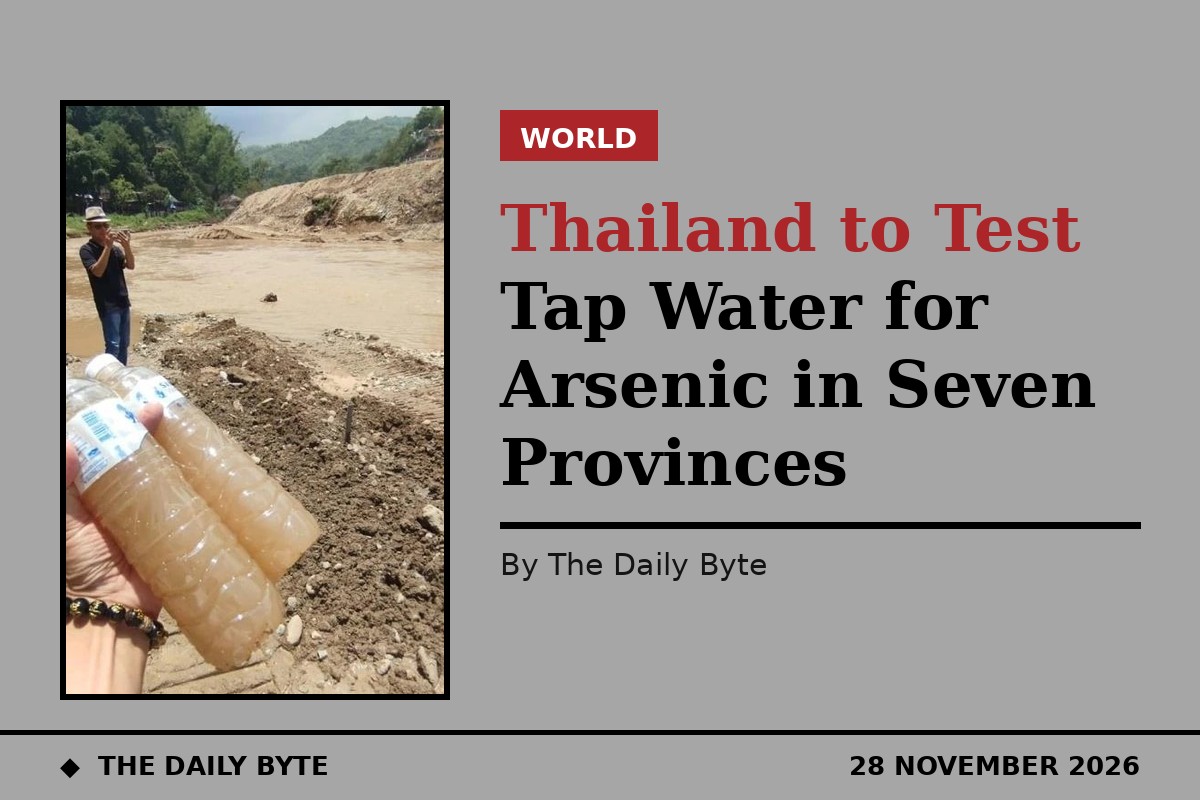
Thailand will test tap water for arsenic in Chiang Rai and six other provinces, checking 91 village water supply systems and 390 drinking-water factories, after contamination was found in rivers and local water supplies in the north. Health officials aim to complete the first round of checks within two weeks and repeat them twice a month.
The Department of Health said the testing will focus on areas within one kilometre of rivers and other natural water sources. The six provinces named by the department are Chiang Rai, Mae Hong Son, Loei, Nong Khai, Bueng Kan and Nakhon Phanom; it has not identified the seventh in its account of the plan. The checks follow concern over contamination in the Kok and Sai rivers and local water supplies. Officials suspended tap-water supplies to 14 villages in Mae Sai district earlier this month after arsenic in the local waterworks reached about 30 times the safe limit, according to the department's director-general, Thiti Sawaengtham.
Food and bottled water also tested
Working with the Food and Drug Administration and the Department of Medical Sciences, the health department will test 53 fruit and vegetable samples and 25 rice samples for arsenic, cadmium, mercury and lead. Rice from the border area has been under scrutiny, with exporters and mills slowing purchases of Chiang Rai rice while testing takes place. The Food and Drug Administration has already randomly tested 37 samples of sealed bottled drinking water, five from Mae Sai and 32 from Mueang Chiang Rai district. Thiti said none contained substances above legal limits.
Thiti advised people in at-risk areas not to use river water directly. He said they should use water from the Provincial Waterworks Authority or village supplies certified to meet standards, and buy food and drinking water from reliable sources. The ministry plans to monitor the health of at-risk residents and is preparing urine test kits to screen for arsenic exposure. The department is also building an online dashboard for risk areas, monitoring points and test results, though officials have not announced when the dashboard or the kits will be available.
Two years of river contamination
The testing follows nearly two years of checks on rivers contaminated by suspected mining pollution from neighbouring Myanmar. Thai authorities have found dangerous levels of arsenic and lead in shellfish and other species in the rivers, an official told the AFP news agency on Thursday. More than 500 samples were taken from five rivers, and 18 had heavy metals at levels over safety limits. In some, arsenic was detected at nearly four times the permitted limit and lead at nearly six times the limit.
The tests involved samples from the Mekong and Salween rivers, which flow through Thailand and Myanmar, and three other rivers in Thailand's north, the Sai, Kok and Ruak. Authorities have urged residents to avoid eating 10 species, including shellfish, river snails, freshwater shrimp and mussels. No contamination was found in farmed aquatic species. Campaigners, experts and politicians trace the pollution back to unregulated mining in Myanmar, where the long-running civil war has led to unregulated exploitation of natural resources. There are fears the contamination could spread farther down the Mekong, which supports millions of people across several countries.


