Thruvision Orders Jump 66% as Funding Warning Hits Shares
Thruvision, the Oxfordshire maker of walk-through people-screening scanners, reported a sharp rise in orders in the first half of its financial year, but warned that it still needs to raise short-term debt finance, a funding gap its directors describe as a material uncertainty over the company's future.
The AIM-listed group said on Friday 20 November that order intake reached £4.1 million in the six months to 30 September 2026, up 66% on the £2.5 million taken in the same period a year earlier. Its order backlog stood at £2.6 million at the end of September, against just £0.2 million a year earlier, giving it far better visibility over second-half sales.
Revenue was flat at £2.6 million, in line with the board's expectations, but the quality of that revenue improved markedly. Adjusted gross margin rose to 44.3%, up 16.4 percentage points on the 27.9% recorded a year earlier, while the statutory gross margin rose to 31.4% from 17.4%. The adjusted loss before interest, tax, depreciation and amortisation narrowed to £1.3 million from a £1.6 million loss, and the statutory loss before tax narrowed to £1.7 million from £2.2 million.
Airport contract drives the order book
Much of the momentum came from aviation. Thruvision won a contract worth more than £3 million to deploy its systems across several major airports in South-East Asia, its largest deployment in the region to date, with delivery due in the second half of the financial year. Aviation revenue rose to £0.8 million in the half, from just £8,000 a year earlier, as part of that order began to be delivered.
The company also secured its first Canadian Government customer and further orders from retail distribution customers in the UK, Europe and the United States. Strategic partners generated almost 60% of first-half revenue. Retail distribution revenue fell to £0.7 million from £1.0 million, while revenue from prisons rose to £0.3 million from £0.1 million.
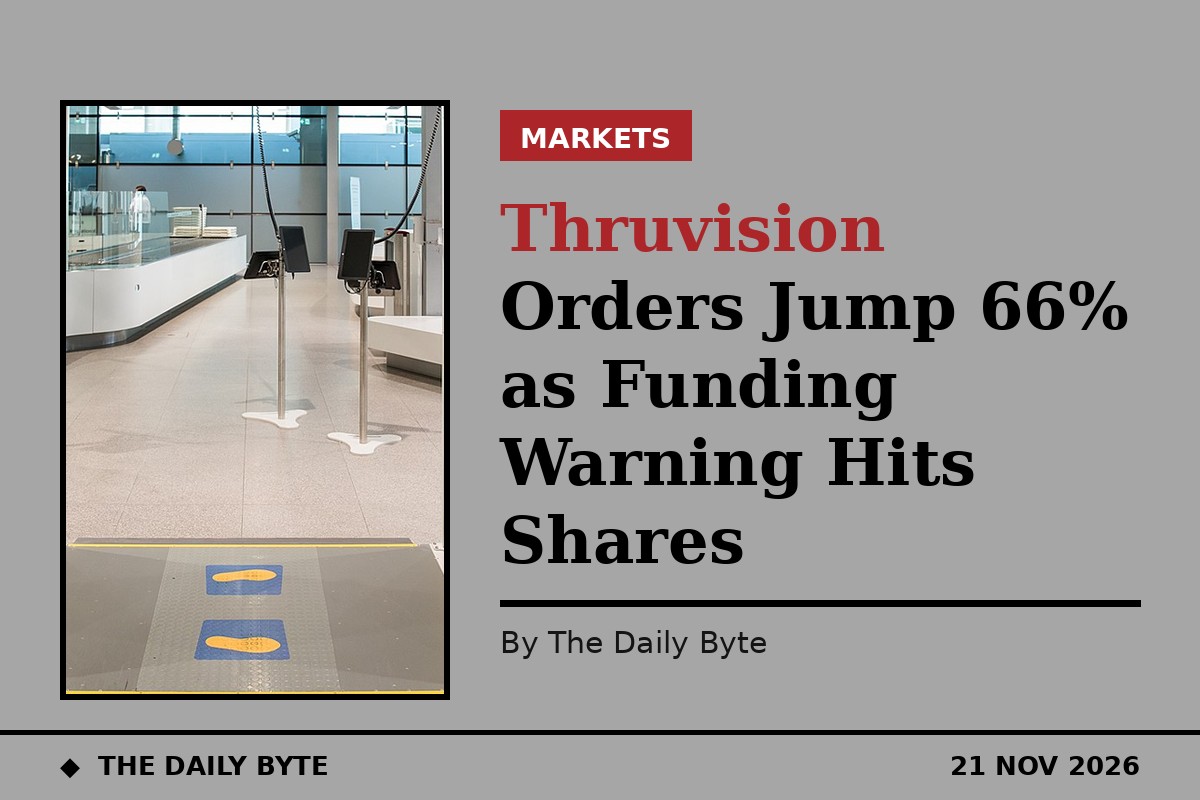
Thruvision's core product is its 8108 WalkTHRU platform, a walk-through scanner that detects concealed metallic and non-metallic objects in real time. The company said testing of the system under the UK Government National Protective Security Authority's discriminative threat detection method was an important third-party milestone, and that an engineering programme to cut build costs was on track to improve margins further.
Cash is tight despite the stronger pipeline
The brighter order picture sits alongside a tight cash position. Cash fell to £0.9 million at 30 September, from £2.0 million at the end of March, although it had recovered to £1.5 million by 19 November. In its interim results, the board said it intends to raise short-term debt finance to cover working capital needs, but that the funding had not been committed when the accounts were approved.
The company said there was no certainty the funding would be completed within the required timeframe, and that the need to secure it represented a material uncertainty that may cast significant doubt on the group's ability to continue as a going concern. The directors said they still had a reasonable expectation that the group could continue operating and had therefore prepared the accounts on a going-concern basis.
Investors reacted sharply. Thruvision shares traded down about 19.5% in midday trading on Friday, at 1.49p against a previous close of 1.85p, according to market data reported that day, as the funding warning overshadowed the stronger orders.
Executive chairman Tom Black said the company entered the second half with stronger commercial momentum and a growing international footprint, and that the board remained confident of delivering full-year revenue of £8.0 million, unchanged from its earlier expectation, with breakeven still targeted for the 2028 financial year. He cautioned, however, that constraints on the supply of some components and longer lead times were being carefully managed and could limit the group's ability to beat that revenue target even if more orders arrive, with undelivered orders rolling into the following year.