Treasury Yields Fall as Hot PCE Locks In Fed December Hike
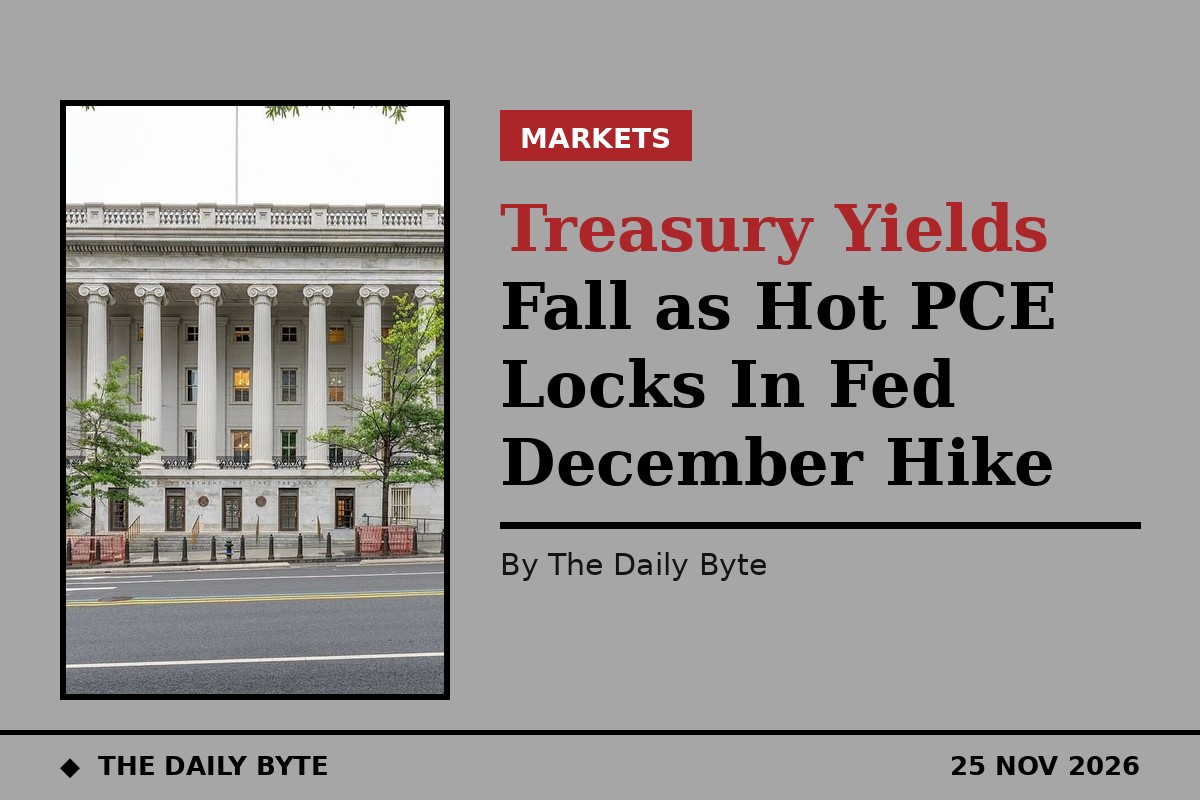
US Treasury yields fell on Wednesday after a flurry of economic data that left the Federal Reserve on course to raise interest rates next month, with investors buying government bonds for safety as technology shares sold off sharply.
The yield on the benchmark 10-year Treasury note fell 6.2 basis points to 4.839% shortly after the data was released, according to Tradeweb figures cited by the Wall Street Journal, its lowest level since 9 November. The two-year yield, which is more sensitive to expectations for interest rates, slid 7.1 basis points to 4.598%. Both yields later drifted back towards the levels seen before the data. Bond yields move in the opposite direction to prices.
The move came despite inflation data that was, if anything, hotter than forecast. The personal consumption expenditures (PCE) price index, the Fed's preferred gauge of inflation, rose 3.8% in the year to October, in line with analysts' expectations and up from 3.6% in September. Core PCE, which strips out volatile food and energy prices, rose 3.3% on the year, above the 3.2% that analysts had expected.
The second estimate of third-quarter gross domestic product, released at the same time, put growth at an annualised 4.3%. According to LSEG data, the figures reaffirmed market expectations of a 25-basis-point interest-rate rise by the Fed in December, which traders now see as fully priced in.
"The big highlight from this morning's data is GDP, which at 4.3% shows that the economy is booming, but unfortunately the inflation data is still too high and is unlikely to convince the Fed to remain on hold," Chris Zaccarelli, chief investment officer at Northlight Asset Management, told the Wall Street Journal.
Yields had already been falling before the data arrived. The 10-year yield was down 3.8 basis points at 4.863% in morning trading, with the two-year down 4 basis points at 4.630%, as investors positioned ahead of the releases in a holiday-shortened week. US markets are closed on Thursday for Thanksgiving.
The apparent contradiction — yields falling when hot inflation would normally push them higher — reflects a rush into safe assets as equities tumbled. The Nasdaq fell sharply on Wednesday as doubts about the artificial-intelligence boom deepened, and Treasuries were the main beneficiary of the flight from risk. Government bond yields in Europe fell in step: the 10-year German Bund yield dropped 4.7 basis points to 3.215%, and the 10-year UK gilt yield fell 6.5 basis points to 5.123%.
A $44 billion auction of seven-year Treasury notes later in the day drew softer demand, selling at a high yield of 4.708%, above the 4.699% yield on the securities in when-issued trading at the time of the sale.
For borrowers and investors, the message from Wednesday is mixed. The Fed looks set to tighten again in December, yet the bond market is increasingly worried about what tighter policy will do to growth — and is buying Treasuries as insurance against it.