Trinidad And Tobago Faces UN Human Rights Review
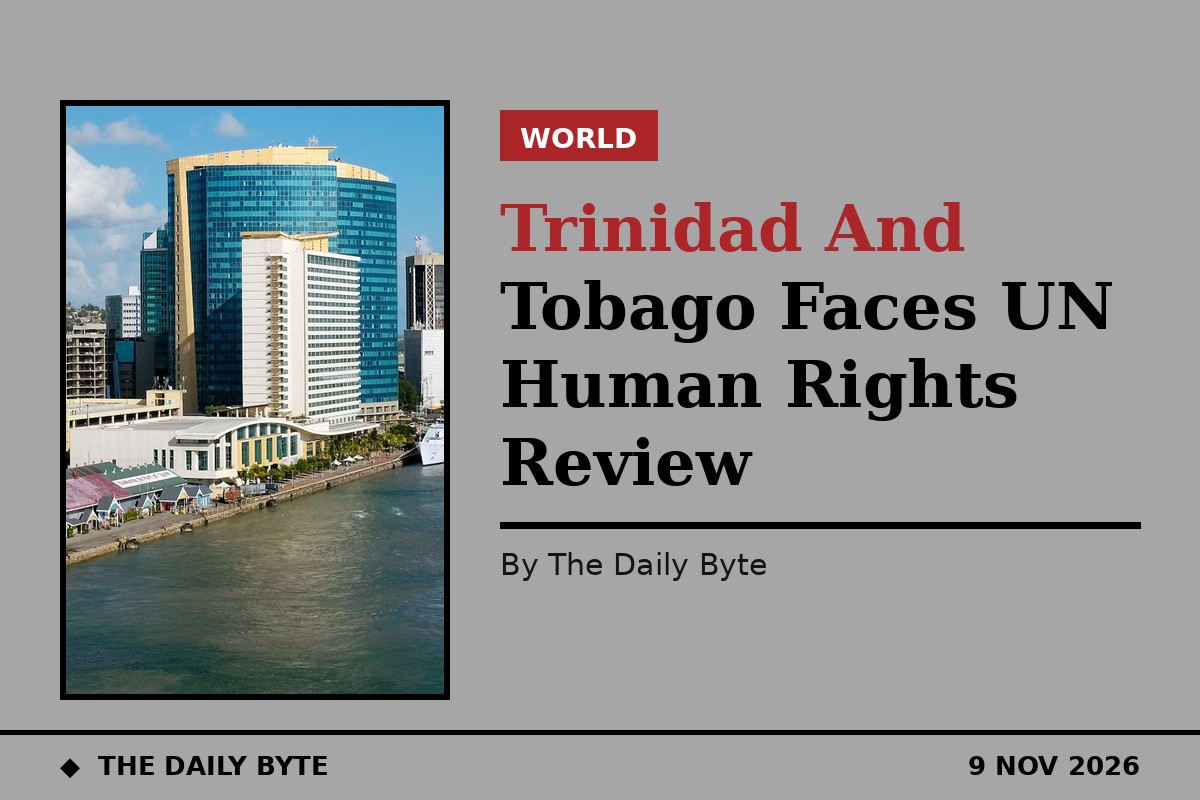
Trinidad and Tobago's human rights record comes under scrutiny at the United Nations in Geneva on Monday, as the country faces its fourth Universal Periodic Review.
The review takes place at the Palais des Nations from 09:00 to 12:30 Central European Time. Trinidad and Tobago's delegation is led by Chamyantie Lal, the country's Chargée d'Affaires a.i. in Geneva.
The Universal Periodic Review is the UN Human Rights Council's peer-review process, in which every member state has its record examined by other governments roughly every four and a half years. Trinidad and Tobago was previously reviewed in October 2011, May 2016 and November 2021.
Issues raised before the review
Thirteen submissions from civil society groups and other stakeholders were filed ahead of the review, raising concerns about emergency powers, detention, prison conditions, gender-based violence, discrimination and the treatment of migrants.
The submissions also raise the use of the death penalty. Forty-eight people were under sentence of death in Trinidad and Tobago in 2026, and campaigners have criticised the mandatory death penalty, under which judges have no discretion over the sentence for murder. Campaigners have long argued that the mandatory penalty breaches international standards because it removes judicial discretion from sentencing, and they have called for a moratorium while the law is reviewed.
A troika of three countries - Angola, Colombia and the Netherlands - will help steer the review and compile the recommendations that come out of it.
What happens next
The review is conducted by a working group of the Human Rights Council, chaired by the Council's president. Any UN member state can take the floor to ask questions and make recommendations, and the country under review can respond during the session.
During Monday's session, other governments will question the delegation and make recommendations. The working group's report, including the recommendations, is due to be adopted on Friday 13 November.
The government will then have the opportunity to say which recommendations it accepts and which it does not, and its responses will form part of the formal record of the review.
The Universal Periodic Review covers the full range of human rights obligations, from civil and political rights to economic, social and cultural rights, and every UN member state is expected to take part. The process is designed to be cooperative rather than adversarial, with the emphasis on practical steps a country can take before its next review.
Sources: United Nations Human Rights Office; CANA News.