Trump administration plans to sell off US public lands
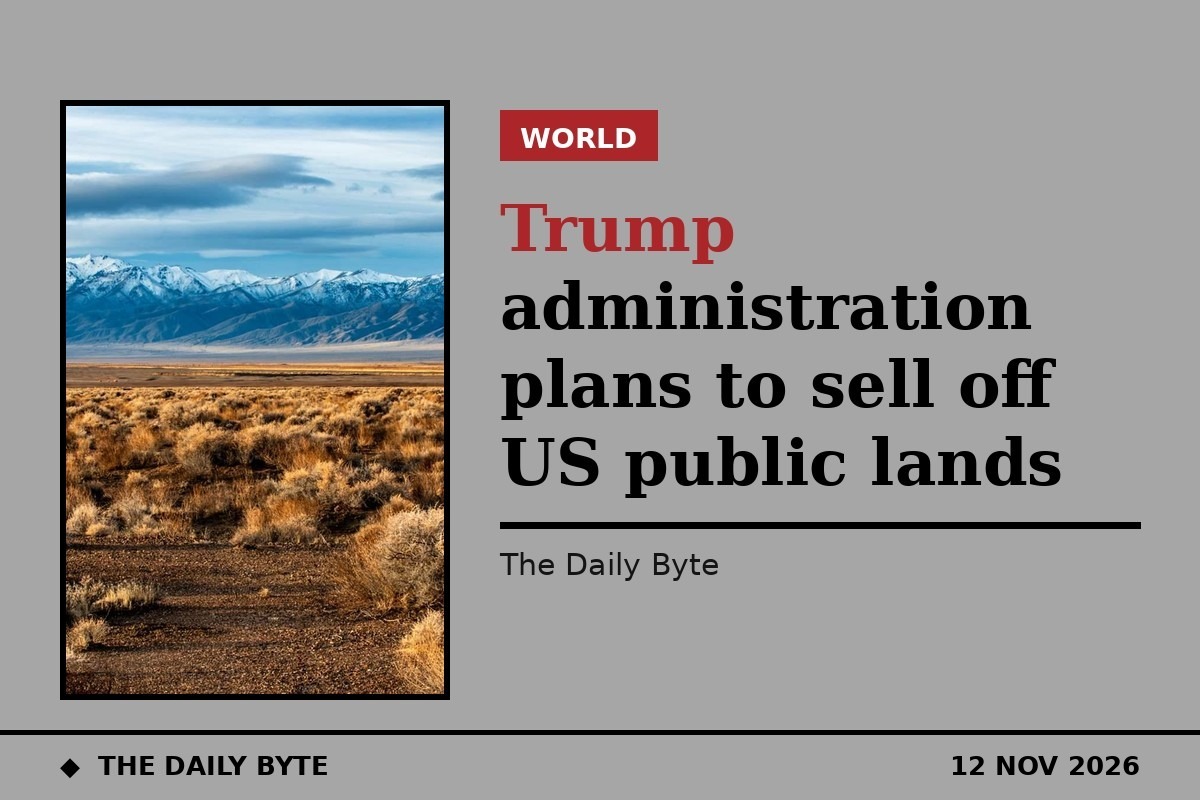
President Donald Trump's administration has formally set out plans to sell off federal public lands, in a new five-year strategic plan from the Department of the Interior that marks a sharp break with decades of policy. The plan says the department will work to shrink the federal estate by offering land for purchase to states, local governments and Native American Tribes, so it can concentrate on what it calls nationally significant land.
What the plan says
The 2026-2030 Strategic Plan, published on Tuesday, states: "The [Interior] Department will work to decrease the size of the federal estate by offering to states, localities and Tribes the opportunity to purchase federal lands." It adds that the sales would let the department focus its resources on its primary federal responsibilities and nationally significant federal lands, a phrase the document does not define. A portion of the money raised would go back to the purchasing state, locality or Tribe to be used for conservation elsewhere, which the plan says would improve recreation access while reducing the taxpayer cost of managing the land.
The scale of what is at stake is vast. The Interior Department oversees more than 750,000 square miles of land, an area greater than Texas and California combined, through the Bureau of Land Management, the National Park Service, the US Fish and Wildlife Service and the Bureau of Reclamation. Together those agencies manage about 500 million acres, roughly a fifth of the land in the United States, most of it in Western states. The plan gives no details about which parcels could be sold, how much land is involved or where the sales would take place.
Energy, conservation and staffing shifts
The plan goes beyond outright sales. It also calls for land transfers and exchanges to support greater energy production, a central plank of the administration's pro-fossil fuel agenda, and says the Land and Water Conservation Fund will no longer be used to expand the federal footprint. Instead, the fund's money would be directed towards conservation and recreation easements on private land. The department also plans to consolidate its workforce, after staffing cuts to public land agencies during the first two years of the administration. The plan appeared a day after the administration released proposed regulations that would make it easier for the Bureau of Land Management to fast-track the sale, transfer or use of public lands for oil and gas drilling, mining, data centres and other industrial or commercial development.
Pushback, including from a Republican
The proposal drew swift criticism from conservation and hunting groups, and from an unexpected quarter. Ryan Zinke, a Montana Republican who served as Mr Trump's first Interior secretary, said through his office that he "remains firmly opposed to the sale or transfer of public lands" and would vote against it if it came before the House before his term ends in January 2027. The Sierra Club said the plan threatened the lands where families hike, camp, hunt and fish, while the Center for Western Priorities and Environment America also condemned it. The reaction suggests the plan faces strong headwinds in Congress even before Democrats assume the majority in January.
It is far from clear how much of the plan can be delivered without Congress, and a strategic plan is a statement of intent rather than binding law. Future administrations would not be bound by it. The document opens with a letter from Interior Secretary Doug Burgum setting out his vision, and it is the first update of the department's strategic plan in four years. The previous plan, drawn up under former President Joe Biden, made no mention of land sales, and neither did the plan from Mr Trump's first administration. The Associated Press reported the plan from Billings, Montana, and the Sierra Club confirmed the details of the land-sale and conservation-fund changes in its response.