Trump Vows to Cap Credit Card Rates at 10%
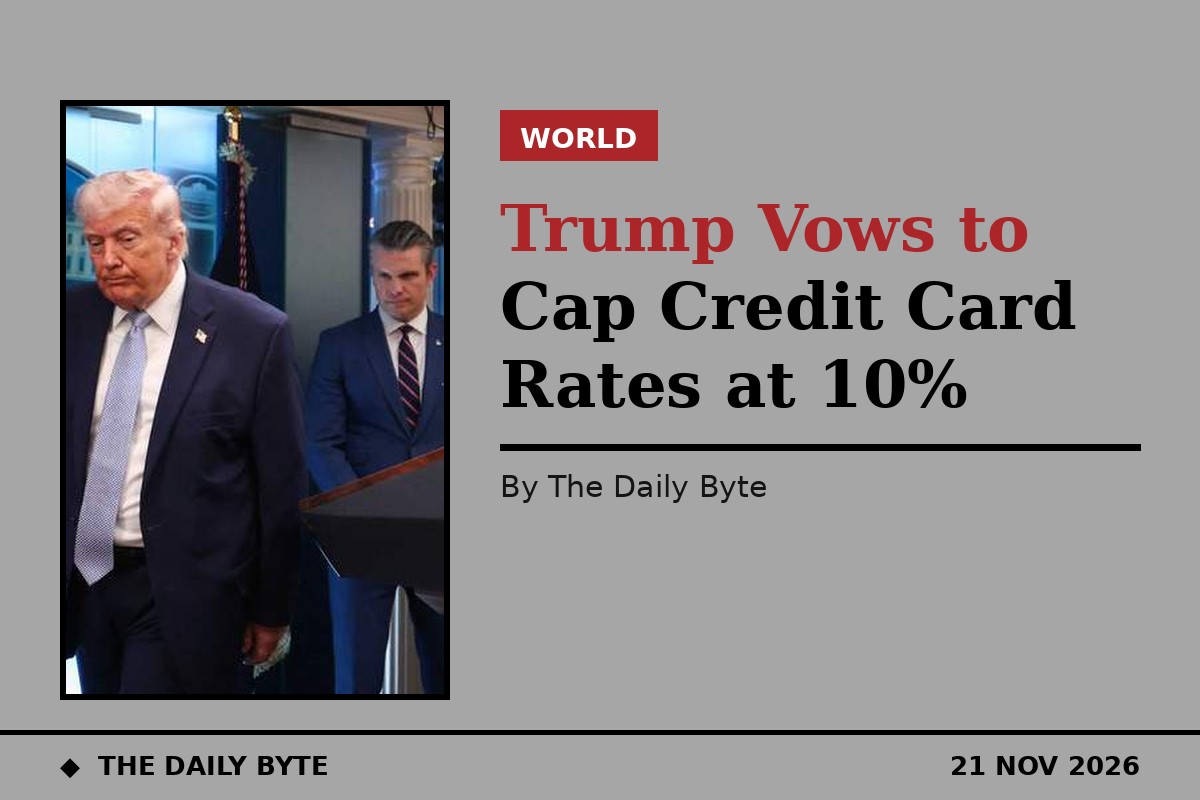
President Donald Trump said on Saturday that he will work with the incoming Democratic Congress to cap credit card interest rates at 10 per cent, reviving a promise from his 2024 campaign that stalled under Republican control of Congress. Speaking on Fox News Channel's "Saturday in America", Mr Trump said he was ready to cooperate with Democrats on the issue once they take their seats in January.
"I would do it. These credit card companies have made a lot," Mr Trump said, adding that the fees and interest rates charged to borrowers were too high. "I'm all into it." The interviewer had asked whether a one-year cap on credit card interest rates at 10 per cent was somewhere he could find common ground with Democrats.
A cap at 10 per cent would cut the cost of borrowing sharply for American households. The median credit card interest rate is roughly 22.2 per cent, according to an August survey by the New York Federal Reserve, so a 10 per cent ceiling would more than halve what many cardholders pay. Researchers who studied Mr Trump's campaign pledge after it was first announced estimated that Americans would save roughly $100 billion a year in interest if rates were capped at 10 per cent.
The sums involved are large. About 195 million people in the United States held credit cards in 2024 and were assessed $160 billion in interest charges, according to the Consumer Financial Protection Bureau. Americans are carrying more credit card debt than ever, about $1.23 trillion, according to figures from the New York Federal Reserve.
A campaign promise that stalled
Mr Trump first proposed capping credit card interest rates during the 2024 campaign, and returned to the idea in January as part of the White House's affordability push, posting on Truth Social that he wanted a one-year cap at 10 per cent. The proposal went nowhere. Banks and credit card companies opposed it immediately and aggressively, arguing that a cap would force them to cancel cards held by poorer and less creditworthy customers or to cut back sharply on the rewards they offer. Republicans in Congress showed little interest, and no cap legislation passed.
That political picture has now changed. Democrats will control both the House and the Senate when the new Congress convenes in January, and several leading Democrats have backed a cap for years. Senator Elizabeth Warren of Massachusetts, who is expected to become the next chair of the Senate Banking Committee, has repeatedly called for a cap, and responded to Mr Trump's interview by saying: "Let's cap credit card interest rates and save Americans money."
Support on both sides, but no bill yet
Other Democrats have endorsed the idea in different ways, including Representative Maxine Waters of California, a senior Democrat on the House Financial Services Committee. Among Republicans, Senator Josh Hawley of Missouri has proposed several caps on credit card interest rates, most recently this year. A bipartisan Senate bill, S. 381, the 10 Percent Credit Card Interest Rate Cap Act, was introduced in February 2025 by Senator Bernie Sanders, with Senator Hawley as co-sponsor, and would cap rates at 10 per cent for five years. It has been sitting in committee since then.
Even so, there are real obstacles before any cap becomes law. No bill has been introduced in the new Congress, and neither Mr Trump nor congressional Democrats have said whether a cap would last one year, as Mr Trump proposed in January, or five years, as the Sanders-Hawley bill provides. Democrats will hold a 56-44 majority in the Senate, but most legislation still needs 60 votes to clear a filibuster, so some Republican support would still be required. The banking industry, which fought the January proposal hard, is expected to lobby against it again.
What happens next
Nothing can be voted on before the new Congress meets in January, so the test will come in the early weeks of next year, when the Senate Banking Committee takes up its agenda under Senator Warren. Mr Trump signalled that he was open to negotiation, telling Fox News that he did not want to veto every bill Democrats sent him and that the two sides could negotiate. For the millions of Americans carrying card balances at rates above 20 per cent, the question is whether a rare point of agreement between the president and his opponents can survive the details: how long a cap would last, what it would cover, and how hard the industry fights back.
Sources: Associated Press | Seeking Alpha


