Trump Rules Out Amnesty After Immigration Deal Talk
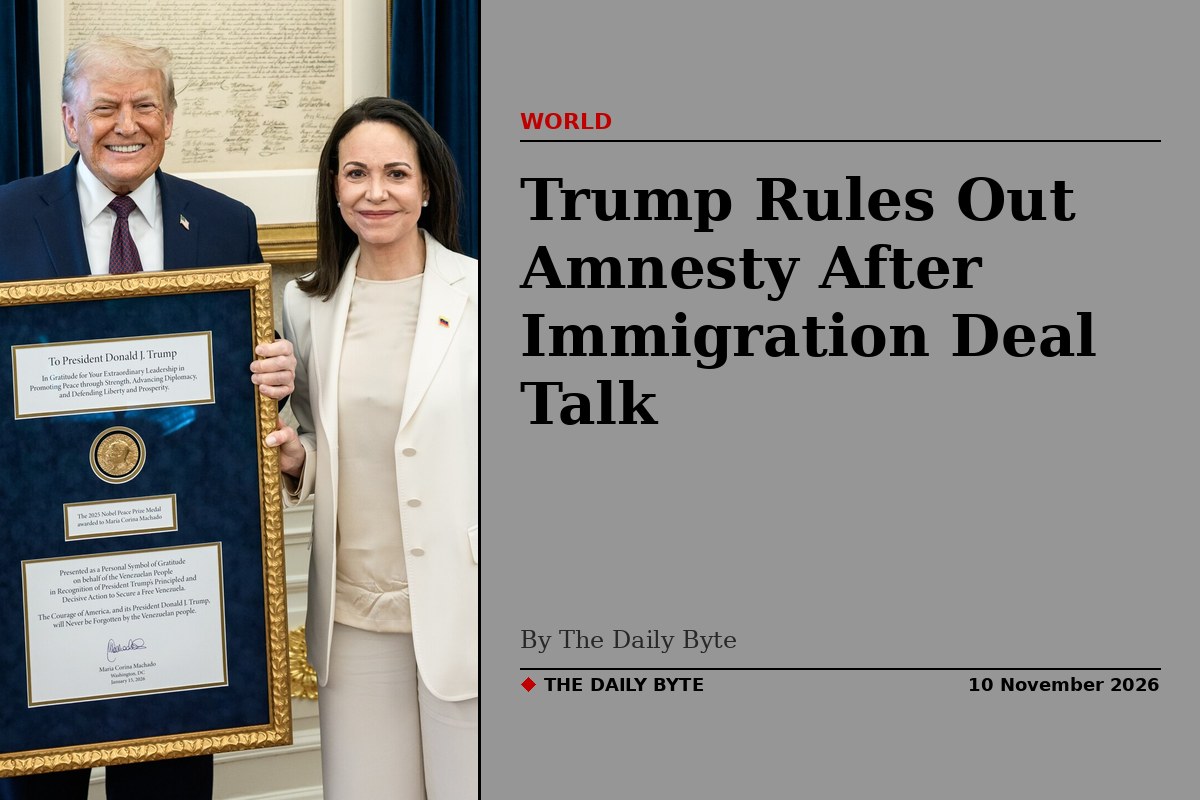
President Donald Trump has ruled out any amnesty for undocumented immigrants, telling reporters at the White House on Monday that his deportation policy has not changed. The remarks came a day after he said in a television interview that his enforcement drive had gone too far and cost his party in last week's midterm elections.
Speaking at an impromptu press conference on 9 November, Mr Trump said his administration would keep targeting people for removal, starting with the most serious offenders. “We have a very strong deportation policy,” he said. “There's no amnesty, no anything. We keep that, but we focus on the worst of the worst.”
He added: “My policy hasn't changed.”
What Trump said on 60 Minutes
In the 60 Minutes interview, which aired on 8 November, Mr Trump said his mass deportation push had swept up many people without criminal records, including hotel and landscaping workers who had lived in the United States for years. “I think it was too tough,” he said of the enforcement effort. “I think, ultimately, that hurt me.”
He suggested he would be open to working with Democrats on an immigration deal for some longtime residents, describing reform as “something that's actually doable”. He pointed to people who had worked for years in hotels, saying it was tough when a maid or waitress who had been in the country for a long time was suddenly removed.
The interview was Mr Trump's first sit-down since voters delivered a heavy midterm rebuke, with Democrats seizing control of both the House and the Senate. Polls show his immigration tactics are unpopular, and Latinos swung sharply towards the Democrats after moving towards Mr Trump in his 2024 campaign.
Backlash from his own side
The suggestion of a deal drew swift criticism from prominent figures on the right. Conservative media figure Megyn Kelly wrote on social media on 8 November: “And now amnesty. Seriously?”
Mr Trump made his 60 Minutes remarks on the same day he appointed Stephen Miller, the architect of his hard-line immigration agenda, as White House chief of staff. Democrats said the appointment sent the opposite signal to any softening. Senate Minority Leader Chuck Schumer said putting the man responsible for the crackdown in charge of the White House was “not a course correction. That's a promotion.”
Democratic House Leader Hakeem Jeffries also criticised Mr Miller on 9 November, saying he was not interested in working with him. At the press conference, Mr Trump praised his new chief of staff, saying he thought Mr Miller could “get along very well with the Democrats” while repeating there would be no amnesty.
What happens next
Homeland Security Secretary Markwayne Mullin also drew a line on Monday, saying there would be no amnesty even as the administration remains open to talks. A White House official said the administration wanted Democrats to “show their cards” on what a deal might include, without ruling out working together.
Any agreement would need support from both parties, and the exchanges on Monday showed that support is far from guaranteed. Mr Trump has in the past nodded towards a softer stance when businesses complained that aggressive enforcement was taking away longtime workers, only to hold the line afterwards.
Deportations have been at the heart of his second term in the White House, including deploying the National Guard to Los Angeles, Chicago, Portland and other cities to help with crime and immigration enforcement, despite protests from local leaders. The moves have been challenged in court and prompted mass protests. For now, the president's message is that the enforcement drive continues, with the focus on what he calls the worst offenders first.


