Trump Says Iran War 'Effectively Over'
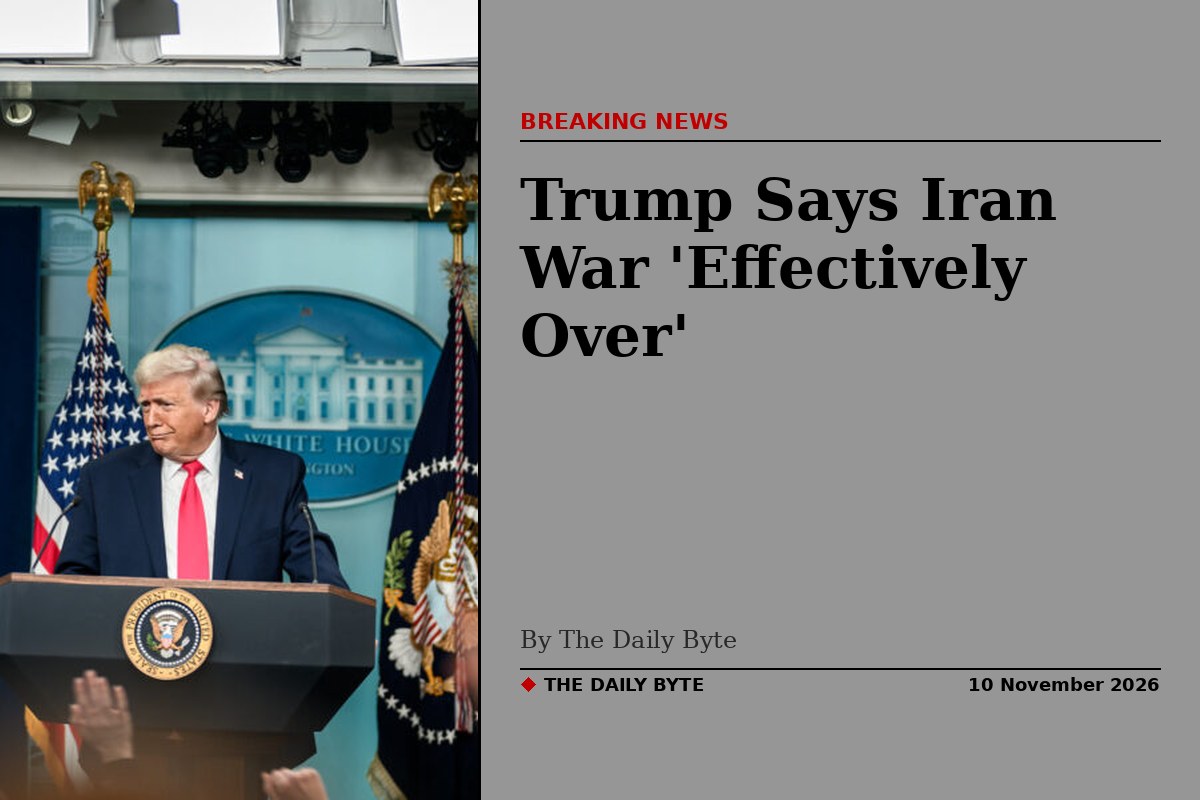
US President Donald Trump said on Monday that the war with Iran is 'effectively over' militarily, but he will keep the current policy of isolating Tehran in place, including the naval blockade of the Strait of Hormuz and a newly announced operation to cut off the country's overland trade routes.
'Iran militarily is effectively over,' Mr Trump told reporters at a White House briefing alongside UFC chief executive Dana White. 'We're just keeping it the status quo, and we're doing that really at the behest of countries that are their neighbours.'
The president said Iran was 'a failing country' with severe economic problems, and he put its inflation rate at 301%. That figure is Mr Trump's own claim and has not been independently verified.
Operation Iron Gate to seal land routes
Mr Trump said the decision not to resume strikes followed a conversation with Qatar's Prime Minister, Sheikh Mohammed bin Abdulrahman Al Thani, who has been mediating between Washington and Tehran. He said Qatar, Saudi Arabia, the United Arab Emirates, Bahrain and Kuwait all preferred the current approach.
'Qatar, Saudi Arabia, UAE, Bahrain, Kuwait, and others would prefer the status quo that we remain as is,' he said. 'In other words, a continuation of the greatest naval blockade in the history of our country, probably in the history of the world,' in addition to the new land operation.
The new effort, named Operation Iron Gate, aims to sever Iran's land connections to other countries. Mr Trump described the combined effect as a 'total lockdown' by land and sea.
He also repeated his position on Iran's nuclear programme, calling it a non-negotiable point. 'I've agreed that Iran cannot have, and everybody's agreed, Iran will never have a nuclear weapon, and that's a non-negotiable point,' he said.
US forces stay 'fully locked and loaded'
Mr Trump said he was not withdrawing the US military presence from the region and that American forces were 'fully locked and loaded' if there was 'any change with respect to developments in the Middle East'.
'We don't think there's going to be any reason to use it. However, it's going very well. You know, we haven't lost a soldier in six months,' he added.
Asked why he would not simply announce an end to the conflict, the president said it was 'because we have some great allies there, and we have to make sure they're not hurt'.
'They are right now a lot safer than they were six months ago, because Iran's been very much decapitated,' he said. 'But they're still the bully of the Middle East a little bit, and I see that we want to make sure they're okay. We want to make sure it's a long-term solution, not just a short term.'
Quiet talks continue, but no deal in sight
The remarks came as the United States and Iran have been quietly negotiating through Qatari mediators, with diplomatic activity accelerating since last week's midterm elections in the US. Mr Trump told CNN on Sunday that renewed US attacks were 'highly unlikely' if Tehran made progress towards an agreement on its nuclear programme and reopening the Strait of Hormuz.
But senior US and Gulf officials have cast doubt on the chances of an imminent deal. Secretary of State Marco Rubio said on Sunday that he 'wouldn't say we're on the verge of a breakthrough'. Iran has publicly insisted it will not negotiate over its nuclear programme or reopen the strait unless seven preconditions are met, including an end to hostilities on all fronts and the lifting of the naval blockade.
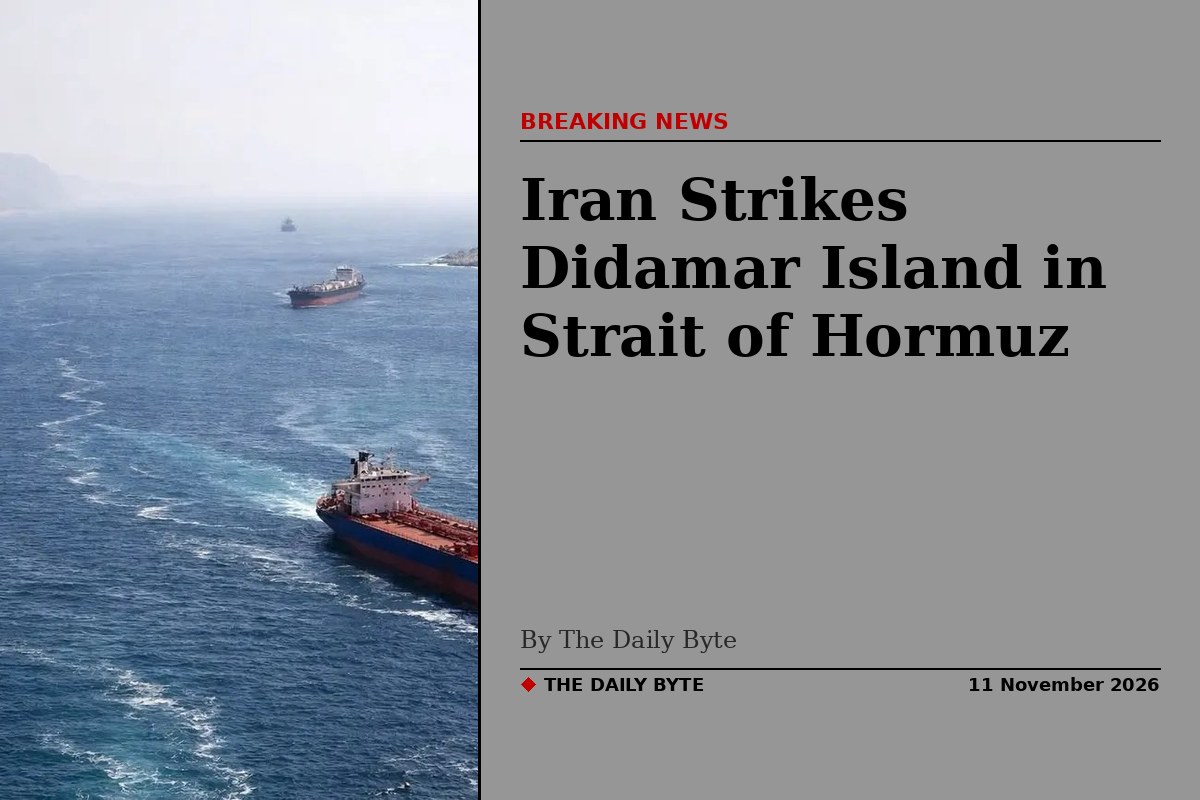
The war began on 28 February, when the United States and Israel launched joint attacks on Iran. Mutual strikes have continued since then, including US strikes on Iran's Qeshm island on Sunday night and Iranian attacks on tankers in the Gulf and the Strait of Hormuz.
Oil prices fall as escalation fears ease
Oil prices fell on Tuesday after Mr Trump's comments eased fears of a fresh escalation. Brent crude futures fell 24 cents, or 0.23%, to $92.33 a barrel, while US West Texas Intermediate fell 35 cents, or 0.40%, to $86.50 a barrel.
Brent had already settled down 5.85% in the previous session, sliding to its lowest level since 31 August. Traders noted that while attacks on shipping around the Strait of Hormuz were still happening, they had not escalated in a way that forced a fresh risk premium into the market.
On the supply side, OPEC oil output rose in October, a Reuters survey found, led by gains in Saudi Arabia, Kuwait and Iraq despite continued constraints on exports.