Trump Threatens Tax on Overseas AI Data Centres
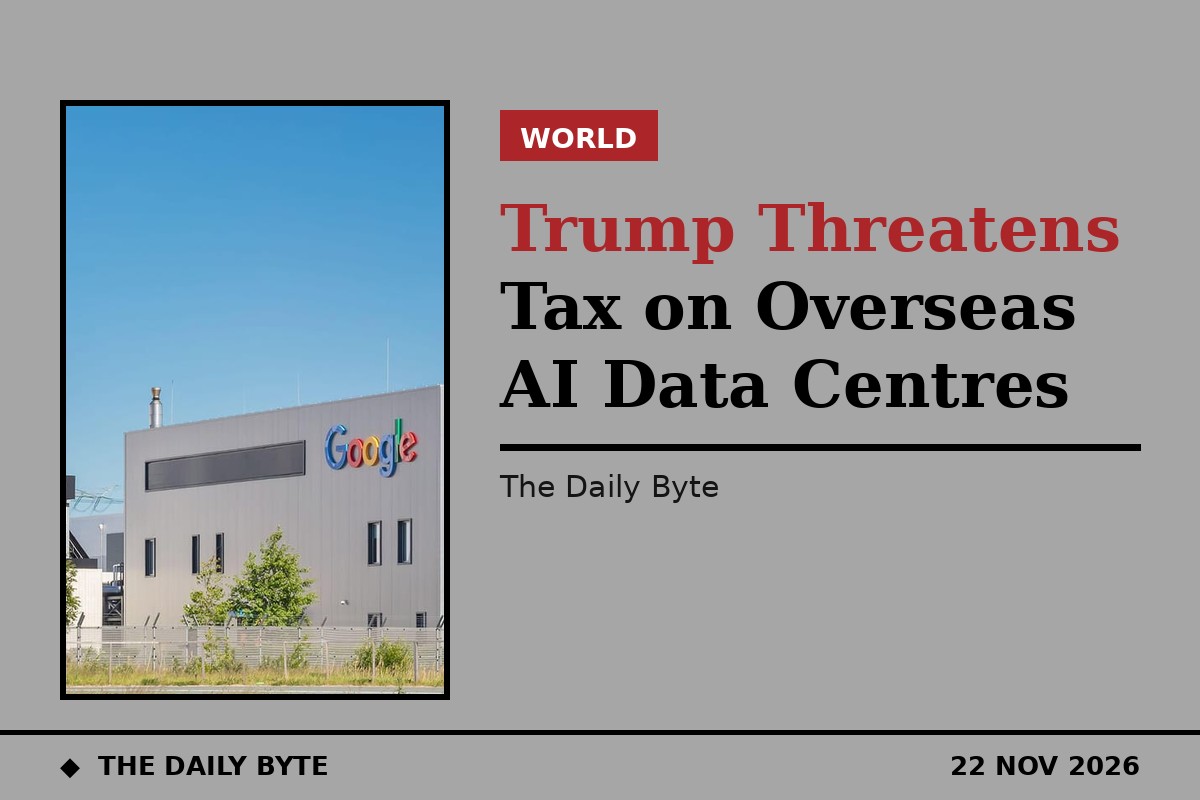
President Donald Trump has threatened to impose a heavy tax on American companies that build artificial intelligence data centres outside the United States, in a move aimed at keeping the AI boom on home soil. Speaking at a White House news conference on 20 November 2026, after returning from a trip to China, Mr Trump said companies that build abroad would face a "tremendous tax".
"We're not going to allow our companies to build data centers outside of our country," Mr Trump said. "We're not going to allow that to happen." He added: "If they won't go in Texas or they won't go in California, they're going to go in West Virginia."
No rate or mechanism announced yet
As of 21 November, no tax rate, enforcement date or legal mechanism had been published, and there was no executive order or Treasury guidance behind the announcement, according to reporting by the Associated Press and Axios. Mr Trump also told reporters he had not discussed the plan with White House officials before announcing it. A tax of this kind would need Congress to legislate it, since the power to levy taxes sits with Congress rather than the president.
The threat follows action already taken by the administration. The Commerce Department moved on 16 November to restrict exports of advanced AI chips to several Southeast Asian countries, part of a broader effort to stop China obtaining the technology through third countries. Chinese tech firms have been reported to be using AI-optimised data centres in countries such as Malaysia to train their models, in deals designed to bypass US chip export controls.
What is at stake for big tech
Data centres provide the computing power needed to train and run AI systems, and several major American developers build and operate them overseas, including Equinix and Digital Realty. Amazon, Google, Microsoft, Meta and Oracle all run data centre operations outside the US. Amazon Web Services announced last month that it plans to invest 18 billion euros in Germany next year, part of it earmarked for data centre capacity, while Google committed 13 billion euros to computing infrastructure in Finland a few weeks earlier.
Mr Trump argued that if companies were allowed to build overseas, China would take the facilities, and he repeated his view that whoever leads in artificial intelligence, which he calls "super intelligence", will lead in the future. He also urged communities to welcome data centres rather than block them, saying: "Make them pay your communities, but don't shut them off."
The Senate approved legislation on 19 November to ease the approval of data centres as part of a broader overhaul of permitting rules. The bill now heads to the House, where Mr Trump said lawmakers must pass it because it will lead to "tremendous amounts of new building".
FAQ
Has the data centre tax been imposed? No. As of 21 November 2026, no rate, order or enforcement mechanism had been published. It remains a threat made at a press conference, not a law.
Why does Mr Trump want data centres built in the US? He says the facilities are critical to winning the AI race against China and that overseas builds risk China gaining access to the capacity.
Which companies could be affected? US cloud and technology firms with overseas data centres, including Amazon, Google, Microsoft, Meta and Oracle, and developers such as Equinix and Digital Realty, according to Reuters.
Sources: USA TODAY and Reuters via LA Post.


