Bedford triple murder: suspect's phones go to UK police
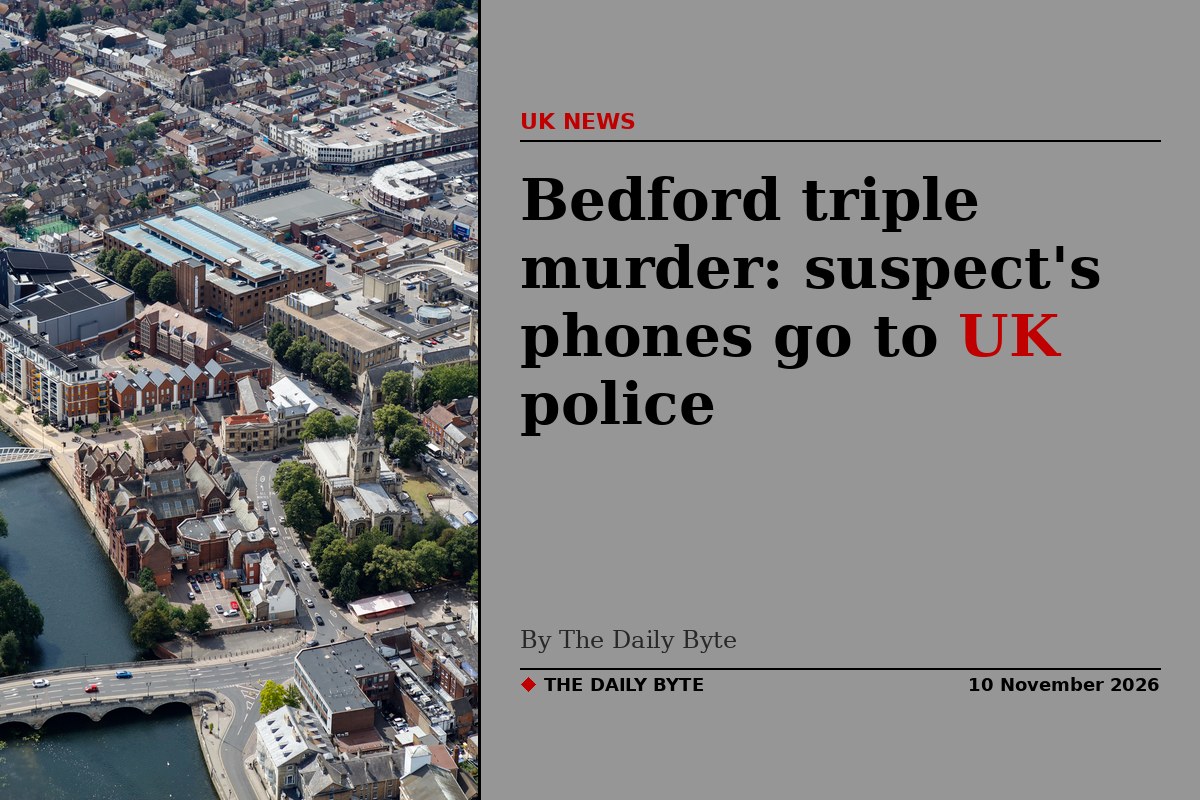
Phones seized from a man wanted in Britain over the deaths of his wife and two young daughters in Bedford will be handed to UK police, after a court in South Africa approved the transfer.
The Johannesburg Magistrates' Court granted an order allowing South Africa's National Prosecuting Authority (NPA) to hand over electronic devices belonging to 46-year-old Ndodana Mkhanyisi Tshuma. The move follows a formal request for mutual legal assistance from the United Kingdom, authorised by South Africa's Minister of Justice under section 7 of the International Cooperation in Criminal Matters Act 75 of 1996.
Mr Tshuma is wanted in the UK on three counts of murder. Prosecutors allege that in early July 2026, in Bedford, Bedfordshire, he killed his wife, Nothabo Zandile Tshuma, and their two daughters, Natalie Tshuma and Nala Tshuma. The three were found dead at the family home in Great Denham, near Bedford, on 6 July 2026. He has not been tried on the murder charges, and the allegations against him have not been proved in court.
Extradition put off until December
The extradition proceedings have been postponed to 7 December 2026. The NPA said the delay allows the mutual legal assistance process to be completed and a separate case against Mr Tshuma in South Africa to be concluded first.
That separate case concerns firearm and immigration offences. Mr Tshuma has entered a plea and sentence agreement with the state under section 105A of South Africa's Criminal Procedure Act, pleading guilty to unlawful possession of a firearm and ammunition and to contravening the Immigration Act. Plea and sentencing proceedings in that case are scheduled for 10 November 2026.
Reports in South Africa say Mr Tshuma flew from Heathrow to Johannesburg via Dubai after the killings and was later arrested in Kensington, Johannesburg, in a joint operation by the South African Police Service and Interpol. British prosecutors have authorised three murder charges against him, and if he is extradited he will face trial in the UK.
What the phones could mean for the case
The devices will now be sent to the UK to assist investigators probing the three murder charges. The contents of the phones have not been publicly disclosed, and no report has established what evidence, if any, they contain.
Phones in a case of this kind can hold messages, location data, searches and contacts, and such material often becomes central evidence at trial. But until the material is examined and tested in court, its significance cannot be assumed. The extradition hearing on 7 December will determine whether Mr Tshuma can be surrendered to British authorities to face the murder charges.
For the family of the three victims, the case has already stretched across four months and two continents. The handover of the phones and the December hearing date are the next steps in a process that will decide where, and when, the murder allegations are tried.


