TSMC and Samsung Halt China Chip Shipments
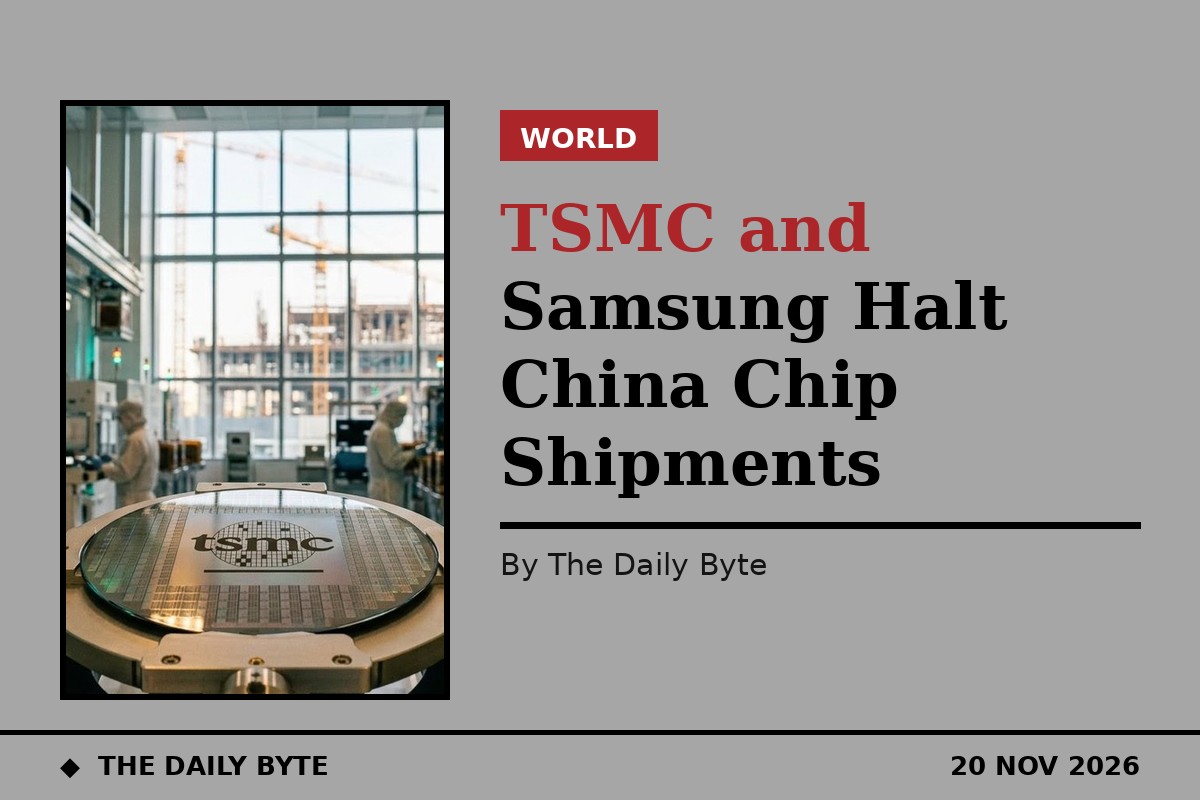
Taiwan Semiconductor Manufacturing Company (TSMC) and Samsung Electronics have suspended some chip shipments to Chinese customers after new United States export rules took effect, closing one of the last routes Chinese companies used to get advanced chips made.
The Financial Times reported on 19 November that both companies had told Chinese clients in recent days that certain processors would not ship while they applied for export licences from the US Commerce Department. Reuters, citing two people familiar with the matter, reported that TSMC had instructed affected customers to halt orders using manufacturing processes of 16 nanometres and below unless they obtained a US licence.
What the new US rule changes
The trigger is an interim final rule from the Bureau of Industry and Security, the export-control arm of the Commerce Department, titled Addressing Remote Access to Advanced Semiconductors. The bureau released the rule on 16 November, and it was published in the Federal Register and took effect on 19 November.
Under the previous system, a foundry could assess a customer's chip design and certify that it fell outside US controls, allowing the order to proceed without a licence. The new rule removes that route for designers based in China or with a Chinese parent company. Advanced chips are now presumed to be covered by US controls, so a licence is required unless an exception applies.
TSMC has told affected customers they will generally be limited to older 28-nanometre and 40-nanometre processes, provided their chips do not use high-bandwidth memory or require advanced packaging, according to guidance reviewed by Reuters. The company has said it intends to comply with the new rules.
Phone chips are caught too
The disruption reaches beyond artificial intelligence processors. The rule also removes exemptions that previously let chipmakers show a chip was designed for a non-AI use, such as a smartphone, and ship it without a licence. TSMC and Samsung have told consumer-electronics customers that their shipments are paused as well.
That matters because TSMC makes smartphone chips for Chinese handset brands including Xiaomi, Oppo and Vivo. A lawyer briefed on the situation told the Financial Times that the two foundries must now seek US licences even for consumer chips made with advanced manufacturing processes.
Shipments that were already in transit when the rule took effect on Thursday can continue under the old terms until 21 December, giving customers and suppliers a short window to adjust.
Tighter screening of customers
TSMC is also stepping up its checks on who it is dealing with. According to Reuters, its guidance requires closer scrutiny of customers' operating locations, parent companies, major shareholders, packaging providers and shipping routes. The checks extend to orders placed through overseas subsidiaries or intermediaries in Taiwan, the United States, Europe, Japan and South-east Asia.
The move could complicate Beijing's efforts to build domestic alternatives to chips designed by Nvidia and manufactured by TSMC, by shutting a route Chinese designers used to reach advanced foundry capacity. The same week, Chinese AI company Moonshot AI was reported to have cancelled a deal for Nvidia chips destined for a data centre in Indonesia after the new rules restricted remote access to advanced chips by Chinese companies.
For now, the pause is framed as temporary: shipments resume if customers secure US approval. But with the licence route untested at this scale, Chinese designers face an uncertain wait, and the world's two largest contract chipmakers are left to manage a backlog of orders they cannot legally fulfil.


