Tube strike gridlocked London roads and hit business
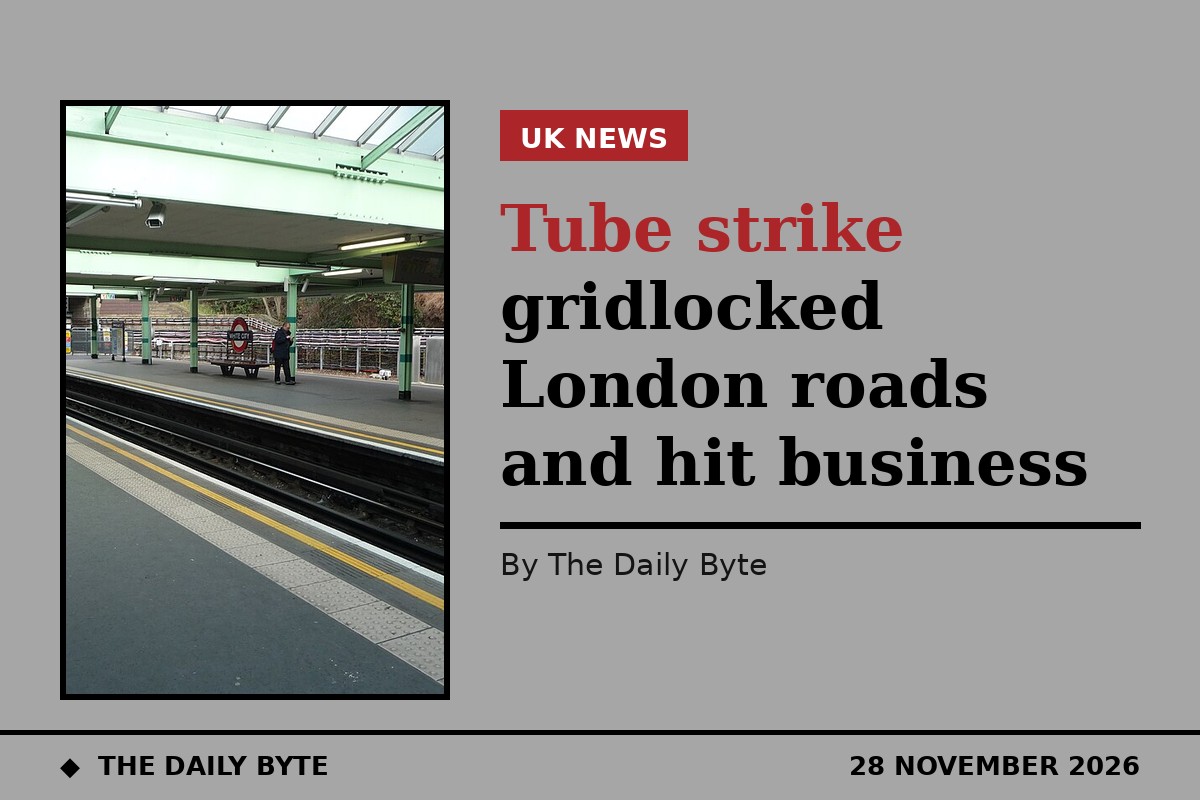
London's first 24-hour Tube strike of the winter left roads gridlocked and the City and Soho noticeably quieter on Thursday, as commuters stayed home, left early or found other ways to travel. The walkout by RMT drivers began at midday on Thursday 26 November, after talks failed to settle a long-running dispute over a four-day week for Tube drivers. Several lines were shut or severely disrupted, and the strike continued to affect journeys on Friday morning.
Shops, pubs and restaurants across the capital missed out on millions of pounds in revenue, according to an account of the walkout in The Standard. Transport for London said Tube use was around two-thirds of normal on Thursday, although buses and the Elizabeth line each carried 3 per cent more passengers than usual.
Roads became substantially busier than on a typical Thursday evening. Google Maps images showed a backlog across the West End, and heavy traffic stretched through east London, from Blackfriars to Mile End, and affected routes in areas usually served by the Metropolitan line.
The fall in people coming into central London was measured in mobile phone data. Anonymised and aggregated O2 Motion data, reported by Virgin Media, showed worker numbers in the City of London and Soho were about 9 per cent lower than on a typical Thursday. Visitor footfall was down by as much as 17 per cent. The gap widened after the strike started: by 5pm, worker numbers were around 16 per cent below the previous Thursday, as people left early or avoided travelling in.
Services on the Tube itself recovered unevenly through the day. Transport for London said more than 55 per cent of the network ran on Thursday. Service levels stood at about 85 per cent of a normal day in the morning and 82 per cent by midday, then fell to around 60 per cent by 9pm. Oyster and contactless taps across the transport network were 89 per cent of normal at 1.45pm, compared with about 78 per cent on the Tube.
All lines began operating before 6.30am on Friday, earlier than Transport for London had expected. The Jubilee and Victoria lines started at their normal time, but the network was running at just over 40 per cent of its usual service up to 9am, with limited Piccadilly line trains and no Waterloo and City service. The strike ended at midday on Friday, although Transport for London did not expect services to return fully to normal until later in the day.
The walkout was the first in a series of 24-hour strikes. The RMT is planning eight days of action between Black Friday and February 2027, and the union has said it will meet Transport for London next week. The next walkouts announced by Transport for London are from midday on Thursday 17 December to midday on Friday 18 December, and from midday on Saturday 19 December to midday on Sunday 20 December.
The dispute centres on Transport for London's plans for a voluntary four-day week for drivers, starting with the Bakerloo line. The RMT says the change was imposed after drivers rejected it in a referendum, and warns it could mean longer duties, earlier starts, later finishes and shift changes at short notice, raising concerns about fatigue and safety. Transport for London says drivers who do not want to switch can remain on a five-day week at the same depot. For now, Londoners have a break from strikes, but with more walkouts announced before Christmas, the dispute is far from over.


