Tuna Fleets Choose Sea Transfers Over Pacific Ports
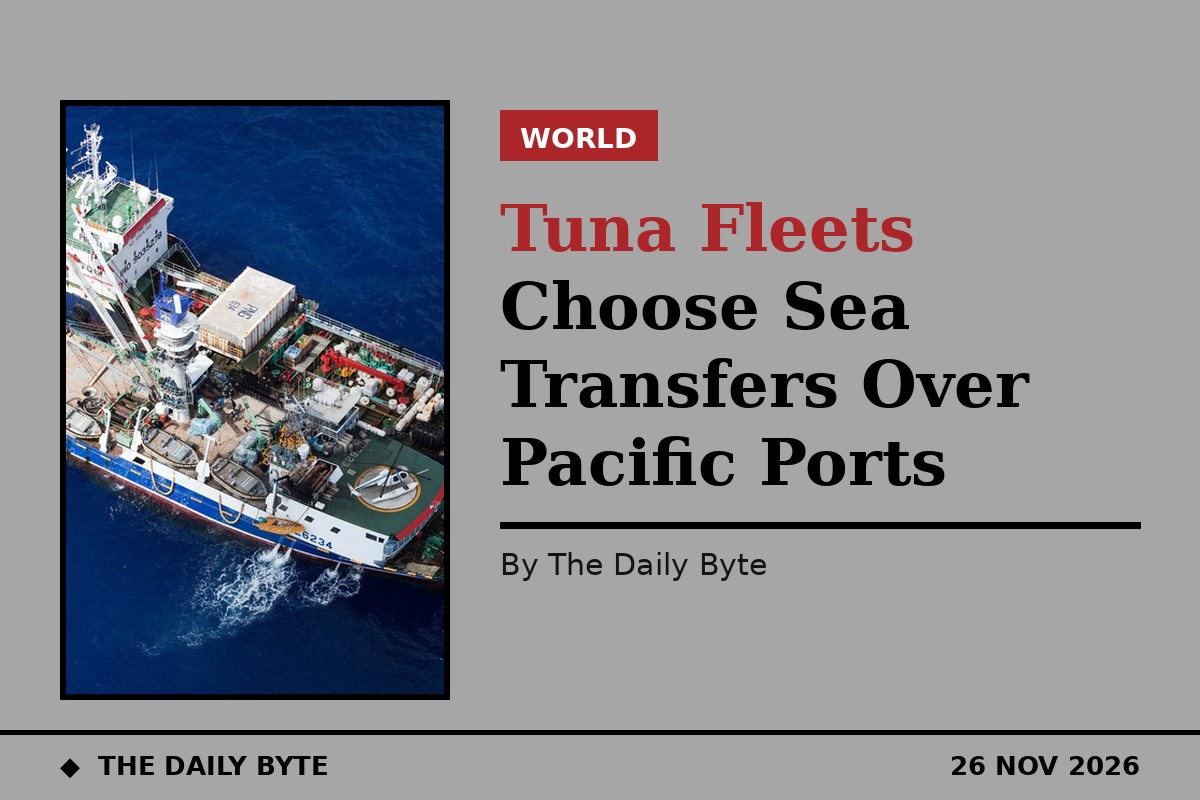
Tuna fishing fleets are choosing to transfer their catch to cargo ships on the high seas even when a Pacific Island port is closer, according to a six-year study of vessel tracking data released on Wednesday.
The analysis, by the Marshall Islands Marine Resources Authority and Starboard Maritime Intelligence, examined 1,644 transfers between six cargo vessels and 486 fishing vessels recorded between May 2020 and March 2026.
In 41 per cent of the 1,277 transfers where a comparison could be made, a suitable port was at least as close as the cargo vessel the fishing vessel travelled to meet. In about one case in five, the fishing vessel travelled more than three times as far to reach the cargo vessel as it would have to reach a port.
The findings challenge the fishing industry's longstanding argument that ports are too far from fishing grounds, making unloading at sea a practical necessity.
Ports within easy reach
Five of the eight main transshipment areas identified in the study lie within 550 nautical miles of Pacific Island ports, including Funafuti in Tuvalu, Kavieng in Papua New Guinea, Kosrae in the Federated States of Micronesia, Honiara in Solomon Islands and Kiritimati in Kiribati.
The study also tested the main economic argument for transshipping at sea: fuel costs. It found no measurable relationship between fuel prices and the locations of transfers over the six-year period, and no shift in fleet behaviour towards greater use of ports. Instead, transfers followed commercial lines of flag and ownership.
Dr Moritz Lehmann, senior oceanographer at Starboard Maritime Intelligence and a lead author of the study, said the distances vessels already covered undermined the argument that a port call was an impractical detour. Fishing grounds can lie more than 8,000 nautical miles from a vessel's home port, and vessels cover about 4,500 nautical miles during active fishing.
Months at sea without a port call
Transshipment involves transferring fish from a fishing vessel to a refrigerated cargo vessel at sea, allowing fleets to keep fishing without returning to port. Cargo vessels also deliver fuel, provisions and replacement crew at sea, so fishing vessels can stay out for months.
The study documented one case in which a fishing vessel travelled 22,155 nautical miles over 148 days without entering port. It also found that 36 per cent of fishing vessels transferred their catch to more than one cargo vessel, making it harder to trace fish to individual vessels and to verify where and how it was caught.
Without regular port calls, authorities have fewer chances to inspect working conditions on board, and crews have fewer chances to seek help. The International Labour Organization estimates that at least 128,000 fishers worldwide were in forced labour aboard fishing vessels in 2021.
Glen Joseph, director of the Marshall Islands Marine Resources Authority, said every transfer on the high seas was a port call that did not happen and an opportunity for oversight that was lost. Pacific Island countries were not seeking to end transshipment, he said, but wanted it moved into ports and national waters where it could be monitored and crews protected.
Decision due in Port Vila
Under the rules of the Western and Central Pacific Fisheries Commission, high-seas transshipment by longline vessels has been prohibited since 2009 unless a member determines that unloading in port is impracticable. Guidelines defining that test were due by 2012 but have never been adopted, so each member makes its own determination without a common standard or independent verification.
The commission, which manages the world's largest tuna fishery and supplies more than half of the tuna consumed globally, brings its 26 members together in Port Vila, Vanuatu, from 30 November to 5 December. The United States, the European Union and France have expressed support for ending high-seas transshipment.
The Marshall Islands and its partners are calling on members to end high-seas transshipment by longline vessels and to require transfers to take place in designated ports or within national waters. They are also urging independent observers for high-seas transshipment, evidence to support any claim that port unloading is impracticable, and a requirement for vessels to return to port at regular intervals.
Dr Jessica Cramp, executive director of Sharks Pacific, said the Port Vila meeting offered governments a chance to bring vessels back into port, require evidence for every exemption and place independent fisheries observers at sea.


